Category Archives: Climate

Lost in the barrens of Moncton

photo 3

Anyone who hasn’t endured shock therapy to erase the memory of last winter along the East Coast will surely greet the latest forecasts of the coming fall with a mixture of fear and loathing.

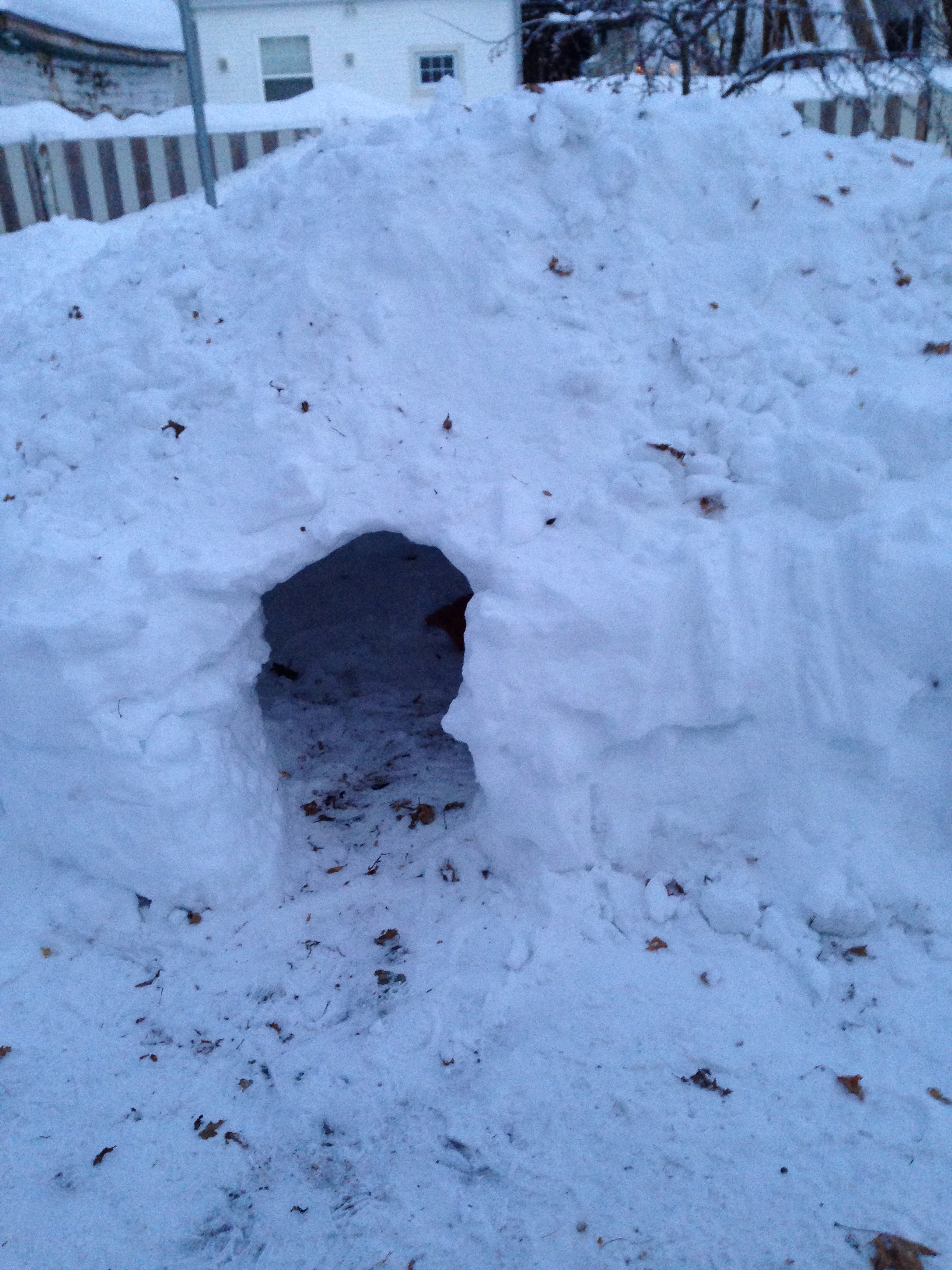
Yes, dear reader, we are heading for another prelude to snowmaggedon: A Maritime autumn of brilliant colours, sparkling skies, pumpkin pies, and then a picture of me standing on a glacier that was once my driveway in downtown Moncton, shovel in hand, maniacal grin fixed to face, wild eyes cast heavenward, and a guttural invocation issuing from trembling lips.

“Really? I mean, really?”

Last February, my wife and I spent a balmy 11 days in nearby Charlottetown looking after our kids’ kids (ours had skipped off to Costa Rica for a well-deserved sojourn involving horseback riding and beach combing). What began as a routine “mission impossible” for us, the grand parents, quickly devolved into a mission from hell.

The snow began on a late Sunday and didn’t stop until mid-Tuesday. When it was over, 90 centimeters of the white stuff had fallen within 36 hours. Roads were impassable. Shovels were pilfered. The city was at a standstill. Only stores of milk and games of monopoly kept us going.

Finally, it was time to travel back to Moncton, there to see what obscenity the weather had wreaked on the home front. As we careened up our street, which had been reduced to less than one lane of traffic, we agreed it could have been worse. After all, our city had received a mere 66 centimeters in that particular tempest. We would take the win – until, of course, we attempted to hike the heat.

Here’s the thing about natural gas furnaces: They like snow and ice about as much as my wife and I do. The only difference between them and us is that they shut down, while I am inclined, in prone position, to dig out the various inflow and outflow valves so as to guarantee not freezing to death in my own house – in, by the way, yet another blizzard.

And so it continued for weeks; and, if the predictions are correct, it will continue apace this winter. That’s climate change for you, or, perhaps, just the luck of the meteorological draw.

Accuweather has done its studly job of scaring the stomachs of weak-kneed New Brunswickers of late. Its forecast for the region, issued last week, posits: “A majority of the Arctic fronts will be directed into northern Quebec, Labrador and the Maritimes this fall, resulting in some early periods of chilly weather. This pattern will also help reduce the threat of a landfalling tropical storm or hurricane into Nova Scotia. Newfoundland will continue to see cooler and wetter conditions into the fall with several storms intensifying just offshore.”

Meanwhile, says the weather service, the El Nino phenomenon in the equatorial Pacific, “continues to intensify. . .and we expect this current episode to be one of the strongest. . .on record by the upcoming winter. . . .Strong El Nino’s typically produce unusually mild winters across western Canada. Farther east, the impacts are less certain, but tend to favor reduced snowfall around the Great Lakes region. Current indications are that this upcoming winter will not be nearly as cold as last winter across eastern Canada.”

As for Atlantic Canada. . .well, we’re not so lucky as to be so certain. Still, maybe our permanently hard winters represent an economic opportunity: winter tourism, anyone?

After all, if snowflakes were dollars, all New Brunswickers would be millionaires by now.

Tagged , ,

Tripping up on climate change

DSC_0006

When it comes to the phrase, “the tipping point”, in all matters related to global warming, our cups now runneth over.

It is, perhaps, inevitable that a discipline as complex, as frustratingly imprecise, as climate change should attract oversimplifications to the point of cliché the way a garden invites dandelions.

Still, the use of this expression seems to have spiked recently as scientists struggle to explain why we’re not already stewing in our own juices.

According to a story in MarketWatch online last week, “In June, Pope Francis, in his encyclical on the environment, called upon humanity to take responsibility for the planet, including climate change. Yet millions of Americans just don’t trust scientists warning of a ’95 per cent certainty’ humans cause global warming.”

That figure was originally published in a MarketWatch story a year ago in which writer Paul B. Farrell noted, “But they do trust Big Oil, the GOP, God. They honestly believe climate science is a dangerous fear-mongering liberal conspiracy.”

That’s because most people can’t, or refuse to, observe the largely subtle changes that accumulate in their environment – and even those who can don’t automatically perceive them as evidence of manmade global warming.

Yet, anyone who spends any time at all lounging in his backyard this New Brunswick summer must surely notice the virtual absence of the little brown bat at dusk. This once-plentiful species filled the sky only five years ago. And then, seemingly overnight, it was gone, a victim of a virulent fungus, the proliferation of which, zoologists believe, is directly related to long-term warming weather trends along the northeast U.S.

That, dear reader, is what the experts call a tipping point. Everything proceeds apace – business as usual, move along, nothing to see here – and then, one day, boom! The new normal rears its frightful head and you don’t know what the dickens slammed into you.

All of which puts paid to the notion that we humans have plenty of time to consider our options. The tricky thing about tipping points is that you ever know when they’re going to occur. Noted environmentalist Bill McKibben alluded to this in an article he penned for Foreign Policy some years ago.

“Time might be the toughest part of the equation,” he wrote. “That melting Arctic ice is unsettling not only because it proves the planet is warming rapidly, but also because it will help speed up the warming. That old white ice reflected 80 per cent of incoming solar radiation back to space; the new blue water left behind absorbs 80 per cent of that sunshine. The process amps up.”

What’s more, he warned, “There are many other such feedback loops. Another occurs as northern permafrost thaws. Huge amounts of methane long trapped below the ice begin to escape into the atmosphere; methane is an even more potent greenhouse gas than carbon dioxide.”

In fact, his piece is fairly dripping with tipping points. Indeed, can we ever tip in a way that not necessarily catastrophic?

That’s a question Andrew Simms asked in an editorial last April for The Guardian: “One of the great environmental stories is of how catastrophe can creep up and be noticed only when it is too late to act. Examples range from the sudden, inexplicable collapse of bee colonies, to ice cores revealing the potential for dramatic climatic upheavals that happen not in millennia or centuries, but the time it takes to pass through a coalition government or two.”

All of which suggests, sadly, that we may have already tipped beyond the point of no return

Tagged

Mum’s the word on climate change

DSC_0003

Whole election campaigns have been sacrificed on the altar of global warming. Entire political careers have been cremated under the magnifying glass of climate change. Remember poor Stephane Dion?

Is it any wonder, then, why this year’s contenders for the democratic throne of Canada are treading gingerly around the subject?

Well, for the most part.

NDP Leader Thomas Mulcair had a moment earlier this month when he told a Hamilton radio talk-show host that the federal government’s inaction on climate change is tantamount to wartime isolationism.

“Whenever we’ve taken on these big fights internationally, we were always one of the smaller players,” he said.

“But it didn’t mean that we didn’t go in. In the Second World War, the same argument could have been made. ‘Oh, we only represent a couple of per cent of the forces.’ But we knew that we had a job to do. This is a battle that the world has to take on. Climate change is real. Reducing greenhouse gases has to be made a priority. It can be done. Mr. Harper doesn’t believe in the science of climate change, so he’s not doing anything.”

In reality, what the current prime minister has never done much of is talk about global warming. That’s been both deliberate and shrewd. For the cunning and the calculating, there is almost nothing to be gained by weighing into the debate (let alone becoming a thought-leader, as did Stephane Dion) in a country where attitudes are so mightily polarized. Indeed, there’s every indication that they’re about to grow even further apart, thanks to research released last month by the National Oceanic and Atmospheric Administration.

According to an article by Katherine Bagley, writing for InsideClimate News, “The long-debated hiatus or pause in global warming, championed by climate denialists who tried to claim it proved scientists’ projections on climate change are inaccurate or overblown, probably did not happen at all.

A new study by researchers at the National Oceanic and Atmospheric Administration finds that the world’s warming never really stalled during the last 15 years – it was just masked by incomplete data records that have been improved and expanded in recent years.

Remarked Tom Karl, the director of NOAA’s National Centers for Environmental Information and principal author of the study: “The rate of temperature increase during the last half of the 20th century is virtually identical to that of the 21st century.”

That’s the sort of comment that gets “denialists” howling mad. Just ask New York based financial and business writer John Steele Gordon. In a recent Wall Street Journal commentary, he insists, “climate science today is a veritable cornucopia of unanswered questions. Why did the warming trend between 1978 and 1998 cease, although computer climate models predict steady warming? How sensitive is the climate to increased carbon-dioxide levels? What feedback mechanisms are there that would increase or decrease that sensitivity? Why did episodes of high carbon-dioxide levels in the atmosphere earlier in Earth’s history have temperature levels both above and below the average?”

Indeed, he ponders pointedly, “If anthropogenic climate change is a reality, then that would be a huge problem only government could deal with. It would be a heaven-sent opportunity for the left to vastly increase government control over the economy and the personal lives of citizens.”

In a country – namely ours – that depends so heavily on greenhouse-gas emitting fuels, politicians (with a few notable exceptions) have clearly decided that when it comes to climate change, discretion is the better part of, if not valour, political survival.

Tagged , , ,

Canada gets gassier and gassier

DSC_0066

It’s hard to decide wether Prime Minister Stephen Harper deserves applause for his candor or jeers for his revelation.

In either case, for the first time in 20 years, Canada, he says, will not match the United States in greenhouse gas reduction targets. “It’s unlikely our targets will be exactly the same as the United States, but they will be targets of similar levels of ambition to other major industrialized countries,” he declared publicly last week.

That, of course, worries environmentalists who note that several developed countries – the ones, presumably, the prime minister now wants to emulate – are relaxing their standards and setting lower goals in the wake of tough economic times.

“We believe three Rs should define Canada’s approach to climate protection: Respect, Responsibility and Restraint,” reads a recent note on the Climate Action Network Canada’s website. “Respect requires humility in accepting the scientific facts that tell us the atmosphere has a limit to the amount of carbon pollution it can take before shifting in ways that put people and the environment we rely on at risk. Responsibility requires accepting that we should care about the harm climate disruption will bring, especially to the most vulnerable at home and around the world, and to doing our fair share to stop it. Restraint requires that we accept that we must set ambitious, enforceable targets to manage carbon pollution at home and to invest around the world to help others reduce their carbon pollution and to adapt to climate change.”

None of which, it’s safe to say, the “federalistas” appear particularly interested in pursuing, despite their protestations to the contrary. “The Government of Canada is committed to addressing greenhouse gas (GHG) emissions while keeping the Canadian economy strong. We are achieving success from 2005 to 2012, Canadian GHG emissions have decreased by 5.1 per cent while the economy has grown by 10.6 per cent. The 2014 Canada’s Emissions Trends report estimates that, as a result of collective action to reduce GHGs since 2005, Canada’s 2020 GHG emissions are projected to be 130 megatonnes (Mt) lower than if no action was taken, an amount roughly equivalent to one year’s worth of GHG emissions from all of Canada’s road transportation.”

And yet, according to Carl Meyer, writing in Embassy News earlier this month, “A new National Inventory Report from Environment Canada released April 17 shows the amounts of greenhouse gas emissions in the previous report have spiked upward by megatonnes of carbon dioxide equivalent in every comparable year now assessed.” 

In fact, “Canada’s GHG emissions, which contribute to climate change, stood at 726 megatonnes in 2013, up from 715 megatonnes in 2012. That increase is equivalent to the annual emissions from over two million extra cars on the road, according to a calculator provided by the United States Environmental Protection Agency.” 

Mr. Myers observes that, “in the prior report, the department reported the 2012 number was at 699 megatonnes. The result is that Canada’s greenhouse gas emissions increased by 18.43 per cent from 1990 to 2013. The previous report had an increase of 18.27 per cent from 1990 to 2012. Canada has redone its inventory submission to the United Nations Framework Convention on Climate Change following revised reporting guidelines, the report says.”

In reality, the federal government now appears broadly enthusiastic about what it jauntily refers to as “adaptation”, which is the policy wonk’s version of “if you’re stuck with lemons, better make lemonade” (especially as the summers grow hotter). Apparently, this involves helping Canadians make “adjustments” in their “thinking” to “reduce harm” or even exploit “new opportunities” from global warming.

And why not? Such promise of new enterprise might actually argue for higher, not lower, emissions. Bravo (and boo), indeed.

Tagged , , ,

The winter of our discontent

We could sell the snow. There's plenty of that

“Atrocious” is the adjective that Canada’s central banker, Stephen Poloz, chooses in order to characterize the effects of low oil prices on the Canadian economy in the frigid months ahead. Sort of like the weather, which is, on the East Coast, equally vile.

Four-hundred-some-odd centimeters of the white stuff alighted on fair Moncton this winter. A good 350 cms of it still perches stubbornly on the ground. The long-range forecast calls for another 40 in the days ahead, bringing us right into daffodil season. It’s a safe bet we’ll beat our 1974 record and top the scales at more than 18.5 feet of dirty, frozen water before the deluge is finally over. If it will be over.

Atrocious, indeed.

I’m taking safe bets that the last of Moncton’s cheerless snow mountains will not be gone before Canada Day, and while the rest of the country celebrates the arrival of summer by beach-combing with ice-cream cones, we’ll be repurposing our shovels as snowboards (having abandoned our gardens to the inevitable effects of short- and long-term climate change).

Oil and gas production, we are told, has something to do with this anomalous circumstance. As David Suzuki writes in a recent blog post, “Rising average temperatures do not simply mean balmier winters. Some regions will experience more extreme heat while others may cool slightly. Flooding, drought and intense summer heat could result.”

He’s kidding, right?

In fact, according to the United Nations’ International Panel on Climate Change, he’s onto something. It writes: “Each of the last three decades has been successively warmer at the Earth’s surface than any preceding decade since 1850. The period from 1983 to 2012 was likely the warmest 30-year period of the last 1400 years in the Northern Hemisphere, where such assessment is possible (medium confidence). The globally averaged combined land and ocean surface temperature data as calculated by a linear trend show a warming of 0.85 (0.65 to 1.06) °C 2 over the period 1880 to 2012, when multiple independently produced datasets exist.”

So what accounts for this (and last) winter’s brutal encroachment into spring along the northeastern seaboard of North America?

Blame it on the “polar vortex”. Here’s what Discovery.news.com has to say about the lately observed phenomenon:

“Some researchers suggest that. . .kinks in the jet stream that allow. . .cold air to spill out could actually become more common in a warming world because of changes to the environment where that cold air originates – the Arctic. Rutgers University sea ice researcher Jennifer Francis was one of the first to suggest a link between the steady decline of Arctic sea ice caused by warming and the extreme twists and turns that the jet stream – the fast-moving river of air miles up in the atmosphere – can take northward and southward. (At the same time that a dip in the jet stream sends polar air southward, a corresponding ridge can push warmer conditions up into the Arctic.)

“The idea is that as white, reflective sea ice has been increasingly melting to lower and lower areas in the summer, there is more dark, open ocean that can absorb the sun’s rays. As sea ice begins to reform as fall progresses, the water releases that heat into the atmosphere. That added heat could be pushing atmospheric patterns in a way that destabilizes the polar vortex.”

Lovely! Or is the proper word “atrocious”?

In any case, the oil and gas chickens in this country may have finally come home to roost. I’m buying a Canada Goose parka in July, when Moncton’s snow mountains of 2015 might just be gone – just in time for winter.

Tagged , , ,

She’ll be comin’ around the mountain of snow

IMG_0743

A change of the dominant topic of conversation within the warrens occupied by downtown Moncton office workers surely signals – if nothing else does – the imminent arrival of that long-rumoured, nearly mythological, lady called “Spring”.

Bragging rights around the water cooler no longer extend to the those who can demonstrate, via selfies, the sheer volume of snow they have, with their strained and sprained muscles, removed in any given 24-hour period.

Nope; the kings and queens of the annual March madness that is winter in Moncton are now those who can answer the question, affirmatively and with definition and confidence: “So, did drinks come with your all-inclusive package to Cuba this year?”

Pick your poison: Havana or the Dominican Republic’s Santo Domingo. Of course, some here still favour the old standards. The Mayan Riviera along Mexico’s west coast is still a sweet peach of a place. So is, for the well-traveled sophisticates among us, Valparaiso in Chile.

But wherever we choose to bake on a beach, we are sending a message to the universe: Enough, already! And, at about this time of the year, the universe always heeds our entreaties. Doesn’t it?

As I say “we”, I should clarify that I have never left my winter perch for sunny, southern locales in the thick of a Maritime winter. After all, someone should man the snow fort, shouldn’t one?

Besides, being snowbound in Moncton isn’t all bad.

It could be Charlottetown.

There, my wife and I had the exquisite pleasure (and timing) of caring for two of our grandchildren in mid-February whilst our daughter and her husband scuttled off to Costa Rica for 10 days.

“Sure, honey,” I said to Jess, as we negotiated the terms of our sojourn. “No problem at all. This is the age of mobile communications. I’ll just transfer all my files on a flash drive and work from your home office there.”

Then came the snow.

Buckets of white poured from the sky. I broke my son-in-law’s shovel just clearing off the back deck. I ventured out into the blizzard to buy the last two scoops the city proffered. I broke one (again), and the other won’t be seen until the next ice-age recedes to reveal a glacial lake where my daughter’s garden once flourished.

Did I get any work done – the sort that actually pays me to, you know, hang out with snow plow drivers in Prince Edward Island? Let’s just say I arrived home to Moncton fitter than I have been since I swam the Halifax Arm in February, on a dare, when I was 22. (By way, just try that feat this year; I’m told you can skate from Jubilee Point to Prospect Bay without breaking the ice once).

And so, in the winter of 2015, the totals mount. Saint John broke its accumulation record, so did Charlottetown. Moncton is almost there (12 centimeters to go). Halifax? Forget about it. That coastal city has wrapped itself in blankets and assumed the fetal position. Municipal representatives, arguing with the provincial government, are still hemming and hawing over the issue of snow tires on cars that regularly traverse 10 per cent inclines of ice in the urban core. (It’s good to know that at least one thing doesn’t change in the city of my adolescence: utter stupidity).

As for all you periodic “sun-wingers” from the Hub City, enjoy your bragging rights, and know that when you return home, lovely, dulcet “Spring” will be just around the corner, just behind the snow bank you weren’t here to shovel.

Tagged , , ,

Exactly why it’s not easy being green

DSC_0070

We’d love to protect the planet, its environment, its splendid ecosystems, its various “bio-dromes” – just don’t ask us to pony up the bucks to do it. That’s some other poor sap’s responsibility.

A new poll conducted for the Globe and Mail by Nanos Research concludes that a goodly number of Canadians are disappointed in the federal government’s failure to lead the nation into a greener, friendlier future. They want corporate Canada to pay through the nose, in taxes, for its despicable habit of poisoning the planet.

But when it comes to the downstream consequences of insisting that the upstream carry the burden of consumerism – well, you know, don’t tread on my oil and gas bills, thank you very much.

According to the Globe report last week, “A majority of Canadians says Canada’s efforts to reduce greenhouse gases have been dismal and they want the federal government to take the lead in creating tax policies for curbing emissions, a new poll suggests. But a much smaller number of participants in the survey said they want to see those taxes reflected at the gas pumps or on home heating bills.”

In fact, “When asked to assess Canada’s efforts to cut the output of the greenhouse gases that contribute to global warming, just 14 per cent of respondents rated them to be ‘good’ or ‘very good.’ That compared with the 29 per cent who described the country’s performance as ‘poor and another 28 per cent who said it was ‘very poor.’”

On the other hand, “While 71 per cent said they ‘support’ or ‘somewhat support’ imposing new taxes on businesses that emit greenhouse gases, just 41 per cent were willing to consider new taxes on gasoline, and only 37 per cent supported hiking taxes on home heating oil.”

This is not the first time in recent years when the awful, yawning gap between logic and sheer, unadulterated idiocy has groaned its inevitable intention to widen ever more. A couple of years ago, a Yale University research project concluded:

“Our recent statewide surveys of Californians, Coloradans, Ohioans, and Texans find that majorities in each state say global warming is happening. This belief is most widespread in California (79 per cent), but seven in ten in Colorado, Ohio, and Texas agree as well (70 per cent in each).

“There are also important differences between the states, however. For example:

Over half of Californians say that, if global warming is happening, it is caused mostly by human activities (58 per cent). By contrast, only 44 per cent of Texans say global warming is caused mostly by human activities, and 31 per cent say it is caused mostly by natural changes in the environment.

“Half or more of Californians (55 per cent) and Texans (52 per cent) say they have personally experienced the effects of global warming. Fewer in Colorado (48 per cent) and Ohio (45 per cent) say that they have.

“A majority of Californians (55 per cent) understands that most scientists think global warming is happening. In the other three states surveyed, however, people are more likely to say that scientists disagree about whether or not global warming is happening.”

But here’s the rub. In all states the project considers, the indiscriminate use of water – for lawns that should not exists, golf courses that are nothing more than chemical sinks, and public fountains that no one actually appreciates – is criminally absurd.

Meanwhile, reports the Globe piece, “The Conservative government has, so far, refused to regulate emissions from the oil and gas industries.”

Really? What a surprise.

As long as my personal stash of hydrocarbons stays cheap. . .what, me worry?

Tagged , ,

Wink, wink, nudge, nudge. . .it’s winter out there

IMG_0743

In late November of last year, when the mercury in Moncton peaked at 8 degrees (C), the U.S. National Oceanic and Atmospheric Administration issued this report: “The epic lake effect event will be remembered as one of the most significant winter events in Buffalo’s snowy history. 

“Over five feet of snow fell over areas just east of (that city), with mere inches a few miles away to the north. There were 13 fatalities with this storm, hundreds of major roof collapses and structural failures, thousands of stranded motorists, and scattered food and gas shortages due to impassable roads. 

“Numerous trees also gave way due to the weight of the snow, causing isolated power outages. While this storm was impressive on its own, a second lake effect event on Nov. 19-20 dropped another one-to-four feet of snow over nearly the same area and compounded rescue and recovery efforts. 

“Storm totals from the two (systems) peaked at nearly seven feet, with many areas buried under three-to-four feet of dense snowpack by the end of the event.”

All of which is to say: Thank the Almighty New Brunswick is not yet upstate New York, where nordic skis and snow shoes will most certainly influence Manhattan’s annual Fashion Week this spring (assuming, of course, there is a spring).

I thought I made myself perfectly clear to the universe a few weeks ago when I wrote about a warm, rainy, green Christmas and how eminently copacetic I was about that fine result.

Now, daily, I contend with snowmotion alerts from my worthy colleagues at this newspaper and others, such as this one, yesterday, from intrepid reporter Eric Lewis:

“Who is winning in New Brunswick’s Great Snow War of 2015? Winning or losing depends on your perspective, of course. Do you win if you have the most snow or the least? That’s up to each individual, but there’s no shortage of frustration in the province after four storms have blasted the province over the last nine days. . .And it’s not over yet. ‘We continue to see a path of storms coming up and down the East Coast of the United States and heading into the Maritimes,’ AccuWeather meteorologist Mark Paquette told the Times & Transcript Tuesday morning. ‘And there’s nothing that’s going to make this pattern change.’”

Oh marvellous. That’s just fine.

Am I the only sap in this now not ironically named Great White North who finds the glinting, gleeful reports of weather forecasters, at this time of the year, profoundly irritating?

“Gosh, Mike, do you know what’s hitting the Maritimes this week. . .again?”

“Why, no Darlene, dooooo tell.”

“Well, Mike, you better get your Canada Goose parka on and your no-name- brand mukluks velcroed up, because it’s gonna be messy.”

“Gee, Darlene, how messy is it gonna get?”

“Well, Mike, as near as we can tell, 400 centimeters of the white stuff is gonna get dumped on Moncton, New Brunswick, within 36 hours of constant, howling, door-busting, roof-collapsing precip.

“Ha, ha. . .that’s great, Darlene. . .So what should people do?
“Oh. . .I don’t know. . .maybe buy a shovel or kiss their arses goodbye?”

“Ha, ha. . .you’re such a caution, Darlene.”

“See you next week, Mike. . .I’ll be reporting on rope swings from sunny Bermuda. . .Now that’s something you don’t see every day.”

As it happens, over the past week, I’ve been frantically googling Bermuda almost every day. Here’s what the official weather website imparts:

“Cooler conditions and decreasing winds into Wednesday as high pressure builds in from the northwest. Another frontal boundary begins to move into the area late Thursday, bringing showers and strong winds, with some gusts near gale force early Friday.”

Except, of course, the highs there are 21 (C), and the lows are 13 (C).

Our higher temperatures are -21 (C). And the lows here are near absolute zero (on Pluto). And still, somehow, it snows.

Again, though, it could be worse.

At least, we’re not upstate New York.

Trust me, the only thing worse than Buffalo in the wintertime is. . .well, Buffalo in the summertime, or, come to think of it, any time.

Tagged

Juicing up the conversation about oil

DSC_0028

It may be a necessary evil with a preternatural tendency to warm the atmosphere, but it sure tanks at cocktail parties. Face it, after more than 100 years of reshaping the world in its own oily image, fossil fuel is, fundamentally, a crashing bore.

Almost no conversation about the stuff begins with, “Hey, here’s something I bet you didn’t know about oil and gas. . .” or “A funny thing happened on my way to the refinery the other day. . .”

Even those snippets about petroleum with the greatest potential to inspire mild surprise are rarely discussed in polite company, most likely because we know that, these days, such discussions lead to nowhere good and nothing ennobling.

Of course, that doesn’t stop the spin-meisters of Big Oil from doing their level best to remind consumers of the western world that without them, and the resource they plunder as a matter of quotidian purpose, we’d all come well and truly undone.

“Life without oil? Impossible!,” declares a web page from the corporate site of Wintershall, a subsidiary of the many-tentacled mega-squid from Germany, BASF. “Within our daily lives oil is used almost everywhere: Every year, 18 million tonnes of crude oil are processed into synthetic materials in Germany. Oil within our materials: 40 percent of all textiles contain oil; for functional clothing this may be as much as 100 percent. Oil within our leisure activities: 40 billion liters of oil a year are used to make CDs and DVDs. Oil helps us relax: A single sofa contains 60 liters of oil. Modern life is inconceivable without crude oil. . . the most important natural resource of industrialized nations. The world consumes almost 14 billion liters of oil each day. This affects us all.”

Yada yada. So does oxygen, but you don’t hear me go on about the stuff.

Besides, just because we use oil in, and for, everything, except maybe coffee creamer (and the jury’s still out on that), doesn’t mean we should or even must. I seem to recall a rather successful series of pre-oil civilizations – beginning with ancient Sumerian and ending with early Victorian – that did rather well for themselves without benefit of plastic water bottles and nylon thread.

Still, there might yet be a way to make fossil fuel more interesting and, therefore, less repugnant to the chattering classes.

How many products, for example, that contribute to a cleaner, greener world actually involve oil at some level?

Now that’s a question worthy of any late-night salon.

A link to a page of the Pembina Institute’s website (helpfully provided by a reader last week) begins the quest.

“Only a few tidal energy sites are in operation around the world,” the clean-energy think tank reports. “Larger sites include the White Sea in Russia and the Rance River in France (the largest site in the world). Smaller tidal power plant have been built in Canada, such as the site at Annapolis Royal in Nova Scotia, and several in Norway. Together they have a total capacity of less than 250 MW. However, the potential for tidal energy is immense; potential global tidal power exceeds 450 terawatts, most of it in Asia and North America.”

Meanwhile, according to the Canadian Wind Energy Association’s web site, “wind energy is more cost-competitive than new sources of energy supplied by coal with carbon capture and storage, small hydro or nuclear power. The fuel that turns wind turbine blades is free and the price of electricity it produces is set for the entire life of the wind farm. Long-term cost certainty of wind farms have a stabilizing effect on electricity rates, providing important protection for consumers. Unlike other energy supply alternatives, the cost of building wind energy continues to decline, with dramatic drops over the past three years. Wind projects have very short construction periods and can be deployed quickly with many benefits delivered to local communities.”

What does any of this have to do with fossil fuel?

It is as Wintershall claims: Oil’s in just about everything, including the plastic components that comprise tidal generating arrays and wind turbines.

Now, if we could deploy our marvelous primate minds to the front lines of innovation for a change, and determine how best to limit fossil fuel’s uses solely to meritorious ends, we might actually start a conversation worth having.

Tagged , ,

My big picture on world views

IMAG0604

In recent months, readers of this column have sometimes complained that my opinions about politics, the economy and life as we live it in this alternately blessed and benighted corner of the unpredictable planet are inconsistent, unreconcilable and, therefore, incoherent.

What, they have invariably demanded, is my world view?

I’d give them one, if I had one.

Frankly, the one unshakeable opinion to which I cleave is that world views, such as they are, are for dictators and salesmen.

One wants you to knuckle under; the other wants to rob you blind. In either case, you’re left with few choices, other than those your political or corporatist overlords prescribe.

Still, the complaints ring with such predictable complacency that they might as well be a popular gospel.

“Why do you hate the wonderful earth we cherish so much?” one scribe asked me in early August. “How can you support the shale gas industry in New Brunswick when, as an intelligent man, you must know how much harm it causes?”

Precisely three days later, another reader accused me of runaway tree-hugging: “It boggles my mind that you, as an intelligent man, slam the only industry that has any chance of rejuvenating the New Brunswick economy.”

Again, with the “intelligent man” stuff!

Yes, I have an IQ above room temperature, but I like to think that this fortunate happenstance engenders a predilection for at least a modicum of critical thinking.

For those of you out there who are similarly equipped, here’s a question: Is it not possible to walk and chew gum at the same time?

The shale gas industry in New Brunswick has operated without incident for more than 10 years. No spills, no poisoning of water tables, no soil decimation, no air pollution have ever been recorded, reported or, even, imagined.

These facts, alone, should prove that the industry, here, understands (at least, intuitively) its “social licence”. And if it doesn’t, provincial rules and regulations governing the locations of, and practices involved in, hydraulic fracturing (which are still on the books, despite the recent moratorium) evidently enjoins it to smarten up.

That said, other jurisdictions around the world have not demonstrated New Brunswick’s perspicacity on this socially volatile energy issue. North Dakota and parts of Appalachia have all but abandoned their side of the social-licence bargain, preferring, instead, to let the industry have its rapacious way with privately-held lots, paid for willingly with up-front buy-downs and long-term royalty agreements.

The result is exactly what New Brunswick opponents of shale-gas development fear: pollution, social dislocation and (let’s face it) death by fossil fuel.

But simply transplanting other provinces’ and states’ experiences and decisions here is a meaningless exercise in organized paranoia. It supplants the agency of our own minds with that of those who are determined to dictate or sell their own agendas, either quasi-corporatist or pseudo-environmentalist.

The middle of the road, negotiating the traffic to the left and right of us, is where we must live now if we have any hope of charting a sustainable, prosperous future.

Those who demand that the world’s petrol-economy can and must end today are either hypocritical or deranged.

At the same time, those who insist that fossil fuels still promise an eternity of risk-free, environmentally benign energy are either sadly delusional or deliberately prevaricating.

The bucket slung around the world’s neck is full of oil. Currently, there’s so much sloshing around in capital markets, literally no one knows how to prevent its pricing from decimating resource-producing economies (including Canada’s).

Still, let’s say that we – all of us in this province, at least – engage in a thought experiment. Let us suppose that oil and gas were not primary commodities, but rather seed capital for sustainable energy research, manufacturing and deployment.

Let us imagine that the engines and factories that burn fossil fuel are actually generating new ways to radically curtail its casual use.

Let us hope that the judicious, reasonable use of “black gold” produces a sea-change in attitudes about the way we treat the planet we share.

Finally, let us propose that partisan bickering about “world views” falls silently, gently, coherently to the good earth we vow to protect from (who else?) ourselves.

Tagged ,