Category Archives: Government

Seeking sanity on Senate shenanigans

As the ranks of auditors scurrying up and down Parliament Hill continue to swell, the Senate expense debacle is beginning to resemble a poorly written episode of a prime-time police procedural. Call it: CSI Ottawa.

First, there was the review board of the Upper Chamber’s internal economy committee. Then came the Senate Ethics Office, followed by the country’s Ethics Commissioner, followed by the RCMP.

Now, the Conservative Leader of the appointed body, Marjory LeBreton, wants Auditor General Michael Ferguson to conduct what she calls a “comprehensive” investigation of all expenses she and her compatriots have incurred and claimed over the past few months, possibly years.

Good idea, says Senate Opposition Leader James Cowan (a Liberal from Halifax), but why stop there? What’s good for the goose is good for the gander, if the gander happens to be the perpetually honking House of Commons.

Or, as he told CBC News last week, “Is this just another attempt to change the channel here? The problem isn’t the rules and policies. The problem is in the people who want to scam the system.”

Mounting evidence suggests that a sizable chunk of his fellow citizens concurs.

A CTV News Ipsos Reid poll, conducted late last month, found the personal accountability – not byzantine or antiquated regulations – is the real issue among the great unwashed of this country. That’s bad news for Sen. Mike Duffy, who used a personal gift of $90,000 from the PMO’s former chief of staff, Nigel Wright, to bay back what he owed. And it’s bad news for Prime Minister Stephen Harper, himself.

According to the survey, only 13 per cent of citizens firmly believed Mr. Harper’s contention that he did not know about the donation at the time it was made. Forty-two per cent were certain he was in the loop. Forty-four per cent weren’t sure.

The poll also found most Canadians clamoring for an independent investigation led by either the RCMP or a jurist (shades of the Gomery Inquiry, which sealed the fate of the once-mighty Liberal hegemony begin to haunt).

If such an inquiry should uncover expense gerrymandering, either deliberate or unintentional, 77 per cent thought those involved should relinquish their Senatorial offices forthwith.

As for the fate of the Red Chamber, itself, a convincing 88 per cent were, more or less, evenly divided: 45 per cent said it should be reformed; 43 per cent said it should be abolished. A marginal 13 per cent voted for the status quo.

There’s no reason to question the validity of these findings, which is why there is every reason to, as Ms. LeBreton suggests, enlist the unimpeachable authority of the Auditor-General’s office (and no others) to get to the bottom of this, and more.

Open wide all the books. Shed a torchlight into every nook and cranny of this increasingly dubious institution. Then, when done, cast a critical eye at the Commons. How are Canada’s elected representatives handling their responsibilities to taxpayers? Shouldn’t “reform” be an equal opportunity exigency in the nation’s public realm?

Before there can be true accountability, there must be clarity. When Canadians know the dimensions of the problems that afflict their most important democratic instruments, they will be equipped to demand the changes that are necessary to safeguard their trust in the political system.

“When I say a comprehensive audit of all Senate expenses, I mean just that,” Ms. LeBreton insisted on CTV’s Power Play earlier this week. “Every tax payer dollar that’s spent to the functioning of the Senate all of it. . .The public saw the Senate as a closed club, investigating itself. I came to realize that we really had to respect what the public was saying and turn it over to a body that is absolutely, without question, has a lot integrity and a lot credibility and actually assure the public that we are serious about tax payer dollars.”

It’s time the Senate’s Keystone Kops make room for CSI’s Horatio Caine.
Tagged , , , ,

The tao of Toronto: Sickness becomes it

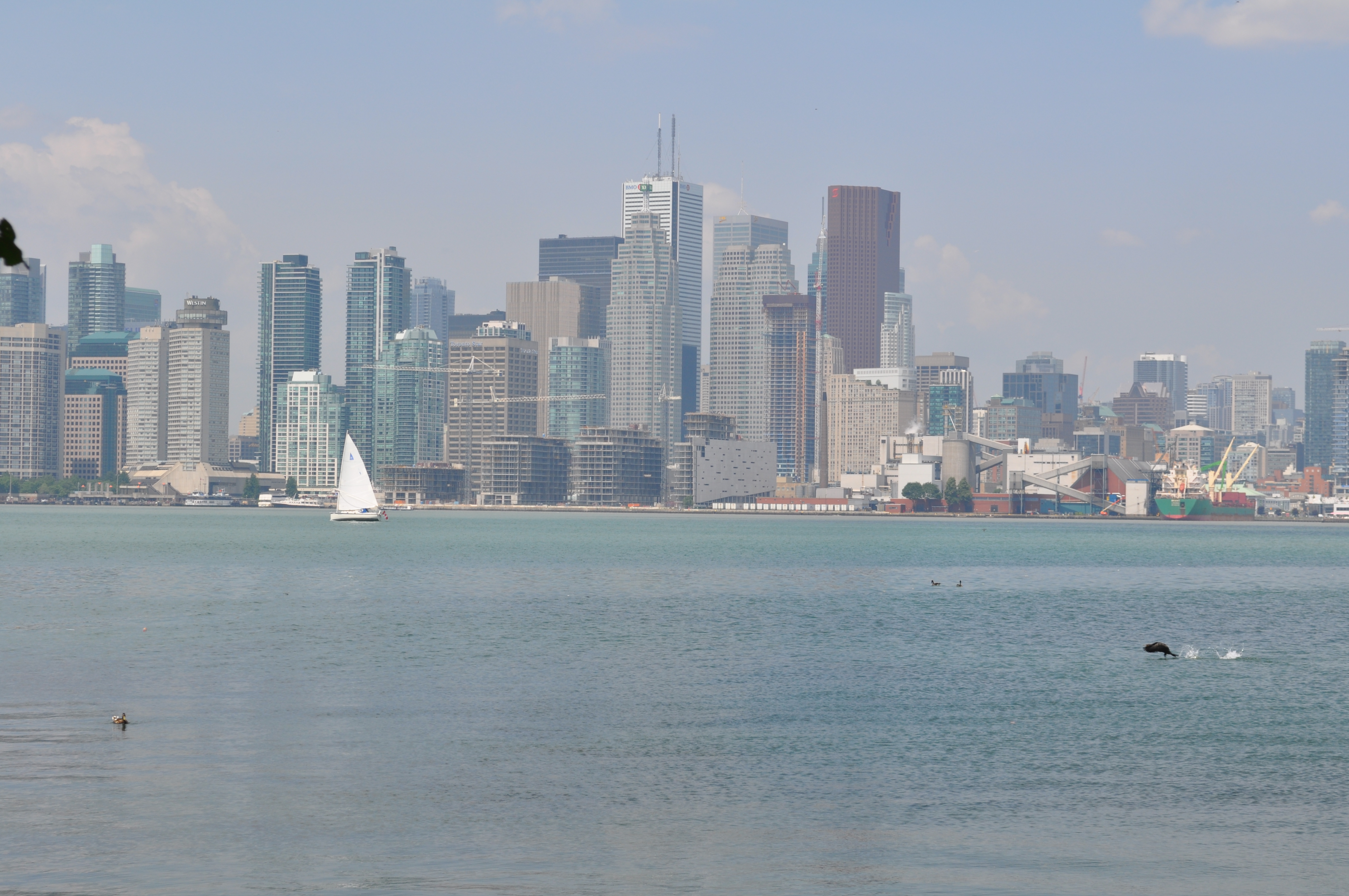
Toronto's mayor is as hazy as late afternoon look from Ward's Island

Toronto’s mayor is as hazy as late afternoon look from Ward’s Island

A mayor of a major metropolitan centre of Canada may skip a meeting of the Federation of Canadian Municipalities (FCM) for any number of reasons. He might, for example, be overwhelmed, juggling the urgent and competing demands of his office: negotiating with city workers, plotting the placement of new parks, fretting over the whereabouts of a certain video.

But Toronto honcho Rob Ford’s refusal to attend the FCM’s recent summit in Vancouver had more to do with principle than practicality. He just doesn’t like the cut of the organization’s jib, which, he thinks, luffs way too far to the left.

“Eighteen (Toronto) councillors flew out on Thursday,” he opined (according to the Globe and Mail) during this past Sunday’s edition of the radio show he co-hosts with his brother Doug, a Toronto councillor. “You know, the same councillors said ‘aw, you know, the city’s falling apart.’ Well where were they Thursday? Where were they Friday? You could shoot a cannon off at city hall.”

Mr. Ford’s implied contention that the FCM is a costly distraction from the real business of running a metropolis is oddly brave, given his own richly diverting circumstances these days. Beyond this, though, it misses the point. Canadian cities are, to varying degrees, facing serious challenges to their viability. And these challenges are, again to varying degrees, common right across the country.

The FCM is correct when it states in its 2013 Report on the State of Canada’s Cities and Communities that “The current division of powers encourages short term, informal and ad-hoc federal policies in the municipal sector, often designed without meaningful consultation with either municipal or provincial/territorial governments. The result is policies that respond to short-term political pressures and opportunities rather than address structural issues.”

The Federation wants Ottawa to “recognize the role of cities and communities in national prosperity, the challenges they face, and the national interest in vibrant, competitive and safe communities.” To do this, it demands a new deal with the feds that will “lead to the collaborative development of policies and programs that focus on those issues that remain unaddressed under outdated policies and jurisdictional obstacles.”

Those issues include: aging, even crumbling, transportation infrastructure; policing and public safety; affordable housing; and environmental protection.

The FCM’s 2012 report card notes that “a significant amount of municipal infrastructure rank between ‘fair’ and ‘very poor’—on average about 30%. The replacement cost of these assets alone totals $171.8 billion, nationally. . .More than half the roads surveyed fall below a rating of ‘good’: 32% are in ‘fair’ condition, and 20.6% are in ‘poor’ to ‘very poor’ condition, for a total of 52.6%”

Meanwhile, “A mixed picture emerges for wastewater infrastructure, with 40.3% of wastewater plants, pumping stations and storage tanks in ‘fair’ to ‘very poor’ condition, and 30.1% of pipes in ‘fair’ to ‘very poor’ condition. The replacement cost for the wastewater infrastructure in ‘fair’ to ‘very poor’ condition is $39 billion. . .With wastewater infrastructure now subject to new and more stringent federal regulations, even good or very good wastewater infrastructure may require upgrading or replacement.”

Those, like Mr. Ford, who insist that none of this should yield a closer and more  productive financial partnership with Ottawa fail to appreciate that, in the hierarchy of indisputable federal responsibilities (forget economic development or science and technology funding) to Canadians, apolitical support for infrastructure ranks near the top. There is nothing Liberal or Conservative about a bridge that’s about to collapse or, for that matter, a downtown events centre in Moncton that may never get built.

Of course, politicians of all stripes make partisan hay reminding people about their proud rural traditions. That’s because the message is clean and simple, unsullied and uncluttered by the diversity of opinions and opportunities that cities cradle.

Still, increasingly, Canadians are a decidedly urban folk. Citizens and resident immigrants, alike, are heading to the cities, not the countryside, to make lives for themselves. It stands to reason that relevant public investment should follow them there.

Tagged , ,

Driven by their distractions

The political process as we know it in Canada

The political process as we know it in Canada

Political commentators are, as a rule, enormously fond of the sound of their own voices, especially when handed the opportunity to contextualize a galloping controversy. I should know. I can’t count the number of times I’ve used the word “distraction” to describe some office holder’s goof-up.

But, I’m beginning to think we who observe-cum-scribble for a living are coming perilously close to spraining our backs for all the bending over we do in our attempt to perceive the bigger pictures in public life.

Yesterday, my esteemed colleague Jeffrey Simpson, the Globe and Mail’s national affairs columnist, deployed the word, “distraction” twice in one paragraph. “For a government already adrift at midterm, the Nigel Wright-Mike Duffy affair, coupled with the resignation from caucus of another Conservative senator, Pamela Wallin, represents an unwelcome distraction,” he wrote. “It’s doubtful that Prime Minister Stephen Harper’s speech to his caucus on Tuesday – in which he declared himself ‘very upset‘ – will quickly end the distraction.”

In this, he may only have parroted Mr. Duffy, himself, who had characterized his contretemps as a “significant distraction” to his Tory caucus colleagues, before resigning to sit as an Independent.

Still, I’m left wondering: From what, exactly, is all this stuff a distraction? A good government? A sound economy? A functioning Senate? A ribbon-cutting ceremony somewhere near Nowhereville, New Brunswick?

Why can’t we see Senategate for what it is? To wit: A damn good news story that cuts to the heart of democracy in Canada, demanding all the remorseless attention to detail for which the Cosa Nostra of our craft is famous.

I might pose the same question to members of Hog Town’s Ford Nation whenever they cluck disapprovingly at the Toronto Star’s coverage of their man, Mayor Rob, whose talent for landing himself in hot water is downright promethean.

How the burgermeister of Canada’s biggest city manages to survive his days and nights at the cutting edge of contention is one of the great mysteries of the modern age. But survive he does, despite headlines that would reduce most in his position to a quivering pool of gelatin.

“Five days after two media outlets published reports on a video that appears to show him smoking crack cocaine, Mayor Rob Ford again offered no explanation on Tuesday,” thestar.com reported this week. “He did not say whether he has smoked crack while in office. He did not say whether he used an anti-gay slur. Despite an expression of concern from the premier and renewed pleas from council allies, he did not say anything at all.”

Meanwhile, American late-night TV was having a ball at hizzoner’s expense. “Both Jimmy Kimmel and The Daily Show’s Jon Stewart discussed the controversy at the tops of their shows,” thestar.com observed. “Jay Leno also mentioned Ford on Monday’s Tonight Show, joking that if the allegations are true, he’d still be qualified to be the mayor of Washington, D.C.”

In her commentary, Star columnist Heather Mallick noted, “There have been 42 low points in Ford’s mayoralty. . .from sexist and racist slurs, to drunken arguments in public, to a chaotic home life, to repeated court hearings on alleged financial wrongdoing, to, oh dozens more, a relentless sordid drip. I’m worried that unless he resigns, he’s going to punch a baby in the face or run himself over. I’m waiting for spontaneous Ford combustion, right there on the sidewalk.”

None of this, it’s safe to say, is a “distraction” from the business of running a major metropolitan area. In fact, in a palpable sense, it is the business of running a major metropolitan area. At least, it is lately.

The comportment of one’s mayor – or Senator – speaks volumes about the condition of one’s public institutions. It also points a fat finger at the electorate who, either directly or indirectly, play a role in selecting those for high public office.

By suggesting otherwise, well. . .the only thing from which we distract ourselves is the truth of our frequently flawed systems of government.

Tagged , , , , ,

The Red-faced Chamber needs reform

They’ve been falling like pins on a bowling lane – not one after another, but all at once, concussed by the sheer force of the public opprobrium against them. First Messrs. Brazeau and Harb, then Mr. Duffy and, finally, Ms. Wallin. May is the month of their reckoning and, at some basic level, of the Canadian Senate itself.

Expense claims make superb political scandals. Who doesn’t believe that public officials are always just one chit away from defrauding the noble, long-suffering taxpayer? Who doesn’t suspect that for every misdeed uncovered in the nation’s chambers of power, dozens more go undetected?

The burden of reality, though, is complexity. Nothing in Ottawa is ever as it seems, and while the tangled webs Senators Patrick Brazeau, Mac Harb, Mike Duffy and Pamela Wallin have spun for themselves seem identical, they are not.

Last week, Mr. Brazeau told CBC Radio’s “The House” that he received prior, written approval from the Senate to rack up nearly $50,000 in living costs, a sum which that august body demands he return. His colleague, Mr. Harb, is on the hook for $100,000, a claim he has hired a lawyer to defend.

Meanwhile, Ms. Wallin has quit the Conservative caucus and has no intention of returning until an external reviewer finishes examining $320,000 in travel expenses she has incurred since 2010. In a statement, she said, “Given that (the audit process) continues, I have decided to recuse myself. . .and I will have no further comment” until, presumably, she is either cleared or found culpably responsible for the tab.

And then there is Mr. Duffy – poor, dear Mr. Duffy. He is paying a heavy premium in the court of public opinion for the $90,000 gift he received from the prime minister’s (now former) chief of staff to cover his expense debt to the Senate. The move has both baffled and outraged Canadians, who complain, with some justification, that a member of the Upper Chamber ought to pay his own bills, just like anybody else.

In fact, it’s the variety of these alleged lapses in judgement (as much as their concurrence) that speak most convincingly to the real problem an increasing number of Canadians perceive about the Senate: its institutional ossification.

Here is a body so unfamiliar with the concepts of accountability and transparency that it has no way to influence the comportment of its members without erecting what amounts to a police dragnet.

This observation lets no individual off the hook; nor should it. Mr. Duffy’s behavior  (or what we know of it) seems particularly egregious. Amid the thunder and lightening of popular outrage, no one has yet seen fit to point out that ethical wounds cannot always be healed by legal triage. Notwithstanding the generosity of a friend lately in a high place, the $90,000 Mr. Duffy improperly billed the Senate is still his burden to bear until he, alone, assumes responsibility for the debt. Otherwise, he skates free to spend his unencumbered net worth on whatever he likes. In whose conception of plain dealing is this even remotely fair?

Still, the larger issue is the Senate, itself – a 19th century institution purportedly doing 21st century work. Its members serve at the pleasure of those who appointed them, not always in the interests of the electorate or even the regions they are, by convention, supposed to represent. Its rules of residency are baroque. Its internal review procedures are inconsistent and oftentimes incomprehensible.

It is possible to remove a senator, but as a CTV report noted in February, it isn’t easy. Quoting from the Constitution Act, the news source identified five reasons for turfing a member, including: “If he is adjudged Bankrupt or Insolvent, or applies for the Benefit of any Law relating to Insolvent Debtors, or becomes a public Defaulter.”

Bankruptcy? Really?

All of which only guarantees that the inarguably good work the Senate performs (despite itself) remains shackled both to its fossilized past and current scandals.

There can be only one, sensible reckoning for Canada’s Upper Chamber: reform.

Tagged , , , ,