Category Archives: Humour

Dancing in the light

DSC_0074

A word to the wise: A daily, six-kilometer fast walk and a nightly, 45-minute endurance routine on a floor mat does not prepare a 55-year-old body for a sudden dismount from a handstand – especially if said body lands on its tippy toes, like Baryshnikov on a really, really bad morning.

“CRUNCH!” was the sound heard round the living room of the Bruce family homestead in Port Shoreham, Nova Scotia, on Labour Day.

To be clear, this was not morning and I cannot confirm or deny the presence of certain liquid substances at the ready to lubricate the traditional, family dance party that, thanks to a wide variety of eclectic music on hand, tends to drown out the yipping and yapping of the ever-increasing population of coyotes in that dark, starry Guysborough county of the Maritimes.

What I can confirm is the solicitude of my wife, sister, brother-in-law, niece, nephew, and a close friend from England. We had been dancing for hours, affecting every style – from punk, to doo-wop, to head-banger, to ballroom, to the hokey-pokey – before I managed in one fell swoop (literally) to crack my foot.

“I think it looks dislocated,” my wife helpfully advised, having surveyed the 90-degree angle the big toe on my right foot had assumed.

“Maybe, you could pop it back in,” my nephew offered.

“I don’t think it’s broken,” my niece observed. “Can you move it?”

I looked at all of them as if they were terrorists intent on hobbling me forever. (After all, my dance moves put them all to shame. . .ahem).

“Look away,” I instructed. “I will handle this.”
And so I did. I grabbed the offending appendage and hauled it over to the neutral position. “CRUNCH!”, again, was the sound heard round the living room. And the dancing continued, as it most certainly should have (sans moi, bien sur).

In fact, there is no better way to appreciate the Maritime spirit than from a reclined position. The odd mood of contemplation that injury and humiliation engender is a priceless asset in the ancient effort to get back onto one’s feet.

Sitting there on the couch, watching them all dance like fools, I remembered why my wife and I and our grown children, with children of their own, fully appreciate this part of the world.

This is where the main chance hits the yellow brick road. This is where fantasy meets reality and you slide down the rabbit hole with both. This is when, the moment you think you’ve got everything nailed down in Bristol fashion, you break your foot.

It’s happened before in this region; it will happen again.

The trick is to ice that part of our Maritime souls, to exercise it, to nurture it, to believe in its recovery – in its sturdy capacity to surge ahead even, especially, when it’s injured.

In a nerdy sort of way, I recalled a passage from the 2014 Ivany Report in Nova Scotia: “While the continuing retreat of the federal government from a regional development role and fiscal weakness at the provincial level are serious constraints, the single most significant impediment to change and renewal is the lack of a shared vision and commitment to economic growth and renewal across our province.”

Yup, say it brother.

“How’s the foot?” my niece inquired. “Can you move it yet?”

I smiled and said, “Shall we dance?”

And so we did, in the light of a strong moon, a starry sky and the company of family. She pranced like a gazelle; I limped like a troll.

But, at least, we danced.

Tagged , , ,

Lost in the barrens of Moncton

photo 3

Anyone who hasn’t endured shock therapy to erase the memory of last winter along the East Coast will surely greet the latest forecasts of the coming fall with a mixture of fear and loathing.

Yes, dear reader, we are heading for another prelude to snowmaggedon: A Maritime autumn of brilliant colours, sparkling skies, pumpkin pies, and then a picture of me standing on a glacier that was once my driveway in downtown Moncton, shovel in hand, maniacal grin fixed to face, wild eyes cast heavenward, and a guttural invocation issuing from trembling lips.

“Really? I mean, really?”

Last February, my wife and I spent a balmy 11 days in nearby Charlottetown looking after our kids’ kids (ours had skipped off to Costa Rica for a well-deserved sojourn involving horseback riding and beach combing). What began as a routine “mission impossible” for us, the grand parents, quickly devolved into a mission from hell.

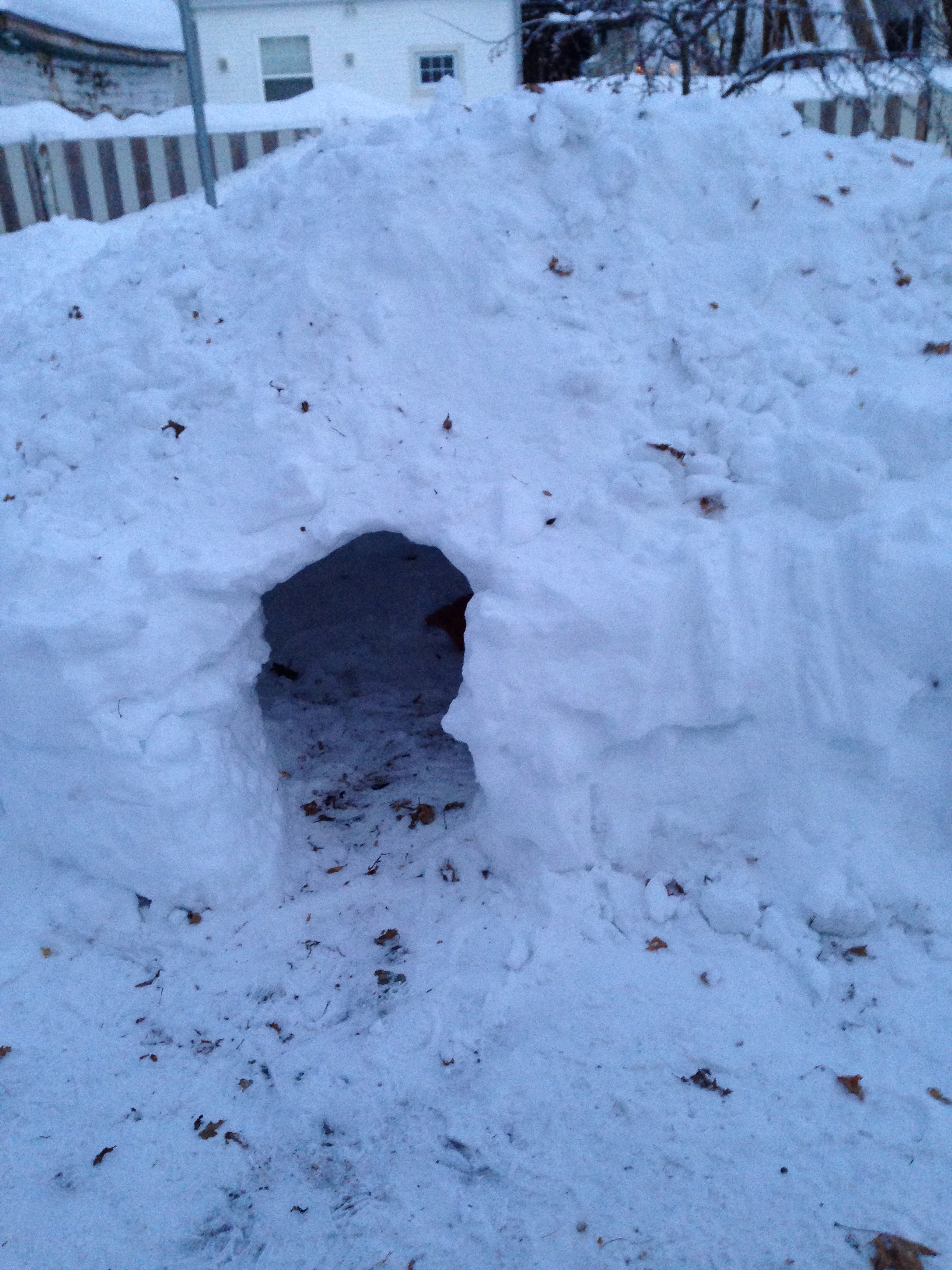
The snow began on a late Sunday and didn’t stop until mid-Tuesday. When it was over, 90 centimeters of the white stuff had fallen within 36 hours. Roads were impassable. Shovels were pilfered. The city was at a standstill. Only stores of milk and games of monopoly kept us going.

Finally, it was time to travel back to Moncton, there to see what obscenity the weather had wreaked on the home front. As we careened up our street, which had been reduced to less than one lane of traffic, we agreed it could have been worse. After all, our city had received a mere 66 centimeters in that particular tempest. We would take the win – until, of course, we attempted to hike the heat.

Here’s the thing about natural gas furnaces: They like snow and ice about as much as my wife and I do. The only difference between them and us is that they shut down, while I am inclined, in prone position, to dig out the various inflow and outflow valves so as to guarantee not freezing to death in my own house – in, by the way, yet another blizzard.

And so it continued for weeks; and, if the predictions are correct, it will continue apace this winter. That’s climate change for you, or, perhaps, just the luck of the meteorological draw.

Accuweather has done its studly job of scaring the stomachs of weak-kneed New Brunswickers of late. Its forecast for the region, issued last week, posits: “A majority of the Arctic fronts will be directed into northern Quebec, Labrador and the Maritimes this fall, resulting in some early periods of chilly weather. This pattern will also help reduce the threat of a landfalling tropical storm or hurricane into Nova Scotia. Newfoundland will continue to see cooler and wetter conditions into the fall with several storms intensifying just offshore.”

Meanwhile, says the weather service, the El Nino phenomenon in the equatorial Pacific, “continues to intensify. . .and we expect this current episode to be one of the strongest. . .on record by the upcoming winter. . . .Strong El Nino’s typically produce unusually mild winters across western Canada. Farther east, the impacts are less certain, but tend to favor reduced snowfall around the Great Lakes region. Current indications are that this upcoming winter will not be nearly as cold as last winter across eastern Canada.”

As for Atlantic Canada. . .well, we’re not so lucky as to be so certain. Still, maybe our permanently hard winters represent an economic opportunity: winter tourism, anyone?

After all, if snowflakes were dollars, all New Brunswickers would be millionaires by now.

Tagged , ,

A good end to a sad era

DSC_0052

He was, inarguably, the finest fake journalist the United States ever produced. That he was, by training and inclination, a comedian only sweetens the irony – almost as much as do the dozens of accolades dedicated to him and written, eulogy-like, in the past tense.

But Jon Stewart, host and producer of The Daily Show (until last week, that is) has not passed beyond the veil. He’s just moved on. As for his reasons for leaving the satirical TV program that has all but saved critical thinking in the mainstream media and, by extension, society at large, he said in April, “Honestly, it was a combination of the limitations of my brain and a format that is geared towards following an increasingly redundant process, which is our political process. . .Watching these channels all day is incredibly depressing.”

I’ve been a political junkie for years – long before the 50-something Mr. Stewart came down the pike. Still, this former MTV host made the ritual skewering of elected officials, bureaucrats and, frequently, members of my own profession utterly exhilarating to behold.

His 2004 exchange with the hosts of the CNN political program, Crossfire, may have been the apogee of his particular craft.

“I would love to see a debate show,” he told the hosts Paul Begala and Tucker Carlson. “You’re doing theatre when you should be doing debate, which would be great. It’s not honest. What you do is not honest. What you are doing is partisan hackery. . .Stop hurting America.”

As the Globe and Mail correctly pointed out in its farewell to the man last week, “In his Crossfire rant, Mr. Stewart wasn’t trying to end a debate show; he was trying to provoke it into engaging in real debates – actual contests of ideas, an actual search for truth – rather than staged fights where professional self-promoters wearing colours of left and right, Republican and Democrat, put on the rhetorical equivalent of a professional wrestling match in the service of entertainment, not enlightenment.”

Of course, The Daily Show with Jon Stewart managed to be both. Recognizing this, even some its frequent targets managed managed good-natured goodbyes during the taping of the host’s final show last week.

“I’ll never forget you Jon, but I will be trying,” said New Jersey Governor Chris Christie. Added presidential hopeful Hillary Clinton: “And just when I’m running for president, what a bummer.”

As for Canada, Mr. Stewart seemed to have a soft spot. In anticipation of his sign-off, the CBC recently pulled together a compendium of “7 memorable Canadian moments” from the show, the top one being coverage of former Toronto mayor Rob Ford

Reports the CBC: “Amid the first reports he’d (Mr. Ford) been caught on video smoking crack. . . .Stewart told his audience. . .’Hey, hey, don’t judge him. . .Maybe he’s cleaning up the city – by smoking all the crack in it.’ The May 21 episode featured Canadian-born correspondents Jason Jones and Samantha Bee. Bee downplayed the scandal, insisting that smoking crack is ‘one of Canada’s most cherished pastimes’ and that Canadians frequently trade sexual favours for the drug. Stewart revisited Ford’s troubles later that year as the scandal widened to include allegations of drunk driving, snorting cocaine and consorting with a suspected prostitute. ‘This. . .guy is a one-man episode of Cops,’ Stewart said, before setting up a clip in which Ford refuted an allegation that he’d sought oral sex with a female staff member with the comment that he was a ‘married man’.

Ah, yes, good times. Jonny, Canada salutes you.

Tagged , ,

In Fat City, the name is the game

IMG-20120908-00198

Welcome, dear webinar participant, to the 14th annual, interactive session on politics in the early 21st Century.

Now that we are about to enter 2056 – also known as the Glorious Acquisition of Wisdom in Democracy (GAWD) year – we must be vigilant in remembering how our society was radically changed for the better when our fearless, nonagenarian leader, Sun King Stephen Harper, chose to dispense with formality and address his political opponents by their first names or, indeed, by any names that came to his exquisite mind.

Let us, then, cast our thoughts back to the summer of 2015 and the first leaders’ debate in that year’s general election campaign. To be sure, we go not far enough to declare that the event changed the entire world.

Here, then, is a partial transcript of that momentous, felicitous event:

Mr. Stephen Harper, recent Prime Minister and current Conservative Party of Canada Leader: “Thank you, (moderator). Let me say what a great pleasure it is for me to address the citizens of this great nation and to lock horns with my eminent colleagues, Gumby and Pokey, standing over there in the corner trying to figure out how to turn on their mics.”

Mr. Justin Trudeau, Leader of the Liberal Party of Canada: “Excuuuuse me! I object strenuously to Mr. Harper’s tone and characterization.”

Mr. Thomas Mulcair, Official Opposition Leader (New Democratic Party of Canada): “As do I. In fact, this may be the one thing young Justine and I actually agree on.”

Mr. Trudeau: “That’s JUSTIN to you, Tiny Tommy!”

Mr. Mulcair: “My deepest apologies, Pierre-Light!”

Mr. Harper: “Gentlemen, gentlemen. . .please let’s just all calm down. Or, maybe Gumby can jump on Pokey’s back and, together, they can ride away into the red and orange sunset that frames their electoral fortunes. Hmmmm? Whaddya think?”

Mr. Trudeau: “Well. . .only if I get to be Gumby.”

Mr. Mulcair: “Not on your life, Pokemon! I’ll do the riding around here. . .Anyway, maybe we should ask our esteemed colleague, Steve, how he intends to fix the Canadian economy now that he’s broken it.”

Mr. Trudeau: “That’s a fair question from my esteemed colleague, Dimbulb. What say you, Steverino?”

Mr. Harper: “Well, now, let me address this issue by asking Messrs. Turduckin and Mohair how they will handle falling confidence in the wit and wisdom of their respective leaderships amongst their own ranks – otherwise known as the pinko, Birkenstock-cobbled, hipster, media elite.”

Mr. Mulcair: “Allow me to field that one. . .For one thing, Mr. Prima Donna Stavros Harpy, I am just as stiff and uninspiring as you in front of a camera. I am just as unenlightening and disengaged as you in a press scrum. In other words, I possess all the qualifications that prime-ministership in this country requires. And one more thing that is crucially important. . .I can grow a beard.”

Mr. Trudeau: “That’s right, Beardy McBeardyson can grow facial hair. . .But is that any reason to elect him to the highest office in the land? My fellow Canadians, I shave semi-regularly, which ought to be some indication of my abiding commitment to personal hygiene.”

Mr. Harper: “Mr. Moderator, I see from the clock that our time is rapidly running down. The only real question Canadians must address in this election is which name they prefer for their fearless leader: Gumby, Pokey or. . .Sun King. Let history be the judge.”

All of which proves, dedicated students, what history always reveals: Greatness is never properly appreciated in its own time.

Tagged , , , , , , ,

Long-distance running

 Resurgo is action in latin. And that's a dead language. Get 'er done boys and girls

Resurgo is action in latin. And that’s a dead language. Get ‘er done boys and girls

And they’re off, not exactly sprinting (more like strolling or, perhaps, gambolling) to the finish line.

Now, the chore of explaining the strategic imperative of subjecting the Canadian populace to the longest federal election since John A. Macdonald toasted his victory in 1872 falls to the chattering class.

Where might we begin?

Clearly, Prime Minister Harper and his fledgling squawkers in the PMO are determined to distract the public from the inconvenient, albeit pedestrian, truth about an economy that has turned sideways and shows every sign of heading south.

According to Statistics Canada last week, national GDP shrank by 0.2 per cent in May (annualized). That followed four months of straight drops, including a first-quarter dip of 0.6 per cent. Said Bank of Montreal economist Doug Porter: “There is no sugar-coating this one. It’s a sour result.”

Under the circumstances, then, what’s better than a general election to get one’s mind off dwindling manufacturing, a plummeting Canadian dollar, and persistent joblessness?

It’s not as if Liberal Leader Justin Trudeau has been getting any traction criticizing the reigning Tories for their demonstrable exaggerations about the health of the economy or, in fact, their ministrations on its behalf. A long election campaign isn’t likely to pose any great danger of the Grits suddenly catching fire as they struggle to reorganize their talking points.

Meanwhile, as the Globe and Mail reported yesterday, NDP Leader Thomas Mulcair – who appears to have usurped Mr. Trudeau in the affections of voters – is too busy honing his rhetorical skills to comment substantively about the perils of government posturing.

“Mulcair has been waging mock debates, squaring off against fake opponents to prepare for the federal election campaign’s first leaders’ debate, which will test his ability to connect,” the Globe revealed. “He has taken the matter seriously, interrupting rehearsals for a single partisan rally in Montreal, and spending the rest of the election campaign, so far, outside the public’s view.”

Of course, calling an October election on the first of August also gives the Conservative machine sufficient time to explain away the otherwise disappointing economic numbers – to, as the publicists say, get ahead of the issue – even as they fill the summer airwaves with all manner of attack ads against their opponents. Lord knows, they have the money burn without wincing.

In any case, the long and winding road to democratic denouement has, itself, become the one election issue that all Canadians can get behind. To wit: It’s too long and winding.

“In his decade of power, Stephen Harper has rarely made himself or our ministers available to Canadians or the Canadian press,” Globe reader Robin Hannah wrote in a letter published earlier this week. “Yet he and they are suddenly everywhere. Now I face 11 weeks of scrambling for my mute button.”

Another reader of the newspaper, one Rod Yellon, noted, “Aside from who wins and whether victory is affected by the length of the campaign, perhaps the most interesting question will be the potential effect on voter turnout. . .Will the endless speechifying, photo ops and political ads encourage voters to tune out?”

Regardless, at least one Pulitzer-Prize-winning journalist in the United States – where the election cycle can be as long as a year – thinks we’re all nuts up here. In a witty commentary for the Globe yesterday, David Shribman quoted former New Hampshire attorney-general Thomas Rath thusly: “The Canadians’ 11-week election is the same duration as a full season of The Apprentice.”

That’s a good point. Plus, we don’t have to worry about Donald Trump running for prime minister any time soon.

Tagged

Return of the grifters

DSC_0034

I now pine for the good, old days of the Internet when a transparently idiotic con artist would invent his persona in the form of a disenfranchised Nigerian prince, looking for a place to park his money in a safe country.

Just give him your bank account number and, hey presto; you, too, could be a winner. “We would be willing to pay upwards of 100 million Euros just to protect the balance of our estate from rebels and authorities,” I remember one entreaty promising some years ago. “Won’t you help us?”

Well, no, actually, whoever you are, located at Dupont and Dufferin Streets in Toronto’s Upper Annex. (Yeah, that’s right; scammers aren’t the only ones in possession of common location technology. Ping that, bro!).

But in the past few weeks, Internet and phone grifters seem to have gotten my various numbers and their deluge has been like a hurricane. It’s not that they’ve grown frontal lobes (they’re still incredibly stupid); it’s that they’re more persistent than ever before and. . .well, downright rude.

To wit: I’ve received three automated phone messages in the past week threatening me with “a lawsuits” if I don’t contact “the CRAs” and settle my substantial, “outstanding billings” to the “Governments of Canadas”. The only thing is: I don’t owe a dime to the “Governments of Canadas”.

Hey man, don’t you know you can attract more flies with honey than with vinegar? I mean, seriously dude, reconcile your tenses. You do know to whom your talking. . .right?

Then, there’s this priceless bit of tripe, which appeared in my inbox just the other day: “Hello & Good day. . .I hope my email meets you well and expect it to come to you as a surprise as you do not know me personally. I am a private investor in Tokyo, Japan with a strong investment desire in search of viable business opportunities for a massive investment project which will also (sic) of immense benefit to you financially and otherwise.”

I can only swoon at the thought of “otherwise”. Free trips to the Sushi garden at the Tokyo airport, perchance?

My recent favourite, however, is from an address that I won’t bother to list. From these sun-starved folks located in a basement apartment (no doubt) in rural Idaho, I may find “peyment advice” in a “Secured PDF file assesible by only” little, old me.

Naturally, I’ll be following up right away.

According to a Washington Times report last month, “A 68-year-old Vermont widow who nearly gave $60,000 to a scammer is warning other potential victims to ditch them. Louise Brown turned to the Internet to find someone to talk to after the death of her husband. When the man she had been bonding with began begging her for money, she gave him $60,000 before her bank flagged her account and warned her of the con. AARP (American Association of Retired People) officials say Vermont has seen an explosion in the number of Internet scams. Greg Marchildon, the director of AARP in the state, says criminals build trust with their victims and try to get them into a heightened state of feeling. The Vermont attorney general’s office is pushing for legislation requiring online dating websites to notify users when they’ve communicated with known scammers.”

Methinks we in this dispirited, economically challenged neck of the woods might turn the tables.

Come one, come all to the Great New Brunswick real estate sell-off. Every house goes for $500,000 – a bargain at twice the price.

Sure, and we’ll mail you the keys once the cheque clears.

Who you gonna call?

IMAG0530

It was only when I noticed the albino mushrooms growing from the black seam in the ceiling above the kitchen pantry that I began to momentarily panic.

I climbed the stepladder, butter knife in hand, determined to cut them down without becoming a hapless victim in some real-life iteration of “Invasion of the Body Snatchers”. They slipped into my trembling paw like dollops of rancid margarine, their spores coating my knuckles.

Two-year-old granddaughter Ruby, her gaze fixed firmly on the objects of my revulsion, promptly announced through the Popsicle planted in her mouth: “Poppy, yucky; fix it!”

I would if I could, dearest, but the Internet – try as it might – does not provide an instructional video for feckless scribblers on advanced plumbing. As for the leak in the bathroom almost directly over your head. . .well, let’s just move your chair to another location, preferably across the street.

Naturally, I elocuted all of this in my “inside voice”. Outwardly, I made a frantic round of calls to old contractors and tradesmen of my acquaintance who had, over the years and on more than one occasion, saved my sorry derriere in this “vintage” property I assumed more than a decade ago.

“Is Jim home? No? He’s gone to Alberta? You don’t say. Okay, thanks. . .No. . .No message.”

“So, Frank is retired? And he closed up shop? No forwarding address. . .Right, thanks very much anyway.”

“Waddya mean Ed disappeared without a trace? You think what, again? You think aliens abducted him, and they’re now using him to build party decks on Alpha Centauri?”

As it happens, I’m not alone in my all-but-vain search for quality trades. Where once, in New Brunswick, they were as plentiful as the rain in spring, they’re now like dust in the wind. And not just here.

Two years ago, Forbes Magazine writer Joshua Wright penned this: “For the last three years, according to ManpowerGroup the hardest segment of the workforce for employers to staff with skilled talent hasn’t been registered nurses or engineers or even web developers. It’s been the skilled trades – the welders, electricians, machinists, etc. that are so prevalent in manufacturing and construction.

“In 2012, 53 per cent of skilled-trade workers in the U.S. were 45 years and older, and 18.6 per cent were between the ages of 55 and 64. (We are using the Virginia Manufacturers Association’s definition of skilled trades, which encompasses 21 particular occupations.) Contrast those numbers with the overall labor force, where 44 per cent of workers were at least 45 years old, and 15.5 percent of jobs were held by the 55-to-64 demographic.”

Conditions for tradesmen and women in Canada aren’t much better. Three years ago, Rick Spence, writing for the Financial Post, observed: “Despite rising unemployment in 2009, a Statistics Canada study that year found 24 per cent of Canadian companies weren’t able to find ‘the right talent’ to fill the jobs available.”

Fortunately, my granddaughter and I are luckier than most. Through a reputable, locally owned building supply company we found a fellow by the name of Josh – a sturdy, durable man with a penetrating wit and exhaustive knowledge of the “right” and “wrong” ways to rebuild a bathroom and, one imagines, just about everything else.

He, in turn, employs a carpenter by the name of Adam – whom I would trust to erect a cathedral composed entirely of locally sourced hemlock – and a plumber by the name of Elliot – whose knowledge of metallurgy and water density is almost mystical.

I’m no longer panicking – at least, not at at the moment.

One columnist’s excellent adventure

cropped-img-20120922-000031.jpg

I always knew I left the employ of the Globe and Mail too soon. Now, I have real evidence that my failure to become a national columnist of weight, gravitas and fulsome wordiness has robbed me of the opportunity to obtain contact highs in the rocky mountains of Colorado.

There, we find the Globe’s Margaret Wente, provocateur-cum-commentator extraordinaire, hanging with some producers of perfectly legal pot, (“In the Weeds”, May 16, 2015).

God, what an assignment!

Give a Russian sailor a bottle of vodka, a credit card and tell him that downtown Halifax in the springtime is his for the plundering, and. . .well, that’s just about the only circumstance that beats what dear, old MW recently encountered in Denver, which is, by the way, “magical at dawn.”

I’ll bet it is, but do go own Ms. Wente: “Along the western horizon, the snow-capped mountains are bathed in pink from the glow of the rising sun. The sky is turning purest blue. The air is crisp and clear, and you can see forever. What a great place to get stoned.”

She goes on (and on, and on, and on. . .hey, is that my hand in front of my face, or just another snow-capped mountain?): “In Colorado, recreational marijuana was legalized on Jan. 1, 2014. Denver now has more pot stores than it has Starbucks. Anyone over the age of 21 can walk into a store and choose from hundreds of varieties of flowers, nibbles, marijuana-infused drinks, oils, ointments and pain patches, as well as a growing array of wax and other supercharged hard-core products. There’s even a sex lube for women, which promises to deliver the most mind-blowing experience of your life.”

Okay. . .too much information even for the stoners in our midst. Still, I get her point. She’s having fun “researching” this business. More power to her.

Except, of course, until recently, Ms. Wente belonged to a strident cohort of Canadian commentators who adamantly refused to accept the logic propounded by sociologists, psychologists, several important lawmakers (both former and current) and almost every cop who ever ran a beat.

For years, they have insisted that decriminalizing marijuana, regulating it as a controlled substance, would save millions of dollars in tax-funded law-enforcement costs and just about as many kids from underserved, breathtakingly damaging incarceration courtesy of the state.

Here’s what The Times of Israel said just the other day: “Signalling a possible shift in attitude towards the recreational use of marijuana, police chief Yohanan Danino called for the government to reassess its current policies in light of growing calls from lawmakers and the public against prohibition of the drug.”

Reported the Times: “Speaking to high school students in Beit Shemesh, Danino told them they will be ‘surprised to hear’ current police policy on cannabis. ‘More and more citizens are demanding marijuana use be permitted,’ he said. ‘I think it’s time for the police, along with the state, to reevaluate its traditional position.’”

So do I. And so, now, does Ms. Wente. Sort of.

“I inhale. . .gingerly,” she writes. “After two or three draws, my cough subsides and I feel relaxed and happy. My entire body seems lighter. The effect is like three or four glasses of chardonnay, but without the heavy, woozy feel. It’s nothing like the stoned sensation I remember, when all I wanted to do was curl up into a fetal position and eat jelly doughnuts.”

Then, she heads home to Toronto, presumably to the waiting arms of her husband who, without a bag of pot at the ready, kisses her on the cheek.

Now, that’s a contact high.

Tagged , , , , , ,

The Great Nice North

 Resurgo is action in latin. And that's a dead language. Get 'er done boys and girls

American writer Eric Weiner thinks it’s nice to be nice to the nice. And by “nice” he means Canadians. Writing for BBC Travel recently, he reported that our “niceness” hits him like a blast of polar-bear breath (the branded Coke variety; not the real thing that’ll rip your lungs out, Jim) just as soon as he approaches the 49th Parallel.

“We experience Canadian nice as soon as we reach customs,” he notes. “The U.S. border guards are gruff and all business. The Canadians, by contrast, are unfailingly polite, even as they grill us about the number of wine bottles we’re bringing into the country. One year, we had failed to notice that our 9-year-old daughter’s passport had expired. They, nicely, let us enter anyway. The niceness continues for our entire trip, as we encounter nice waiters, nice hotel clerks, nice strangers.”

What’s more, he observes, “Canadian niceness is pure, and untainted by the passive-aggressive undertones found in American niceness. It’s also abundant. Canada is to niceness as Saudi Arabia is to oil. Researchers have yet to analyse Canadian niceness empirically, but studies have found that Canadians, perhaps in an effort not to offend, use an overabundance of ‘hedge words’, such as ‘could be’ and ‘not bad’. Then there is the most coveted of Canadian words: ‘sorry’. Canadians will apologize for anything and to anything.”

Actually, Mr. Weiner, Canada is to oil as Saudi Arabia is to. . .well, oil. Except we’re colder, our streets are lined with glaciers and, occasionally, mud. And in the long, dark, winter night that is Fort McMurray, Alberta, I dare you to find one transplanted Maritimer riding the derricks of the tar sands who will say “sorry” for anything.

It’s all about frame of reference, Mr. Weiner, frame of reference.

For example, long ago an American tourist drove me off the road somewhere between Belleville and Cornwall, Ontario. He was in a hurry and, so in no time, I was in the ditch about 100 kilometers from where I once played pee-wee hockey and had once hurt the feelings of a juvenile competitor (from Buffalo, no less) by deriding his ill-fitting jersey.

The traveller stopped his car, railed at me for holding him up and kicked my tires. In return, I thumbed my nose at him, called him a “gosh darn yankee”, and phoned the cops for moral support and a tow. They obliged; no questions asked. (We Canadians are “nice” that way).

Once in Fargo, North Dakota, I met an official from the local tourism authority who refused to tell me the location of the mighty Mississippi River. I informed him that if he persisted with his typical American rudeness, I’d be forced to lodge a formal complaint with his supervisor. He laughed and queried, “What are you? Some sort of Canadian?” When I smiled and murmered, “sorry, eh?” he turned ghost-white and hired a limo to take me all the way to Brainerd, Minnesota, where the Old Miss begins as a mere trickle. I returned the favor by resisting the temptation to mock his midwestern accent. (Again, we Canadians are “nice” that way).

Still, Mr. Weiner does have a point. As he quotes my old acquaintance, Michael Valpy – a journalist, formerly with the Globe and Mail – our national politeness is a “defence mechanism” that “stems from inferiority and an awkward awareness that our clothes don’t fit properly and we always have bad haircuts and really don’t do anything great.”

Yeah, Mike, that’s “nice”, real “nice”. But let’s just keep that between ourselves from now on. I know where you live, pal.

Tagged ,

A modest proposal for New Brunswick

We could sell the snow. There's plenty of that

We could sell the snow. There’s plenty of that

In the annals of economic perdition along Canada’s benighted East Coast, Cape Breton is often cited as the exemplar of Murphy’s Law, where everything that can go wrong always does.

An Alberta colleague of mine in the Toronto newsroom of the Globe and Mail in the mid-1980s once japed that about the only government-funded development scheme that region of Nova Scotia hadn’t tried was building a monorail around the picturesque Bras d’Or Lake for rich European, American and Asian tourists.

“Because,” he shouted giddily, pointing an index finger to the sky, “there’s an idea that might actually work.”

Canada is vast enough and diverse enough that its various laughing stocks are never in short supply (much, of course, to our national discredit).

So, it seems odd that outside of a few bureaucratic enclaves at Industry Canada, New Brunswick has yet to receive the brunt of scorn and ridicule its sister parts of the Maritimes – such as Cape Breton – have endured for generations.

After all, as the lovely butt of other people’s jokes, it’s a perfect candidate. Even our very own native son, Donald Savoie, isn’t above cracking wise every now and then. . .sort of.

The Moncton-based economic development authority and university professor was in fine form last week as he chatted with the Saint John Telegraph-Journal’s John Chilibeck. Referring to the ticking time bomb that is the province’s aging population, Mr. Savoie invoked several figures of speech, including “waiting to explode” and “bite us very hard”, either or both which could involve “slow, painful economic death spiral.”

Whichever case may, ultimately, transpire, the economist’s main message is clear: We’re in for a whole lot of fear and loathing unless we get off our collective derrieres and grab the bull by the horns and go for the brass ring in our effort to prove that, if nothing else, academics aren’t the only members of provincial society who can mix a wicked metaphor.

His larger point, though, is that “we’ve being saying ‘no’ to a lot of economic development over several years. We can’t (here comes the jokey part) turn all of New Brunswick into a national park.”

Of course, we can’t. Apart from any other consideration, national parks cost big bucks and – in case some of us haven’t been paying attention – we don’t have even little ones. Oh, we have the trees, alright, but not the variety on which money grows.

Perhaps, then, we should go with our strengths – or, rather, turn our weaknesses into competitive advantages the way we turn lemons into lemonade.

Take one-part aging population, add one-part pristine environment, shake, then pour. Hey presto: we’ve got ourselves an instant, province-wide retirement community. Forget about merely visiting the old folks’ home. New Brunswick is the old folks’ home

If we’re shrewd, we can sell this brand all over the world to, you guessed it, rich Europeans, Americans and Asians.

See what we did there? In one dramatic swoop, we’ve boosted badly needed immigration. And – thanks to the money pouring into provincial coffers from fat, international retirement trusts and savings plans to pay for new sanitoriums, nursing homes and assisted-living facilities, and then some – we’ve solved the fiscal crisis.

But let’s not stop there. If we start building a few monorails to replace the roads nobody will soon be driving through the countryside nobody will soon be fracking we’ll manage to keep our productivity up until, of course, we all just drop dead from natural causes.

As my Alberta chum might say, “There’s an idea that might actually work.”

Indeed, what could go wrong?

Tagged , , ,