Category Archives: Economy

How a fiscal leopard changes spots

IMG_0261

New Brunswick’s former Finance Minister Blaine Higgs, God love him, has always been a straight shooter. Except when he hasn’t.

Whilst in Tory office for all of four years, he inveighed against the provincial government’s tendency towards profligacy, calling for deep and painful cuts in the public service.

He suggested that everything “must be on the table”, and that included a serious review of his government’s tax policies – even going as far as intimating, off the script, that a prudent hike in the HST might save New Brunswick years of unnecessary fiscal pain at the hands of international bond holders who held – and continue to hold the province’s $12-billlion long-term debt in abeyance.

He talked darkly about streamlining the educational system; about cutting services to rural citizens; about rationalizing the way we pay for basic infrastructure, like roads, highways, sewer systems and pubic meeting spaces.

Apart from a few trims to the fiscal petticoat that hides a multitude of sins in this province, he largely failed and largely through no fault of his commitment or character. The political winds within his own party of silos and principalities were simply not in his favour. (Have they ever been for any sitting provincial finance minister in any province of this country)?

Still, now that the man is drifting freely in the soft winds of a durable New Brunswick spring – far from from the tethers of Cabinet discipline that once constrained him – one must wonder at the temerity of his latest proposal, a proposal that he must know has no chance of finding purchase in Canada’s only bilingual province.

Conflate New Brunswick’s two health authorities, he says, into one fully bilingual one. Why? “Because,” he told the Saint John Telegraph-Journal last week, “we don’t have a choice. In order to provide the quality of health care we need in the province, we need to look at how we can work more closely together, not further apart.”

Leaving aside, for the moment, just how breathtakingly ambitious – both politically and administratively – such a move would prove, the obvious question arises: If Mr. Higgs feels this strongly now, having prowled the perimeters of the political wilderness for seven months, why didn’t he speak up (as he did about public service cuts, education and infrastructure) just as forcefully when he had a better chance to use his position to win friends and influence people on an important matter of public policy?

Answer: Because, on this file alone, he would have been burned like a bad bagel, kicked to the backbenches and consigned to vacant seat in the “independent” section of the legislative gallery by the whips and goons of his own party. And he knows it.

Of course, on the face of it, his proposition to merge the province’s health authorities is fatally flawed, if only because it can’t work. The law stipulates in excruciating detail that health, like education, is a central plank in the Equal Opportunity platform that has guided New Brunswick politics since the late 1960s. Dismantling this apparatus would be tantamount to declaring war (real or imagined) on the rights of Francophones.

Beyond this, though, Mr. Higgs’ late-game candor conveniently ignores the real problem with health care in this province, which is not linguistic “duality” but service “duplication” and the fact that nobody in government or health authorities seems to know (or, perhaps more accurately, cares to think) about how to both profitably privatize and regulate certain elements of geriatric and long-term care and, in so doing, remove huge costs from critical-care facilities.

Methinks, politics will always win out when its erstwhile gunmen aim low and shoot from the lip.

Tagged , , , , , , , ,

As the fracking follies continue. . .

DSC_0224

It’s always heartening to realize that those we elect to high, public office hold each other to the same standard of comportment as do the rest of us. After all, if we can’t count on the statesmen among us, we can surely depend on the ready, nearly endless, supply of clowns.

And so it was last week when New Brunswick’s Tory energy critic, Jake Stewart, had this to say in the House about the Liberal government’s decision to extend a partial, four-year payroll refund, reportedly worth $150,000, to internationally based Clean Harbors’ Saint John operation:

“I am sure that the minister of Energy and Mines and the premier are very excited to have this company, one of the leading suppliers of hydraulic fracturing waste treatment and disposal services in the Bakken, Marcellus, and Utica shale formations, established in New Brunswick. . .It is interesting to learn that this government is providing taxpayer-funded assistance for existing staff to a company that has such a high level of expertise in the treatment and disposal of hydraulic fracturing waste when the same government, just months ago, implemented policies that actually prohibit this industry in which Clean Harbors is a leading service provider.

To which Premier Brian Gallant gamely responded, “I understand his (Mr. Stewart’s) frustration. I understand why he is so confused. The members opposite are so fixated on fracking that they cannot fathom that we can create jobs, even though there is a moratorium on hydraulic fracturing. The member cannot fathom. . .that a business like Clean Harbors can create jobs in the province, even though there is a moratorium.”

With which, in turn, Gary Kelly, vice-president of business sales for Clean Harbors, naturally agreed (of sorts). He told the Saint John Telegraph-Journal: “We felt that there was a need here. A few years ago one of the competitors closed up shop, so we felt there was an opportunity.”

Added Economic Development Minister Rick Doucet: “The company is tied in very well with the industrial sector in Saint John – with the pulp and paper industry and with the oil industry. . .Any company, especially a world-class operation such as this, located in 50 places around the world and with 13,000 people working for it, that stands and wants to open up shop in New Brunswick and wants to represent New Brunswick is a bonus for us.

“Clean Harbors has a very broad range of services that it offers in the sectors – the cleaning services and products, the recycling of oil into base, the blending of lubricating oils, the high-pressure and chemical cleaning, and the disposal of hazardous waste.”

In other words, for a polluting province, such as New Brunswick, Clean Harbor is an economic, jobs-generating boon. Its record is apparently sterling; its knowledge about these matters, exquisite.

So, then, the path seems clear: Ask this company what it would do to meet one or more of the provincial government’s requirements for lifting the ban on hydraulic fracturing. It couldn’t hurt, and it might even work to ease this absurd toothache that is the shale-gas debate.

It might, at least, serve to bring Conservative and Liberal interests in Fredericton closer together on what must surely be their joint interest, which is nothing more or less important than the economic and social integrity of the province both groups profess to love and cherish.

Or, perhaps, I am finally, fatally naïve, after all.

Maybe all we in the peanut gallery terminally expect of our so-called democracy are the clowns masquerading as statesmen.

Tagged , , ,

Under pressure, he’s still “Gallant”

DSC_0073

Apparently, the premier of New Brunswick and I are on a first-name basis. He’s 32. My daughter will be 34 this year. I’m turning 55 and feeling every inch the old scold these days.

So, Mr. Premier, you can call me “Dad”, though I don’t believe I’ve ever had the pleasure of actually meeting you directly. Still, at least you managed to get my name right (it’s not Alex, or Aleck, or Ozymandias) when you penned this remarkably courteous and circumspect note before emailing it to my personal inbox the other day:

“Hi Alec – I hope all is well. After reading your blog commenting on the Moncton Downtown Centre and my commentary, I just wanted to clarify why Mr. Goguen (i.e., Robert Goguen, MP for Moncton-Riverview-Dieppe) was mentioned in my commentary.”

I’m listening.

“The GMCC (Greater Moncton Chamber of Commerce) announced it’s going to mount a lobbying campaign against myself and our government. I was completely surprised that its campaign would solely focus on us and not also target the federal government.”

Yes, yes. Do go on.

“The reason one may say the target should be only our government is because Mr. Goguen has said he is supportive of the project. But I haven’t heard Stephen Harper say his government is supportive. I haven’t heard the regional minister Moore say his government is supportive. And even if one of them did make comments to confirm support, the next question would be why is the federal government not providing a letter to the city confirming funding that would be conditional on the province being at the table? That is how any project like this would work.”

Hmmm. And how does that make you feel?

“The point I was, therefore, trying to make was why is the GMCC focused on just us and not the federal government since neither of us are at the table officially at the moment?

“That was my only point regarding Mr. Goguen. Perhaps I didn’t make that point clearly enough. I will try to do a better job in the future, and hopefully this email will clarify it for you. All the best. . .BG.”

Indeed, “BG”must be the most solicitous premier New Brunswick has ever enjoyed hosting (although history suggests Richard Hatfield and Hugh John Flemming were also pretty fine gents).

But this does not excuse Mr. Gallant from his responsibility to avoid partisan politics when the issue is nothing less than the future of economic development in New Brunswick’s urban jobs’ dynamo.

Personally, I don’t concur with every word that issues from Mr. Goguen’s mouth. He’s a Harper man, trained and true. When he insists that the feds are willing to invest in a Moncton events centre, he likely means that they are prepared to divert necessary federal infrastructure funds from sewers, roads and bridges in the tri-city area to fulfill their end of the bargain. Then, just watch them step through potholes to attend the ribbon-cutting ceremony, plaudits and honorifics in hand.

But you, dear Brian (if I may be so bold), are better than that. You are already known for taking stands (fracking comes to mind, though we clearly don’t agree).

Take a stand on this one. You have the research. You have the evidence. Does a Moncton downtown events centre make economic sense? Of course, it does. Now say so, and make the project yours.

I hate to be a scold, my son, but at my age it comes with the empty territory where a brilliant meeting place, a gathering space, waits to rise.

Tagged , ,

Canada gets gassier and gassier

DSC_0066

It’s hard to decide wether Prime Minister Stephen Harper deserves applause for his candor or jeers for his revelation.

In either case, for the first time in 20 years, Canada, he says, will not match the United States in greenhouse gas reduction targets. “It’s unlikely our targets will be exactly the same as the United States, but they will be targets of similar levels of ambition to other major industrialized countries,” he declared publicly last week.

That, of course, worries environmentalists who note that several developed countries – the ones, presumably, the prime minister now wants to emulate – are relaxing their standards and setting lower goals in the wake of tough economic times.

“We believe three Rs should define Canada’s approach to climate protection: Respect, Responsibility and Restraint,” reads a recent note on the Climate Action Network Canada’s website. “Respect requires humility in accepting the scientific facts that tell us the atmosphere has a limit to the amount of carbon pollution it can take before shifting in ways that put people and the environment we rely on at risk. Responsibility requires accepting that we should care about the harm climate disruption will bring, especially to the most vulnerable at home and around the world, and to doing our fair share to stop it. Restraint requires that we accept that we must set ambitious, enforceable targets to manage carbon pollution at home and to invest around the world to help others reduce their carbon pollution and to adapt to climate change.”

None of which, it’s safe to say, the “federalistas” appear particularly interested in pursuing, despite their protestations to the contrary. “The Government of Canada is committed to addressing greenhouse gas (GHG) emissions while keeping the Canadian economy strong. We are achieving success from 2005 to 2012, Canadian GHG emissions have decreased by 5.1 per cent while the economy has grown by 10.6 per cent. The 2014 Canada’s Emissions Trends report estimates that, as a result of collective action to reduce GHGs since 2005, Canada’s 2020 GHG emissions are projected to be 130 megatonnes (Mt) lower than if no action was taken, an amount roughly equivalent to one year’s worth of GHG emissions from all of Canada’s road transportation.”

And yet, according to Carl Meyer, writing in Embassy News earlier this month, “A new National Inventory Report from Environment Canada released April 17 shows the amounts of greenhouse gas emissions in the previous report have spiked upward by megatonnes of carbon dioxide equivalent in every comparable year now assessed.” 

In fact, “Canada’s GHG emissions, which contribute to climate change, stood at 726 megatonnes in 2013, up from 715 megatonnes in 2012. That increase is equivalent to the annual emissions from over two million extra cars on the road, according to a calculator provided by the United States Environmental Protection Agency.” 

Mr. Myers observes that, “in the prior report, the department reported the 2012 number was at 699 megatonnes. The result is that Canada’s greenhouse gas emissions increased by 18.43 per cent from 1990 to 2013. The previous report had an increase of 18.27 per cent from 1990 to 2012. Canada has redone its inventory submission to the United Nations Framework Convention on Climate Change following revised reporting guidelines, the report says.”

In reality, the federal government now appears broadly enthusiastic about what it jauntily refers to as “adaptation”, which is the policy wonk’s version of “if you’re stuck with lemons, better make lemonade” (especially as the summers grow hotter). Apparently, this involves helping Canadians make “adjustments” in their “thinking” to “reduce harm” or even exploit “new opportunities” from global warming.

And why not? Such promise of new enterprise might actually argue for higher, not lower, emissions. Bravo (and boo), indeed.

Tagged , , ,

Doubling-down on government waste

DSC_0052

For a government that appears to believe that duplication is the mother of perdition, New Brunswick’s Grit regime has a funny way of sticking to the guns of its political principles.

As Premier Brian Gallant’s cabineteers defund and dismember the province’s energy institute – a creature of the former Progressive Conservative government, established to provide scientific research on the effects of hydraulic fracturing on soil, water and air – they convene a panel of non-experts in these matters to do precisely the same thing.

Granted, the New Brunswick Energy Institute began under crossed stars (its original head was forced to resign after it was revealed his curriculum vitae fudged his credentials), but the group has, by all accounts, conducted its work over the past two years with circumspection and objectivity.

But now a triumvirate composed of a former university president, a former board chairwoman of the province’s community college system, and a former provincial Chief Justice, are being asked to determine whether hydraulic fracturing is safe, socially acceptable and economically viable.

It bears mentioning that none of these fine, upstanding citizens – John McLaughlin, Cheryl Robertson, Guy Richard – are geologists, hydrologists, or mining engineers (unlike those who lately worked for the disbanded institute). Yet, they are tasked with determining whether “clear and credible information about the impacts of (fracking)” are even possible. Stranger still, their mandate insists that they discover how and under which circumstances these effects are perceptible in “a New Brunswick context”.

Politics, of course, is never about telling the truth; it’s about spinning the plates on which you serve your own version of veracity. The proof of life in this dictum is in the current government’s utter disinterest in the work Institute members have already performed. Apparently, and for no sensible reason, we begin again.

According to the provincial government’s terms of reference for its new panel, released to the Saint John Telegraph Journal earlier this week, “the specific role of the Commission will be to study each (of the province’s conditions) in a New Brunswick context and report its evidence based findings directly to cabinet. Government has set a period of up to twelve months  for the Commission to complete its report.”

Meanwhile (and in some trick of political mastery), “the Commission will be independent of government, transparent in all its activities, open minded. . .and accountable for all government assigned resources.” What it won’t be, likely, is informed by the research and findings that actual scientists have already produced.

Findings like this, published this week: “The first research project funded by the New Brunswick Energy Institute and carried out by the Canadian Rivers Institute has been finalized and released for public consumption. . . .‘The document serves as a scientific review to provide background information on environmental flow assessment approaches and on the current status of environmental flow guidelines used in jurisdictions across Canada and internationally,’ according to Allen Curry the scientific lead on the project.

“The project was funded by the New Brunswick Energy Institute because there are currently no federal guidelines regarding determination of holistic environmental flows in Canada, i.e., guidelines to safeguard the wellbeing of aquatic life and maintain ecosystem integrity. ‘While New Brunswick has not experienced serious pressure related to surface water abstraction to date, that will change as the Province develops more of its natural resources, therefore we see a need to define policy guidelines and best practices for New Brunswick’s environmental flow needs,’ Dave Besner, Chair of the New Brunswick Energy Institute said in releasing the study.”

Forgive my obtuseness, but is this not exactly the sort of perspicuity this government needs, and has already inherited?

Must we always follow good dollars with bad ones in this province?

Tagged ,

How hawks and doves circle

DSC_0162

The move was as much symbolic as practical. How better to prove to Canadians that the federal, Tory regime is on the right, fiscally hawkish course than by selling its last, remaining stock in the giant auto company it bailed out when it was on a far more fiscally dovish flight path?

With that, Finance Minister Joe Oliver proclaimed the end of an era this week, authorizing his government’s divestiture of 73 million common shares in General Motors to Goldman, Sachs & Co. “We have eliminated a market exposure for Canadian taxpayers and returned GM to private-sector ownership, having supported its continued contribution to the Canadian economy,” he declared in a statement.

What a difference eight years makes to the leadership sensibilities of the governing classes. We may recall the bad, old days of global, financial collapse in 2008 and the Great Recession that followed, when the still tender-footed Harper majority was, like the normally counterpoised Obama administration, committed to economic stimulus not austerity, spending rather than restraint.

At that time, allowing the big automakers, GM and Chrysler, to fail was unthinkable on either side of the 49th parallel. Indeed, less than a year after Parliament Hill and Queen’s Park banded together to drop a combined $14 billion on the crippled manufacturers, then-federal Industry Minister Tony Clement declared, “This was not a decision we took lightly. But, at the end of the day, we knew that if we did not participate, what was at risk was not just the (direct) jobs but all the other parts manufacturers and other industries that go into having an auto sector in this country, and that has been estimated to be over 400,000 jobs that were at risk.”

He was probably, if frustratingly, correct. Now, it appears, the nation’s economy has recovered well enough to justify liquidating the government’s auto assets (reportedly worth about $3.5 billion) just in time to balance the budget later this month, roughly half-a-year before the next general election.

All of which may only prove that hawks and doves really can occupy the same airspace, depending on which way the political wind blows.

Still, the larger issue that concerns many economists in this country is whether a hell-bent rush to book a balance in the public accounts, come what may, is rational (or even possible) in the medium-to-longterm. The GM cash-out may not be, technically, a windfall, but something about it feels awfully like found money (“Don’t worry, Mabel, we’re saved from perdition; I just found Uncle Harry’s collection of gold nuggets buried in a coffee can down by the river).

Meanwhile, storm clouds are once again gathering in the broader economy – which is expected to grow only fractionally over the next quarter – a point that Bank of Canada Governor Stephen Poloz made clear in an interview with The Financial Times last week. “When the oil shock came, it was clear we would no longer be able to close the output gap by 2016, but by 2017,” he was reported to have said.

“Since we had some firepower, we took some insurance and cut rates. . .The first quarter of 2015 will look atrocious, because the oil shock is a big deal for us. . .

In theory lower oil prices mean (putting) more money in consumers’ pockets, but. . .if an oil company cancels (an investment) project, laying off a worker, that guy will not have the money to buy a new pickup truck.”

A balanced budget is a desirable objective for any lawmaker, but not when there are girders in the economy to support – and certainly not when all such book entries are manufactured for more symbolic than practical reasons.

Tagged , , , ,

The winter of our discontent

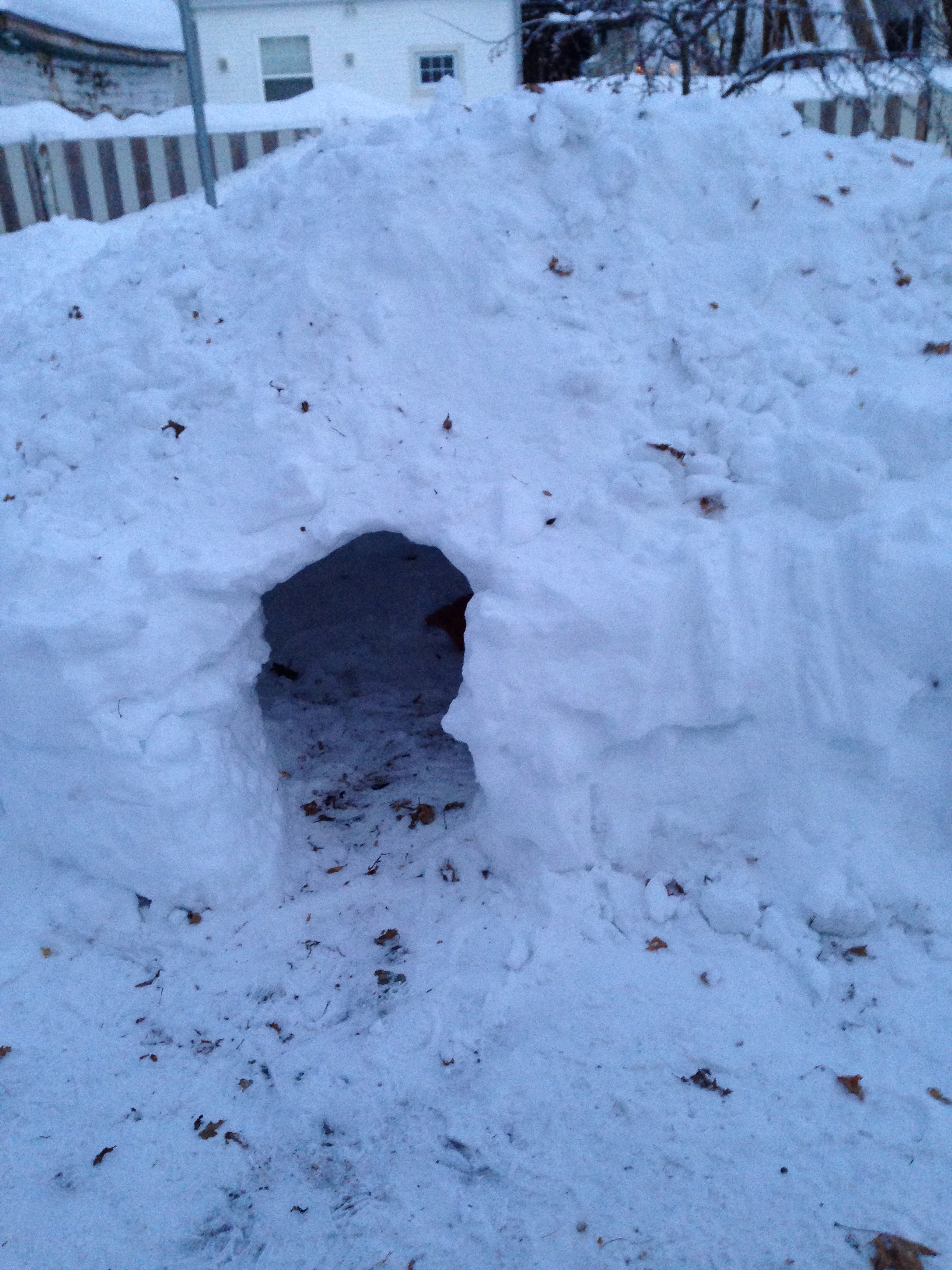
We could sell the snow. There's plenty of that

“Atrocious” is the adjective that Canada’s central banker, Stephen Poloz, chooses in order to characterize the effects of low oil prices on the Canadian economy in the frigid months ahead. Sort of like the weather, which is, on the East Coast, equally vile.

Four-hundred-some-odd centimeters of the white stuff alighted on fair Moncton this winter. A good 350 cms of it still perches stubbornly on the ground. The long-range forecast calls for another 40 in the days ahead, bringing us right into daffodil season. It’s a safe bet we’ll beat our 1974 record and top the scales at more than 18.5 feet of dirty, frozen water before the deluge is finally over. If it will be over.

Atrocious, indeed.

I’m taking safe bets that the last of Moncton’s cheerless snow mountains will not be gone before Canada Day, and while the rest of the country celebrates the arrival of summer by beach-combing with ice-cream cones, we’ll be repurposing our shovels as snowboards (having abandoned our gardens to the inevitable effects of short- and long-term climate change).

Oil and gas production, we are told, has something to do with this anomalous circumstance. As David Suzuki writes in a recent blog post, “Rising average temperatures do not simply mean balmier winters. Some regions will experience more extreme heat while others may cool slightly. Flooding, drought and intense summer heat could result.”

He’s kidding, right?

In fact, according to the United Nations’ International Panel on Climate Change, he’s onto something. It writes: “Each of the last three decades has been successively warmer at the Earth’s surface than any preceding decade since 1850. The period from 1983 to 2012 was likely the warmest 30-year period of the last 1400 years in the Northern Hemisphere, where such assessment is possible (medium confidence). The globally averaged combined land and ocean surface temperature data as calculated by a linear trend show a warming of 0.85 (0.65 to 1.06) °C 2 over the period 1880 to 2012, when multiple independently produced datasets exist.”

So what accounts for this (and last) winter’s brutal encroachment into spring along the northeastern seaboard of North America?

Blame it on the “polar vortex”. Here’s what Discovery.news.com has to say about the lately observed phenomenon:

“Some researchers suggest that. . .kinks in the jet stream that allow. . .cold air to spill out could actually become more common in a warming world because of changes to the environment where that cold air originates – the Arctic. Rutgers University sea ice researcher Jennifer Francis was one of the first to suggest a link between the steady decline of Arctic sea ice caused by warming and the extreme twists and turns that the jet stream – the fast-moving river of air miles up in the atmosphere – can take northward and southward. (At the same time that a dip in the jet stream sends polar air southward, a corresponding ridge can push warmer conditions up into the Arctic.)

“The idea is that as white, reflective sea ice has been increasingly melting to lower and lower areas in the summer, there is more dark, open ocean that can absorb the sun’s rays. As sea ice begins to reform as fall progresses, the water releases that heat into the atmosphere. That added heat could be pushing atmospheric patterns in a way that destabilizes the polar vortex.”

Lovely! Or is the proper word “atrocious”?

In any case, the oil and gas chickens in this country may have finally come home to roost. I’m buying a Canada Goose parka in July, when Moncton’s snow mountains of 2015 might just be gone – just in time for winter.

Tagged , , ,

Soaking the rich

IMG_0808

In a sense, a province’s budget is less a definitive statement of a particular government’s approach to number-crunching than a metaphor for society’s broader tolerances and expectations. That’s why these annual exercises always manage the simultaneous tricks of going too far and not quite far enough.

So it is with the Gallant government’s first budget, released Tuesday, a scattershot of spending and revenue decisions all putatively designed to address New Brunswick’s fiscal morass; just not right away, or in any aggressively uncomfortable manner, thank you very much. Indeed, emerge from its pages with a reasonable sense of the Liberal government’s vision for the province: Go ahead, I dare you.

To be fair, we do know a few things that, before this week, we may not have fully appreciated. We know, for example, that the department of finance likes building “rainy-day” funds almost as much as it does picking the pockets of the well-heeled. We know that the Grits – who deploy a rhetorical arsenal that brims with bon mots about “fairness” – only really expect rich, older folks to pony up to the plate (at least for the time being; next year, we are told, will be whole new ball game). And we know that, despite these and other measures, an estimated $477 million deficit in 2015-16 is just about as bad as it gets (though, not quite), even while the province’s long-term debt balloons to $12.6 billion.

“It would be easy to avoid making difficult decisions and leave the problems we face to the next generation,” Finance Minister Roger Melanson told the Assembly. “We are not going to do that. Our government was elected to lead and this means making difficult and sometimes even unpopular decisions.”

That, presumably, is why, anyone who earns between $150,000 and $250,000 a year in New Brunswick will now pay 21 per cent provincial portion of income tax (those earning more than $250,000 will face 25.75 per cent), up from about 18 per cent.

As the Saint John Telegraph-Journal reported, “Seniors who have managed to accumulate liquid financial assets will see those included in calculations of how much they must pay for long-term care in places like nursing homes. . .On the plus side, the Liberal government is establishing a New Brunswick Seniors Home Renovation Tax Credit. It will give seniors a tax break on home renovations. ‘We want our seniors to be able to stay in their own homes as long as they can,’ Melanson said.”

All of which is code for: Stop cluttering the province’s increasingly costly hospital wards and emergency wings. And that’s a message even the geriatric and infirm among us can get behind.

Fundamentally, though, the most these tax increases are expected to raise annually is $30 million, a comparatively paltry sum when you consider the obvious alternative: a modest hike in the HST. In fact, a one-percentage-point boost in this consumption tax would generate about $126 million. It would also be cheaper to manage and easier to collect than income taxes. Moreover, when properly executed, with due regard for the impoverished and working poor, it’s far fairer than any current brand of income tax. 

Of course, few governments arguing the affirmative in this country have ever won that particular debate. For their part, Mr. Gallant and Mr. Melanson are clearly not ready to test these tolerances and expectations in New Brunswick

Still, that’s the wonderful thing about a provincial budget. Every 364 days, or so, we all get another crack at going too far or not quite far enough in our public and private economies.

Follow the bouncing budgetary balls

DSC_0180

As the Government of Canada coordinates the release of its signature piece of election-year propaganda, the federal budget, provincial finance ministers are scrambling to contain the public relations disasters that are their own annual spending plans.

Rarely in the nation’s history have the fiscal conditions of the regional partners in Confederation contrasted so sharply with that of the national one – a circumstance that does little to inform Canadians about the true state of the union they occupy.

Yesterday, New Brunswick’s fine, young Liberal government brought down its first budget since assuming office last fall, becoming the latest in a string of provinces (Quebec, Saskatchewan, Alberta) to swallow its bitter medicine in one, quick gulp.

Oh to be in British Columbia in the springtime. That province is doing so well these days, it managed to double its forecast budget surplus of more than $400 million in fiscal 2014-15 to nearly a billion bucks ($879 million).

The same cannot be said for Alberta, which has just posted a deficit of $5 billion, despite having raised $1.5 billion in new taxes. According to a CBC report, “The reaction . . .is mixed: relieved that there was no increase in the corporate tax rate, and concern that Albertans will have less disposable income in a time when the economy is weak.”

In Quebec, the preoccupation is with runaway debt. That province’s 2015-16, $100-billion budget is freckled with nips and tucks in almost every department, but especially in the big-ticket portfolios of health care, education and social services. “We are making reforms, we are doing things differently,” the province’s Treasury Board chairman Martin Coiteux told the CBC. “It’s not that we are reducing services. We are looking at ways to live within a budget envelope which is relatively smaller than what we would like, but this is this the required step to rebuild our room to manoeuvre.”

  And, according to a report by The Canadian Press last month, “The Saskatchewan government has brought forward a budget that attempts to put the brakes on spending increases and peels back tax incentives for middle-class families, graduates and the potash industry. . .A global oil downturn is putting the squeeze on the province’s bottom line, but Finance Minister Ken Krawetz noted that there are no new personal income taxes or fee increases.”

Now, stroll down the banks of the Rideau Canal, Blackberry on full news-alert mode from the nation’s capital, and you’ll observe that the fiscal backstory appears altogether different. Canadians aren’t mired in debt. Nay, it’s quite the contrary. Our supremely responsible, circumspect and economically gifted federal government is preparing to bring down a (nearly) balanced budget with about $4.5 billion in goodies for individual voters.

Indeed, from places like New Brunswick, Alberta and Saskatchewan, where the stern warnings of penurious governments bear almost no resemblance to the rosy messaging wafting through Ottawa’s halls of privilege and power, following the bouncing ball from provincial script to federal talking point can give a guy whiplash.

Still, there’s some reason to think that many of the differences between national and provincial bean-counters are illusory. After all, only one pot of sovereign money is  spilled or filled in this country, as circumstances require. What one branch of government giveth, another taketh away just as keenly. The Bank of Montreal has already noted as much in a recent report. As BMO economist Robert Kavcic told the CBC “most of what Ottawa will be returning to one taxpayer’s pocket, the provinces will take out of the other.”

So much, then, for a vote-friendly federal budget.

Tagged , , , , ,

Tuning out our insular attitudes

DSC_0053

In the time-honored practice of central Canadian commentary about what’s ruining the economically flaccid East Coast, only one thing’s more annoying to a Maritimer than a diatribe that manages to get it completely wrong.

And that’s one that manages to get it utterly right.

Globe and Mail writer-at-large John Ibbitson’s lengthy piece, entitled “The incredible shrinking region”, in that newspaper’s Focus section last Saturday, left me with the urge both to pat him on the back and punch him in the nose.

That, in an odd way, is his point.

“Disaster looms unless Maritimers work together to reverse the slide – and, in some respects, adjust their thinking,” Mr. Ibbitson writes.

Quoting University of Prince Edward Island political scientist Peter McKenna, he observes that “the Maritimes enjoy strong social cohesion. . .‘You don’t get that sharp polarization’ between left and right seen elsewhere in Canada. But there is also a downside: ‘a particular resistance to change.’”

University of Moncton economist Donald Savoie concurs and believes he knows what’s behind Atlantic Canadian intractability. “Our region, more than any other. . .remains rural,” he tells Mr. Ibbitson. “New ideas and thinking usually come from urban areas, which are home to universities, innovation and less social and religious pressure.” Crucially, though, Mr. Savoie says, “Our region also lacks the energy, entrepreneurial spirit and the desire for a fresh start that new Canadians bring.”

Ouch, indeed!

Is there a solution? Mr. Ibbitson and the men and women he interviewed for his story like to think so.

First, stop looking to Ottawa for bandaids. Governing politicos and their bureaucratic factotums there couldn’t care less about us.

Second, make sure that the Atlantic region’s private enterprisers are actually equipped to grow their various provincial economies.

Third, acknowledge that urban, not rural, centers are where the true action occurs. (A place like Greater Moncton, for example, already seeds southeastern New Brunswick’s villages and hamlets with far more economic capacity than they can, and do, account for on their own).

Fourth, create a single, inter-provincial trade zone in the Maritimes where modern – not archaic – principles of commerce encourage productive collaboration on government procurement, labour mobility and skills and professional accreditation.

Fifth, and finally, attract and retain immigrants. Lots of them.

As perspicacious as Mr. Ibbitson’s piece is, he is not the first (nor will he be the last) to imagine that these measures are long-term solutions to Maritime malaise.

The enduring problem in this part of Canada, however, has never been understanding the dimension of our collective economic difficulty, or even crafting handy steps to resolve it. The problem has been that we’ve never really wanted to confront any challenge that extends beyond our individual front doors or back fences.

The real conundrum here is not the fiscal morass that besets our governments or the associated demographic perils of low birth rates, aging producers and accelerating outmigration. The real peril is that though we know well what to do with ourselves, we simply choose to do precisely nothing.

In fairness to us, this is not a pathology exclusive to the Maritimes. “Head-in-the-sanditis” is now rampant in Toronto, Vancouver and Alberta, where home-buyers still leverage their futures against absurdly overpriced shacks on the wholly discredited notion that the status quo in human affairs is, somehow, an immutable law of nature.

It isn’t, and we on the East Coast should know this better than anyone in the country. More’s the pity, and the shame.

What is ruining the economically flaccid East Coast? It’s not central Canadian commentators. It’s not even Stephen Harper.

It’s just us. It has always been just us.

Tagged , ,