Category Archives: Oil and Gas

New Brunswick’s pipeline to opportunity

DSC_0027

Now, for something completely different in New Brunswick: unvarnished good news. What began, for many, as a pipe dream becomes, for all, a bonafide pipe line into Saint John. And, unquestionably, not a moment too soon.

For much of the past 15 years, the urgent conversation in this decidedly unpromising corner of Canada has had everything to do with loss. How much public debt can we bear before our international creditors come knocking at the door? How many young people must we send west for jobs before, as public policy pundit Donald Savoie once famously wrote, New Brunswick becomes an old folks home?

Trans Canada Corp.’s announcement last week that it will move forward with a multi-billion-dollar pipeline from Alberta east to refineries in Quebec and Saint John – tentatively scheduled for completion by 2018 – changes the channel. (Quebec insists it wants to study the proposal, but the odds are in favour of its support).

In a report issued last Tuesday, Scotiabank energy analyst Patricia Mohr framed the opportunity clearly: “The line would allow access to less expensive and more secure domestic crude oil, allowing displacement of imports into the Suncor Energy and Ultramar (Valero) refineries in Montréal and in Lévis (near Québec City) as well as the large Irving Oil refinery in Saint John. These refineries have in the past been mostly supplied by expensive light oil imports.”

Moreover, “Greater access to stable supplies of domestic oil would improve the financial viability of current refineries and could eventually encourage development of a larger domestic refining industry in Québec and Atlantic Canada. History shows that pipeline developments – linking crude oil supplies to markets – often precede refinery expansion.

And, thirdly, “The line could provide vitally needed new export outlets for Western Canadian oil – to Europe and, most interestingly, to India – accompanied by expanded port and marine service-sector activity near Québec City and Saint John.”

All of which led her to conclude: “The economics of the ‘Energy East Pipeline Project’ are compelling. . .Refiners in India have shown considerable interest in importing Alberta blended bitumen. Estimated tanker charges from Québec City and Saint John to the west coast of India average a mere US$4.20 per barrel in a Suezmax vessel. A marine terminal at Saint John would be ice-free year round and could accommodate VLCCs of 350,000 DWT, cutting tanker costs to India to only US$3 per barrel. . .developing low-cost transportation infrastructure to access overseas export markets is critical.”

Against this backdrop, of course, languishes Keystone. As the Globe and Mail astutely observed in its coverage last week, “Politically, the project has attracted far less opposition so far than either Keystone XL, which has become a prime target for American climate-change activists and a political bone of contention between U.S. President Barack Obama and congressional Republicans, or the Gateway project, which has been opposed in its current form by Premier Christy Clark.” Meanwhile, it added, “Canaport (has) applied to transform its offshore facility to a gas storage and export terminal, giving it a new lease on life.”

For New Brunswick, the economic stimulus will be enormous: immediately translatable into thousands of skilled, highly paid jobs. Longer term, the energy sector, itself, will undergo a profound transformation as clusters of small and medium-sized enterprises emerge to support the refining anchor in the Port City.

But the broader significance of the pipeline has as much to do with national, as it does with regional, identity.

Premier David Alward was not wrong last year when he likened the project – when it was still just a concept – to a country-building exercise. For too long, the solitudes of West and East have driven the dialogue about what it means to be a Canadian. The have-less and have-more provinces have bickered over their respective slices of the energy pie.

The pipeline is, in effect, a handshake, across thousands of kilometers of geography, that unites once-competing interests. It says we’re in this together.

It also says to Alberta: You know all those Maritime sons and daughters we’ve been sending your way in recent years. . .Well, we’re gong to need you to send some of them back.

Tagged , , ,

“Common ground” initiative makes common sense

DSC_0074

Proof, perhaps, that the best ideas on just about everything originate far from the cocoons and cloisters of governments and corporations, the Atlantica Centre for Energy, based in Saint John, is injecting a long-overdue dose of sanity into New Brunswick’s shale gas debate.

In fact, the outline of its scheme, called “common ground”, to encourage “dialogue” among opponents and supporters of onshore petroleum development in the province – particularly, on the hot-button issue of hydraulic fracturing – makes so much sense, I’m puzzled – even a little annoyed – I didn’t think of it, myself.

The approach is simple enough.

We know that many rational people here are deeply worried about the effects on potable water and soil of large-scale fracking operations, and that, given the industry’s track record over the decades in other parts of North America, they have good reason.

We also know that exploration companies in New Brunswick insist that their technologies and practices have substantially improved, in recent years, and that provincial regulations governing their activities are among the strictest in the world.

Furthermore, we know that the debate has been hung up on competing definitions of what is actually knowable – a sort of epistemological hornet’s nest of a priori and a posteriori suppositions – about an industry that has not yet determined whether there is enough recoverable resource to justify commercial enterprise.

So, the Atlantica Centre reasonably argues, why not create an online podium for both sides – unedited, unfiltered, utterly transparent? Why not build a series of videos that present the divergent opinions, for and against, post them to its website and invite public reaction?

Or, as the group’s president, John Herron, told the Telegraph-Journal on Monday, “My view is that in the old days industry used to come to town and say, ‘I promise you jobs and growth – love me.’ That doesn’t work anymore. You can’t address an environmental concern or a health concern with an economic response.”

In fact, he added, “The minimum we owe each other is a dialogue, and if there is a process that people feel they can participate in, if there is a safe place where those different perspectives can be exchanged, I think we can identify points of agreements on many aspects that we are currently not. . .Consultation and engagement really has to be an ongoing, progressive process. It can’t be an event or even a series of events, and if there isn’t a process in place that people have confidence in, it’s not by accident that the default response in many cases becomes protest.”

Naturally, the key is creating that “safe place”. To this end, the Centre appears to have given serious thought to the breadth of representation that’s necessary to legitimize its venture. The first video, according to the T-J, incorporates commentary from “Cyril Polchies from the Elsipogtog First Nation; Jim Emberger, a Taymouth resident who is part of an alliance of New Brunswick community groups against the development of shale gas; Green Party Leader David Coon; NDP Leader Dominic Cardy; Stephanie Merrill of the Conservation Council of New Brunswick; Barbara Pike, executive director of the Maritimes Energy Association; and Donald Savoie, the Canada Research Chair in Public Policy and Administration at l’Université de Moncton.”

Of course, none of this will fully immunize Mr. Herron and his association from criticism. The Atlantica Centre’s membership roll is a who’s who of business interests in the province. It includes Canaport LNG, Deloitte, Emera, Ernst & Young, Fundy Engineering, IPR-GDF SUEZ North America, Irving Oil Ltd., J.D. Irving Ltd., Maritimes Northeast Pipeline, NB Power, PricewaterhouseCoopers, and Stantec. It also includes the two heaviest of hitters in the province’s shale gas game: Corridor Resources and Southwestern Energy.

But, these affiliations, alone, should not automatically dilute public confidence in the authenticity of the Centre’s project. Industry has known, for some time, that it can’t merely brush aside principled opposition. Until now, though, it hasn’t had the faintest clue about how to communicate its points to the broader public.

Letting its critics have their say, without ginning up the traditional spin machine, is a fresh idea whose time has finally come round.

Tagged , , ,

Forging a confederation of common cause

IMG-20120908-00198

Typically, when Canada’s premiers gather to discuss the state of the federation, they produce enough hot air to float several trial balloons, all drifting in different directions at once. But last week’s gathering in Niagara-On-The-Lake suggested that provincial leaders might be warming to the idea of pinpointing one or two destinations at which to touch down together.

New Brunswick’s David Alward can take much of the credit for forging at least the semblance of common cause among his colleagues this year. He has been a vocal and effective critic (whether or not you agree with him) of federal changes to both the Employment Insurance system and labour market agreements. He has emphasized the shared impact of these moves across the country.

He has also reached out to other premiers in a consistent and collegial way – not seen since the Frank McKenna era – on the subject of energy, which is rapidly becoming the most important file on the interprovincial agenda. Even in the notoriously self-absorbed central Canadian press, his name tends to come before all others in stories about a dearly imagined west-east oil pipeline.

“They’ve all been very open to that discussion – I don’t have any concerns at all,” he told the Globe and Mail last week. “We’re bullish on the project because it’s a nation-building project, it’s going to have a positive impact on Canadians from coast to coast to coast. . .We feel very good about the work that is taking place and I have full confidence in the next steps.”

Reflecting on Quebec Premier Pauline Marois’ refusal to discuss the pipeline in the wake of the Lac Magentic tragedy, Mr. Alward was circumspect: “In discussions with the Quebec government thus far in our working groups, in terms of the pipeline, have been excellent, and we look forward to continuing to work with them,” the New Brunswick Telegraph-Journal quoted him in Friday’s edition. “A catastrophe in their province, the derailment. . .I don’t believe Premier Marois is commenting out of respect for that. . .And I respect that.”

In fact, Mr. Alward was one of the first Canadian leaders to recognize the project’s symbolic significance to the country, as whole. He likened it to a new “national dream”, as big and bold for this century as the transcontinental railway was to the 19th. The argument resonated immediately with Alberta Premier Alison Redford, whose overriding priority is to get her province’s crude to refineries (any refinery) as soon and as cost-effectively as possible.

It’s clear, from her quote in the Telegraph-Journal last week, she hasn’t changed her mind. “We believe it is terribly important that this be considered exactly what it is,” she said. “(This) is a commercial transaction that must be approved by the approval processes in each province that has to take into account the integrity of the project, as well as the environmental impact of the project.”

Moreover, she said, “I’ve heard nothing (at the premiers’ meeting) that in any way suggested to me that there was any possibility that there were any new developments that would change this – that each jurisdiction that is touched by this project will do the work that it needs to do to make sure it does receive the approvals.”

Translation: Stay tuned, but matters are proceeding apace.

The pipeline company, itself, seems to agree. Last week, the Globe and Mail broke news that TransCanada Corp. was nearly chafing at the bit to execute its Energy East strategy sooner, not later.

“(The company) says it has garnered significant support for its quest to ship Western crude to refineries in the East, as premiers seek consensus on a politically charged cross-country pipeline,” the newspaper reported on Thursday. “The Calgary-based company (said) it has received major backing from producers who want to ship crude on its Energy East pipeline, and will make an announcement in the coming weeks. ‘We are very optimistic about the project,’ Alex Pourbaix, TransCanada’s president for energy pipelines, said in an interview.”

For New Brunswick and the rest of Canada, this is one trial balloon that may be getting ready to come down to earth.

Tagged , , ,

Injecting reason into the fracking debate

DSC_0074

For academic geologists, who study the world’s reserves of oil and gas, which have slumbered beneath the surface for millions of years, time is a meaningless concept. For public officials, embroiled in the politics of petroleum development, it’s the only thing that matters. Or it should be.

One of the broad and exquisite ironies (and there are many) about the gathering controversy over shale gas in New Brunswick is that the provincial government has only just figured this out.

For months, if not years, elected representatives of the Tory persuasion have ceded nearly all of the high ground in the battle to win the hearts and minds of the great, voting unwashed to the Internet-mining, documentary-viewing, anti-fracking, fossil-fuel-loathing constituency.

At times, Premier David Alward’s cabineteers have seemed downright flummoxed by the vehemence of opposition to shale gas development in the province. After all, they said as they scratched their scalps, as we don’t yet know whether there is an actual industry to despise, shouldn’t we identify its true, commercial potential before we lose our collective minds to inchoate outrage?

But, of course, such musings are not how you win a revolution. Environmental and community activists know well the first rule of effective civil action: Don’t wait for your enemy to set the agenda.

This is especially important in circumstances where your enemy has more money than God. If and when shale gas companies actually do fire up their production platforms, no amount of peaceful – if vitriolic – protest will ever shut them down. Only economics can achieve this. Hence, the marvelously orchestrated fury.

Lately, though, the Province has stepped up its game in defence of what it might term the prudent development of shale gas in New Brunswick. In two, surprisingly articulate, commentaries carried by the Times & Transcript’s sister organ, the Telegraph-Journal, Energy and Mines Minister Craig Leonard sets out his case. First, he says in so many words, “We can’t afford to do nothing,” before he declares, “We will ensure we can enjoy the economic benefits. . .while proceeding in a safe, responsible and sustainable manner.”

Of these, the strongest argument is the latter and, again, one wonders why it’s taken this long to make it this cogently.

At the heart of the opposition to shale gas is the conviction that hydraulic fracturing is inherently injurious to the environment and, by extension, to communities proximate to drilling operations. To support the claim, critics produce a virtual trove of information, gleaned from the Web, that clearly demonstrate just how fully industry players have desecrated whole regions of the United States with faint regard for their responsibilities, above those that secure shareholder values.

Some of the “proof” is spurious; some of it is persuasive. (Valid or not, it’s hard to counter a homeowner’s assertion that he abandoned the family farm because his once healthy child began coughing blood only after the nearby rig started drilling).

And yet the massive hole in this argument, through which no one in public office (until now) has seen fit to drive a rhetorical truck, is that New Brunswick’s opportunity lies before it. The province has a chance to do things better and more safely. It is not tethered to shoddy regulations and “industry-friendly” arrangements. It starts with a clean slate. Or, as Mr. Leonard, writes: “We designed the new rules for industry to ensure issues with the industry faced by other jurisdiction will not occur here.

“Whether it is requiring that all fluids used in the gas extraction process are kept in a closed loop system to ensure no contact with the land, the constant monitoring of air and water or improved construction of the wellbore, our rules will protect the land, water and air.”

The other piece is that no two shale plays are exactly alike. The experiences of one region are not reliably transferrable to another simply because we invoke the word “fracking” – like some, dark incantation – to describe industrial activity in both.

Mr. Leonard’s arguments will not convince everyone, of course. But they are, at least, useful contributions to what should be an informed, public debate. And, for once,  they are timely.

Tagged

Hail to the chief “Keystone Kop”

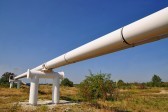
photo_10500371_the-high-pressure-pipeline

Some call it oil. Others call it tar. Still, U.S. President Barack Obama appears disinclined  to call the whole thing off over a simple matter of nomenclature.

In a speech at Georgetown University on Wednesday, the second-term Commander in Chief, mired in legislative gridlock, makes one thing more or less clear: Alberta bitumen must pass his administration’s litmus test for environmental benignity before it gets piped to refineries in Texas.

On whether the sandy crude should, in the alternative, be railed to said locations (and, therefore, cause more carbon pollution than a pipeline ever could), he doesn’t venture an opinion. Such is the kookiness of Keystone politics these days.

Clearly, Mr. Obama – who is as lame a duck as a president can get – has nothing to lose, and he knows it. The “audacity of hope” minstrel is back in full-throated glory, appealing to every possible constituency under the setting sun of his mandate.

“The 12 warmest years in recorded history have all come in the last 15 years,” he roars to the delight of environmentalists. “Last year, temperatures in some areas of the ocean reached record highs, and ice in the Arctic shrank to its smallest size on record – faster than most models had predicted it would. These are facts.”

Here are some others: “2012 was the warmest year in our history. Midwest farms were parched by the worst drought since the Dust Bowl, and then drenched by the wettest spring on record. Western wildfires scorched an area larger than the state of Maryland. Just last week, a heat wave in Alaska shot temperatures into the 90s.”

In fact, he says, “The question is not whether we need to act. The overwhelming judgment of science – of chemistry and physics and millions of measurements – has put all that to rest. Ninety-seven percent of scientists, including, by the way, some who originally disputed the data, have now put that to rest. They’ve acknowledged the planet is warming and human activity is contributing to it. . .As a President, as a father, and as an American, I’m here to say we need to act.”

That is the zig; now for the zag.

“One thing I want to make sure everybody understands. . .This does not mean that we’re going to suddenly stop producing fossil fuels,” he declares to the relief of the oil lobby. “Our economy wouldn’t run very well if it did. And transitioning to a clean energy economy takes time. . .I know there’s been a lot of controversy surrounding the proposal to build a pipeline, the Keystone pipeline, that would carry oil from Canadian tar sands down to refineries in the Gulf. . .I do want to be clear: Allowing the Keystone pipeline to be built requires a finding that doing so would be in our nation’s interest. And our national interest will be served only if this project does not significantly exacerbate the problem of carbon pollution.”

Ah yes, something for everyone. Most of all, perhaps for Canada’s Natural Resources Minister Joe Oliver, who’s still hung up on the whole “tar sands” versus “oil sands” business. “There is no tar in the oil sands,” he told a news conference in Ottawa, following Mr. Obama’s speech. “Not everyone understands that.”

But on the broad stokes of the president’s address, Mr. Oliver was sanguine. “We agree with President Obama’s State Department Report in 2013 which found that, ‘approval or denial of the proposed Project is unlikely to have a substantial impact on the rate of development in the oil sands, or on the amount of heavy crude oil refined in the Gulf Coast area’.”

All of which reasons strategically for an eastern pipeline into Saint John. After all, the more Alberta oil that can be diverted away from the American marketplace, the more persuasive the argument for Keystone becomes in Washington.

Some say “to-may-toe”. Others say “to-mah-toe”. Still, it seems clear, they’re calling the whole thing on, and everybody wins.

Except, perhaps, the planet, which stubbornly refuses to appreciate the nuances of politics.

Tagged , , ,

On seismic testing, just the facts please

DSC_0032

Those of us who remain curious about the economic potential of onshore tight oil and gas in New Brunswick might as well face it: There is no perfectly safe way to develop an industry that pulls vast quantities of petroleum from the ground. There never has been, and there never will be.

The only thing that matters is identifying the level of risk we are prepared to assume in return for jobs, royalties and tax revenues. And to do this, we need facts. But where are they?

The news media is in its element when it covers controversy. Altercations and recriminations between shale gas protestors along Highway 126 and SWN Resources, which is undertaking exploration there, make headlines. Dispassionate examinations of the claims both for and against the technologies involved more often do not.

And so, we are left sifting through emotionally charged assertions for clues of validity. We are left, for example, parsing this statement from a local resident, whom the CBC quoted in a story the other day: “There’s lots of money in Alberta, but when people come home they don’t want to see this. The money is good, but the money isn’t everything. . .They still put charges of dynamite in the ground and they still blast them.”

He was referring to the practice of seismic testing, which, according to the website naturalgas.org, “artificially (creates) waves, the reflection of which are then picked up by sensitive pieces of equipment called ‘geophones’ that are embedded in the ground.” Essentially, the procedure takes a picture of what lies beneath.

The question, of course, is whether this citizen’s concerns about the potentially catastrophic effects of the process on the water table and broader environment  – which, not incidentally, mirror those of many others in the province – are justified.

Or is Marc Belliveau of the provincial Department of Energy and Mines closer to the truth? Yesterday, he told this newspaper, “There is, unfortunately, a lot of misconceptions of what seismic testing is and what it is not. . .It’s used in making highways, it’s used in finding water sources for municipalities. . .There was seismic testing carried out along more than 500 kilometres in New Brunswick two years ago. . .There were no issues.”

Still, that was then. What about now? Back in the stone age, when I briefly majored in Geology at university, seismic testing was breakthrough technology in the oil and gas industry. And, like all breakthrough technologies – which are, by their natures, intrusive – this one did cause “issues”.

Even today, the procedure can be problematic. Earlier this month, oil and gas companies in the Gulf of Mexico agreed to forgo using the technology over concerns that it may harm marine life. According to a news report from KNOE.com, “Michael Jasny of the Natural Resources Development Council says the (moratorium) will give the government and industry time for required environmental studies and research.”

That said, the best evidence suggests that seismic testing in New Brunswick is about as safe as can be expected given the province’s regulatory framework and SWN’s statement of exploration practice, which appears on its website.

“The vibroseis technique is only used on roadways and provides quality signals with minimal disturbance,” the company declares. “Seismic vibrator trucks are equipped with an underlying vibrating plate to generate specific sound signals. . .The strength of the signal from one seismic vibrator truck is very small; several trucks need to be activated simultaneously to create a signal strong enough to be recorded. These vehicles create noise levels similar to that made by a logging truck.”

When no roads are available, SWN says it deploys the “shot hole technique”. In these instances, the company clears “a maximum three metre-wide path for a drill vehicle in the woods. No vegetation larger than 15 centimeters in diameter is cut. The track-mounted drill vehicle drills a hole 15 metres deep. A small seismic source is placed at the bottom of the hole and is sealed with clay and drill cuttings per provincial regulations. When safely secured, the source is activated with specialized equipment. Afterwards, the area is restored to its original state.”

Whether or not this statement can allay public concern depends entirely on the degree to which one is willing to allow fact to triumph over fear.

Tagged , ,

Shale gas flows with hot air

Is what lies beneath enough?

Is what lies beneath enough?

At the current rate of progress, shale gas in New Brunswick is fast becoming the best-regulated industry that never was.

After two, exhaustive reports by independent auditors and a best-practice framework covering the dos and don’ts of resource exploration, extraction and production, the Alward government has now released a 37-page “blueprint” that ties up the whole, messy business with a bright, Tory-blue bow.

All this even before the industry, itself, has determined whether shale gas is, in fact, commercially viable. And yet, there are those who continue to believe the province is not going far enough to protect the interests of average citizens from the presumed avarice of the petroleum lobby.

The blueprint, say the opposition Liberals, is conspicuous for its lack of rigor. Quoted in news reports, environment critic Bernard LeBlanc said, “New Brunswickers’ environment and health are at risk based on the actions of this government moving forward. There are glaring oversights in this document, including a proper discussion about greenhouse gas emissions.”

Added Green Party Leader David Coon: “A lot of what is in the document says, ‘the government will continue to‘ or that things will be ‘ongoing’. It doesn’t contain much new and it leaves out considerable things.”

In fact, though, absent an actual gas-producing industry, the blueprint goes about as far as it can and, indeed, should.

Much of the debate over shale gas development in this province has been wildly chimeric – informed as much by horror stories about industry’s past abuses in small towns and communities south of the border as by engineering science and the lessons lawmakers elsewhere in North America have learned.

Far less attention has been paid to likelihood of commercially exploiting a proportion of the estimated 67 trillion cubic feet of shale gas that lays beneath the surface in quantities sufficient to justify the cost and inevitable disruption, let alone the regulatory regime. At the moment, that’s not a question boosters, opponents or even governments can answer.

In a letter to the editor, published by Newsday in March, Jannette M. Barth (who is described as “the founder of the Pepacton Institute, an economic research and consulting firm”) writes: “Gains from shale gas development in the United States are greatly exaggerated. Macroeconomic models do not capture regional, state or local impacts. It is possible that the combined losses at these less-aggregate levels will be greater than any macroeconomic gains.”

She continues: “Peer-reviewed research and other research not funded by the natural gas industry have found only modest short-term employment gains to regions with shale gas development. Research also shows that economic impacts concluded by industry-sponsored studies are likely overstated, and that regions with shale gas development end up worse off in the long run, with higher levels of unemployment and long-term poverty.

“A survey of municipalities in 12 Marcellus-area counties in Pennsylvania  found that while 26 percent of the municipalities experienced increased expenditures from Marcellus Shale development, 75 percent said it had not increased their revenue, indicating that costs to communities are increasing without any offsetting increase in revenue.”

New Brunswick industry types will almost certainly take issue with these conclusions, but even they are determined to inject a note of caution into the discussion. As Brunswick News reported on Friday, Contact Exploration president Steve Harding thinks “there has been so much energy that has gone into this potential resource and, to be fair, that’s all it is today. We haven’t been able to quantify it as something that is commercial.”

Barbara Pike, executive director of the Maritimes Energy Association, concurs: “The fact that the government recognizes that we still don’t know whether there is a substantial onshore natural gas industry in New Brunswick. . is important.”

Until they do – know, that is – there’s not much point is wasting further breath on fanciful predictions of either doom or boom. If and when the industry decides to pull the trigger, that’s when a true, independent analysis of its claims should inform public policy and draft the next, and final, blueprint for New Brunswick’s energy future.

Tagged , ,

Are Canada’s oil sands on shaky ground?

The tar sands may be moot in moments, people!

The tar sands may be moot in moments, people!

There he went again, raining all over Canada’s petroleum parade with the sort of gusto one expects from a former American vice president, nobel laureate and, arguably, the planet’s leading climate-change critic.

Al Gore thinks the nation to the north of him has lost its way and in an interview published in Saturday’s Globe and Mail, he pulled no punches. “The resource curse has multiple dimensions,” he said, “and [that includes] damage to some extremely beautiful landscapes, not to mention the core issue of adding to the reckless spewing of pollution into the Earth’s atmosphere as if it’s an open sewer.”

To which Canada’s Natural Resource Minister Joe Oliver shot back (again, in an interview with the Globe), “Well, he’s off the mark. . .[Those were] wildly inaccurate and exaggerated comments.”

This is not the first time the two gentlemen have sparred over Alberta’s oil sands, which occupy a tract of land about the size of England (though only a fraction of this is actually under development) and which can be seen from space. And it won’t be the last. As the glittering example all that’s wrong with our greedy, self-destructive, fossil-fuel-addicted society, this bitumen-producing region is, for environmentalists, simply too sexy to resist.

Still, though they continue to provoke discussion, there is some indication that their battles over the production of synthetic crude are becoming less relevant to the global energy debate, which is moving in increasingly new and intriguing directions.

British Columbia’s Liberal Leader Christy Clark, who is campaigning for a second term as the province’s premier, touched on this the other day when she told the Globe’s editorial board, “The pipelines that are of most interest to British Columbians are liquefied natural gas,” she said. “That’s something we can do and we don’t need the federal government and we don’t need Alberta.”

It’s the sort of statement that comes with the electioneering territory. But at least one decidedly sober source openly wonders whether our conventional attitudes and assumptions about petroleum products deserve a makeover.

One such assumption is that the world is running out of commercially exploitable reserves, a condition that makes the still plentiful Alberta fields crucially important. But, as Charles C. Mann notes in the Atlantic magazine’s cover story this month, “Even as companies drain off the easy oil, innovation keeps pushing down the cost of getting the rest. From this vantage, the race between declining oil and advancing technology determines the size of a reserve – not the number of hydrocarbon molecules.”

Mr. Mann says, “This perspective has a corollary: natural resources cannot be used up. If one deposit gets too expensive to drill, social scientists (most of them economists) say, people will either find cheaper deposits or shift to a different energy source altogether. Because the costliest stuff is left in the ground, there will always be petroleum to mine later. ‘When will the world’s supply of oil be exhausted?’ asked the MIT economist Morris Adelman, perhaps the most important exponent of this view. ‘The best one-word answer: never.’ Effectively, energy supplies are infinite.”

The article’s author does not endorse this argument; he merely raises it by way of explaining that technology is transforming our notions of what is and is not exploitable   – just as it once did in Alberta. Now, shale gas from hydraulic fracturing is flooding the North American marketplace, promising to do the once unthinkable: make the United States energy self-sufficient in less than 20 years.

And, on the horizon, is another, even more promising, fossil fuel source awaiting the steady march of innovation to set it free. “In the 1970s, geologists discovered crystalline natural gas – methane hydrate, in the jargon – beneath the seafloor,” Mr. Mann explains. “Stored mostly in broad, shallow layers on continental margins, methane hydrate exists in immense quantities; by some estimates, it is twice as abundant as all other fossil fuels combined.”

It’s also much cleaner and, therefore, potentially less costly (environmentally and financially) to produce.

But if all this sounds like so much science fiction, it’s worth remembering that’s what the experts once said about shale gas and, yes, Alberta’s oil sands when technology was still in its infancy.

The future is about to give bitumen a run for its money.

Tagged , , ,