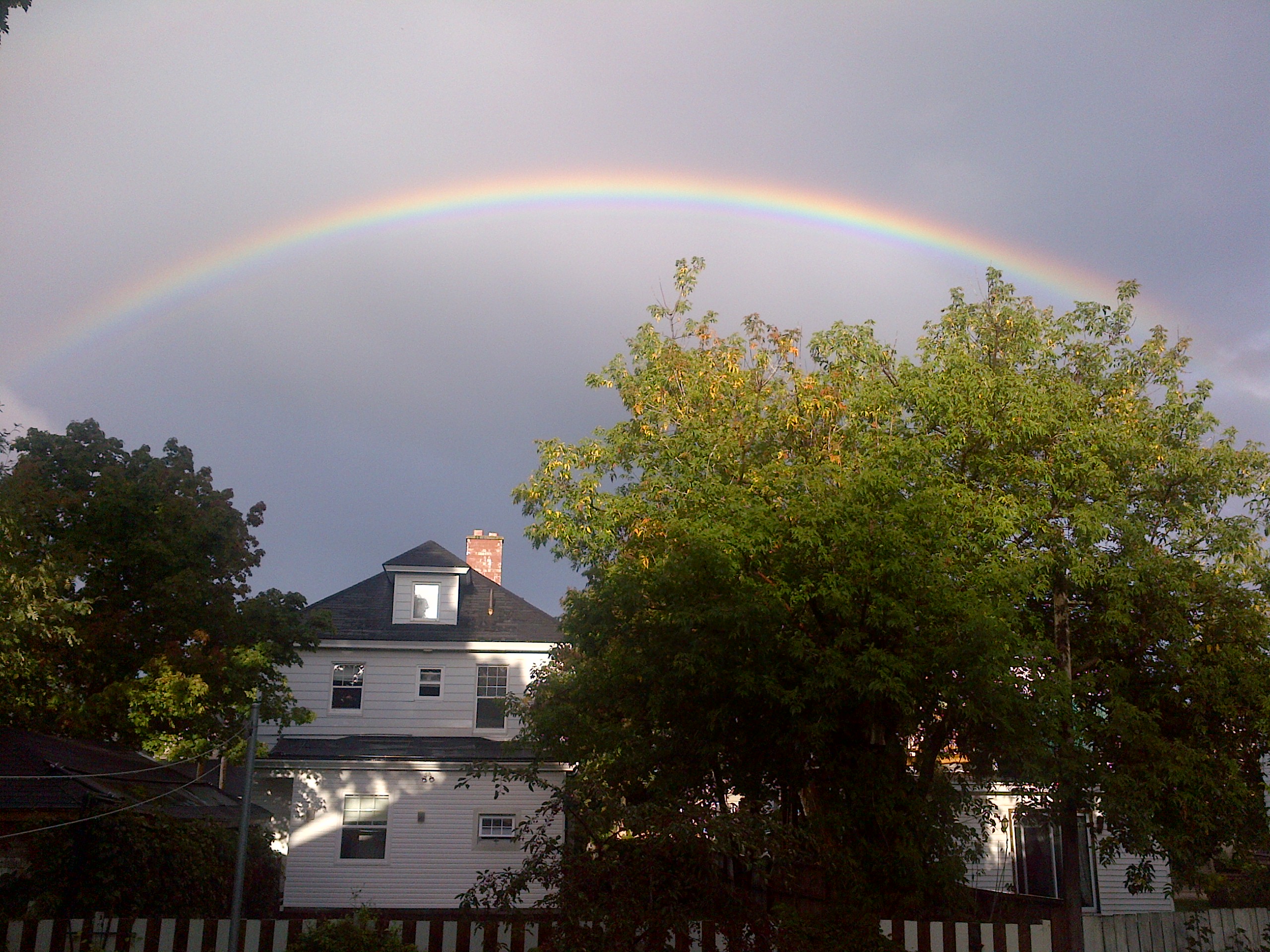
Long-distance running

 Resurgo is action in latin. And that's a dead language. Get 'er done boys and girls

Resurgo is action in latin. And that’s a dead language. Get ‘er done boys and girls

And they’re off, not exactly sprinting (more like strolling or, perhaps, gambolling) to the finish line.

Now, the chore of explaining the strategic imperative of subjecting the Canadian populace to the longest federal election since John A. Macdonald toasted his victory in 1872 falls to the chattering class.

Where might we begin?

Clearly, Prime Minister Harper and his fledgling squawkers in the PMO are determined to distract the public from the inconvenient, albeit pedestrian, truth about an economy that has turned sideways and shows every sign of heading south.

According to Statistics Canada last week, national GDP shrank by 0.2 per cent in May (annualized). That followed four months of straight drops, including a first-quarter dip of 0.6 per cent. Said Bank of Montreal economist Doug Porter: “There is no sugar-coating this one. It’s a sour result.”

Under the circumstances, then, what’s better than a general election to get one’s mind off dwindling manufacturing, a plummeting Canadian dollar, and persistent joblessness?

It’s not as if Liberal Leader Justin Trudeau has been getting any traction criticizing the reigning Tories for their demonstrable exaggerations about the health of the economy or, in fact, their ministrations on its behalf. A long election campaign isn’t likely to pose any great danger of the Grits suddenly catching fire as they struggle to reorganize their talking points.

Meanwhile, as the Globe and Mail reported yesterday, NDP Leader Thomas Mulcair – who appears to have usurped Mr. Trudeau in the affections of voters – is too busy honing his rhetorical skills to comment substantively about the perils of government posturing.

“Mulcair has been waging mock debates, squaring off against fake opponents to prepare for the federal election campaign’s first leaders’ debate, which will test his ability to connect,” the Globe revealed. “He has taken the matter seriously, interrupting rehearsals for a single partisan rally in Montreal, and spending the rest of the election campaign, so far, outside the public’s view.”

Of course, calling an October election on the first of August also gives the Conservative machine sufficient time to explain away the otherwise disappointing economic numbers – to, as the publicists say, get ahead of the issue – even as they fill the summer airwaves with all manner of attack ads against their opponents. Lord knows, they have the money burn without wincing.

In any case, the long and winding road to democratic denouement has, itself, become the one election issue that all Canadians can get behind. To wit: It’s too long and winding.

“In his decade of power, Stephen Harper has rarely made himself or our ministers available to Canadians or the Canadian press,” Globe reader Robin Hannah wrote in a letter published earlier this week. “Yet he and they are suddenly everywhere. Now I face 11 weeks of scrambling for my mute button.”

Another reader of the newspaper, one Rod Yellon, noted, “Aside from who wins and whether victory is affected by the length of the campaign, perhaps the most interesting question will be the potential effect on voter turnout. . .Will the endless speechifying, photo ops and political ads encourage voters to tune out?”

Regardless, at least one Pulitzer-Prize-winning journalist in the United States – where the election cycle can be as long as a year – thinks we’re all nuts up here. In a witty commentary for the Globe yesterday, David Shribman quoted former New Hampshire attorney-general Thomas Rath thusly: “The Canadians’ 11-week election is the same duration as a full season of The Apprentice.”

That’s a good point. Plus, we don’t have to worry about Donald Trump running for prime minister any time soon.

Tagged

Mum’s the word on climate change

DSC_0003

Whole election campaigns have been sacrificed on the altar of global warming. Entire political careers have been cremated under the magnifying glass of climate change. Remember poor Stephane Dion?

Is it any wonder, then, why this year’s contenders for the democratic throne of Canada are treading gingerly around the subject?

Well, for the most part.

NDP Leader Thomas Mulcair had a moment earlier this month when he told a Hamilton radio talk-show host that the federal government’s inaction on climate change is tantamount to wartime isolationism.

“Whenever we’ve taken on these big fights internationally, we were always one of the smaller players,” he said.

“But it didn’t mean that we didn’t go in. In the Second World War, the same argument could have been made. ‘Oh, we only represent a couple of per cent of the forces.’ But we knew that we had a job to do. This is a battle that the world has to take on. Climate change is real. Reducing greenhouse gases has to be made a priority. It can be done. Mr. Harper doesn’t believe in the science of climate change, so he’s not doing anything.”

In reality, what the current prime minister has never done much of is talk about global warming. That’s been both deliberate and shrewd. For the cunning and the calculating, there is almost nothing to be gained by weighing into the debate (let alone becoming a thought-leader, as did Stephane Dion) in a country where attitudes are so mightily polarized. Indeed, there’s every indication that they’re about to grow even further apart, thanks to research released last month by the National Oceanic and Atmospheric Administration.

According to an article by Katherine Bagley, writing for InsideClimate News, “The long-debated hiatus or pause in global warming, championed by climate denialists who tried to claim it proved scientists’ projections on climate change are inaccurate or overblown, probably did not happen at all.

A new study by researchers at the National Oceanic and Atmospheric Administration finds that the world’s warming never really stalled during the last 15 years – it was just masked by incomplete data records that have been improved and expanded in recent years.

Remarked Tom Karl, the director of NOAA’s National Centers for Environmental Information and principal author of the study: “The rate of temperature increase during the last half of the 20th century is virtually identical to that of the 21st century.”

That’s the sort of comment that gets “denialists” howling mad. Just ask New York based financial and business writer John Steele Gordon. In a recent Wall Street Journal commentary, he insists, “climate science today is a veritable cornucopia of unanswered questions. Why did the warming trend between 1978 and 1998 cease, although computer climate models predict steady warming? How sensitive is the climate to increased carbon-dioxide levels? What feedback mechanisms are there that would increase or decrease that sensitivity? Why did episodes of high carbon-dioxide levels in the atmosphere earlier in Earth’s history have temperature levels both above and below the average?”

Indeed, he ponders pointedly, “If anthropogenic climate change is a reality, then that would be a huge problem only government could deal with. It would be a heaven-sent opportunity for the left to vastly increase government control over the economy and the personal lives of citizens.”

In a country – namely ours – that depends so heavily on greenhouse-gas emitting fuels, politicians (with a few notable exceptions) have clearly decided that when it comes to climate change, discretion is the better part of, if not valour, political survival.

Tagged , , ,

Return of the grifters

DSC_0034

I now pine for the good, old days of the Internet when a transparently idiotic con artist would invent his persona in the form of a disenfranchised Nigerian prince, looking for a place to park his money in a safe country.

Just give him your bank account number and, hey presto; you, too, could be a winner. “We would be willing to pay upwards of 100 million Euros just to protect the balance of our estate from rebels and authorities,” I remember one entreaty promising some years ago. “Won’t you help us?”

Well, no, actually, whoever you are, located at Dupont and Dufferin Streets in Toronto’s Upper Annex. (Yeah, that’s right; scammers aren’t the only ones in possession of common location technology. Ping that, bro!).

But in the past few weeks, Internet and phone grifters seem to have gotten my various numbers and their deluge has been like a hurricane. It’s not that they’ve grown frontal lobes (they’re still incredibly stupid); it’s that they’re more persistent than ever before and. . .well, downright rude.

To wit: I’ve received three automated phone messages in the past week threatening me with “a lawsuits” if I don’t contact “the CRAs” and settle my substantial, “outstanding billings” to the “Governments of Canadas”. The only thing is: I don’t owe a dime to the “Governments of Canadas”.

Hey man, don’t you know you can attract more flies with honey than with vinegar? I mean, seriously dude, reconcile your tenses. You do know to whom your talking. . .right?

Then, there’s this priceless bit of tripe, which appeared in my inbox just the other day: “Hello & Good day. . .I hope my email meets you well and expect it to come to you as a surprise as you do not know me personally. I am a private investor in Tokyo, Japan with a strong investment desire in search of viable business opportunities for a massive investment project which will also (sic) of immense benefit to you financially and otherwise.”

I can only swoon at the thought of “otherwise”. Free trips to the Sushi garden at the Tokyo airport, perchance?

My recent favourite, however, is from an address that I won’t bother to list. From these sun-starved folks located in a basement apartment (no doubt) in rural Idaho, I may find “peyment advice” in a “Secured PDF file assesible by only” little, old me.

Naturally, I’ll be following up right away.

According to a Washington Times report last month, “A 68-year-old Vermont widow who nearly gave $60,000 to a scammer is warning other potential victims to ditch them. Louise Brown turned to the Internet to find someone to talk to after the death of her husband. When the man she had been bonding with began begging her for money, she gave him $60,000 before her bank flagged her account and warned her of the con. AARP (American Association of Retired People) officials say Vermont has seen an explosion in the number of Internet scams. Greg Marchildon, the director of AARP in the state, says criminals build trust with their victims and try to get them into a heightened state of feeling. The Vermont attorney general’s office is pushing for legislation requiring online dating websites to notify users when they’ve communicated with known scammers.”

Methinks we in this dispirited, economically challenged neck of the woods might turn the tables.

Come one, come all to the Great New Brunswick real estate sell-off. Every house goes for $500,000 – a bargain at twice the price.

Sure, and we’ll mail you the keys once the cheque clears.

Between a rock and a loud space

DSC_0026

Back when the only noise-making machine on any self-respecting scribbler’s desk was a manual typewriter (mine happened to be a vintage Underwood I inherited from my grandfather), a person might actually hear the birds chirping outside his distinctly non-hermetically sealed window.

No more, alas, no more.

I write one of these a day, sometimes more, and I can’t remember the last time at least one of my various computers didn’t startle me with a flood of alerts and notifications (emails, text messages, tweets, voicemail, etc.), momentarily goosing my 55-year-old heart rate to dangerously high levels and generally throwing me off my game.

My younger, more tech-sanguine colleagues laugh when I periodically complain (as I do here). “Just turn down the volume, old fella,” they say. “Better yet, turn off the features altogether and go grab a nap.”

And I would, except for one unavoidable anxiety: I’m afraid I’d miss something.

What if a nuclear broke out, and I slept right through it? How embarrassing would that be for a journalist of my seasoned flavour? What would I write for my next blog posting? How radioactive dust makes a great fire-starter for the summer barbecue?

Worse, what if I missed the latest Gap ad, promoting blockbuster savings on men’s skinny jeans, or advance word of the next episode of The Vampire Diaries on iTunes?

Apparently, I’m not the only one in this tricked-out, wakeful world caught between a rock and loud space.

Pointing out that “noise” is no longer a merely audible phenomenon, but also a visual one, Daniel Levitin, James McGill professor of psychology and behavioural neuroscience at McGill University in Montreal, recently wrote in The Guardian, “When trying to concentrate on a task, an unread email in your inbox can reduce your effective IQ by 10 points.”

He continued: “Our brains are busier than ever before. We’re assaulted with facts, pseudo facts, jibber-jabber, and rumour, all posing as information. Trying to figure out what you need to know and what you can ignore is exhausting.

“Our smartphones have become Swiss army knife-like appliances that include a dictionary, calculator, web browser, email, Game Boy, appointment calendar, voice recorder, guitar tuner, weather forecaster, GPS, texter, tweeter, Facebook updater, and flashlight. They’re more powerful and do more things than the most advanced computer at IBM corporate headquarters 30 years ago. And we use them all the time, part of a 21st-century mania for cramming everything we do into every single spare moment of downtime.”

And, yet, say the great minds of history, silence truly is golden.

In fact, William Penn once insisted, it is “the rest of the mind; it is to the spirit what sleep is to the body, nourishment and refreshment.”

Confucius scooped him by a couple of millennia when he declared, “silence is the true friend that never betrays.” Indeed, Walter Bagehot observed, “an inability to stay quiet is one of the most conspicuous failings of mankind.”

Or as Henry David Thoreau noted, “silence is the universal refuge, the sequel to all dull discourses and all foolish acts, a balm to our every chagrin, as welcome after satiety as after disappointment.”

So, then, the conundrum comes down to a choice: How much of the modern world shall we tolerate in our quietest moments? Going without our various feeds, alerts and notifications, altogether, seems absurd and absurdly precarious (given the degree to which our economic survival, these days, depends on these beeps and bells).

Still, perhaps we can sit back and just listen to the birds every once in awhile.

Tagged

Courting Canada’s Conservatism

IMG_0129

Much has been written about the country – our country – that Conservative Prime Minister Stephen Harper has wrought over the past decade. Indeed, this is not the Canada that Pierre Trudeau, or even Brian Mulroney, left behind.

Still, every individual lucky (or unfortunate) enough to occupy the official residence at 24 Sussex Drive makes his or her mark on the political and cultural landscape of the nation – for better and for worse.

For his part, Mr. Harper clearly hopes that however the election in October plays out he and his crusty crew of Tories will be remembered and admired as competent fiscal managers, demonstrably capable in all matters concerning the economy. And, until about a minute ago, that might have been a fair expectation.

The current condition of Canada’s commercial and labour markets has all but undermined the current government’s fondest dreams of a legacy on economic grounds. Two consecutive months of negative growth, stubbornly low commodity prices, moribund employment in just about every sector and region of the country have done quick, nasty work to the agenda.

Yet, there is one area where Mr. Harper may well have secured a place for himself in the history books: The judiciary.

In a fascinating and bravely reported piece in a recent edition of the Globe and Mail, that newspaper’s justice writer Sean Fine observes, “Mr. Harper’s battles with the Supreme Court are well known. The court has struck down or softened several of his crime laws. When the Prime Minister named an outspoken conservative, Marc Nadon, to the Supreme Court in 2013, the court itself declared Justice Nadon ineligible. Mr. Harper would go on to publicly assail the integrity of Supreme Court Chief Justice Beverley McLachlin, turning an institutional dispute into a very personal battle.”

But a closer look behind the curtain reveals a far more successful campaign to remake the country’s judicial system in a decidedly Conservative image. As Mr. Fine reports, “While those public conflicts were playing out, the government was quietly transforming the lower courts. The Conservative government has now named about 600 of the 840 full-time federally appointed judges, or nearly three in every four judges on provincial superior courts, appeal courts, the Federal Court and Tax Court.”

Why does this matter as long as the Supreme Court retains at least a modicum of ideological independence? The answer is that the high court doesn’t actually do the daily heavy lifting in our judicial system. The courts with which Mr. Harper is most concerned are, Mr. Fine writes, the ones that, “at the appeal level, decide how the government’s crime crackdown is to be implemented. At the trial level, they decide high-profile cases. In constitutional cases, they rule on social and legislative facts – anything that establishes the real-world context in which a law plays out, such as whether prostitution laws endanger sex workers.

“Higher courts, including the Supreme Court, do not change these facts, unless they view them as wildly wrong. Constitutional rulings depend on these facts. The judges, who can serve until they are 75, may be sitting long after other governments have come along and rewritten the laws. They also are a farm team or development system for the Supreme Court.”

In effect, “They are Mr. Harper’s enduring legacy.”

Economic conditions run hot and cold, but matters of justice, law and morality are enshrined in the democratic institutions we embrace and on which we depend.

This is where Canada’s new conservatism will root itself and ensure, among other things, that Mr. Harper will be remembered long after he’s left the political stage.

Tagged , , ,

In the lemur cage

DSC_0069

Almost nothing incinerates in me that odd, albeit infrequent, mood of reticence more thoroughly than a ring-tailed lemur perching gamely on my shoulder.

To be sure, this was not how I expected my day to unfold when I grabbed my camera and headed out to the Magnetic Hill Zoo in the outer burbs of Moncton. My job was routine enough: Snap a few pics of the establishment’s manager, Bruce Dougan, for a magazine piece I had been writing.

Mr. Dougan, a burly man with an Arctic fringe of beard and a safari leader’s comportment, is a born showman. He has to be. Without an effective promoter at the helm, a zoo can become as endangered as many of the wild animals they house.

So, it really shouldn’t have surprised me when he led me into the lemur cage to pose with a handful of friendly, inquisitive primates. Suddenly, the joint was bustling with dozens of the human variety, their noses pressed against the chain-link fence, delighted to watch the photog struggle to regain control of his camera from the creature attached to his forearms.

I am a little embarrassed to admit that in the 20 years I’ve lived in Moncton I’ve only been to the zoo three times – two of those occasions within the past month (once with one set of grandkids; the other on the aforementioned photo assignment). Frankly, I really haven’t known what I’ve been missing.

On one of my trips, the line of young families and old folks waiting patiently for admittance stretched all the way to the far end of the parking lot. A recent CBC story provided the context when it reported in June that “The Magnetic Hill Zoo in Moncton is opening a $1.4-million exhibit that will showcase three big cats. Visitors will be treated to a new exhibit featuring two Amur Tigers – Alik and Anya – and a leopard, named Katushka.

“Jeremy Nelson, a board member of Friends of the Zoo and chair of the fundraising campaign, said the new exhibit is the biggest project the zoo has ever undertaken. ‘I can’t believe we’re finally here today. There’s not a person who won’t be wowed when they walk in,’ he said.”

Added Mr. Dougan, in a statement: “It’s amazing that we have two of the most endangered cats in the world right here in Moncton.”

I’m not sure “amazing” is the right word. After all, the city’s public website describes the facility thusly: “The Magnetic Hill Zoo. . .is committed to safeguarding animal species and raising public awareness of endangered species. The zoo is designed with the well being of the animals. . . in mind.”

What’s more, “The staff of the. . .zoo is very concerned with protecting endangered animals. They follow national protection movements closely and participate in diverse repopulation programs. The . . .zoo is the provincial headquarters for the Frog Watch program, an initiative of the Canadian Minister of Environment to gather environmental information on Canada’s diverse frog species. . .In 2010 and 2011, the. . .zoo worked in partnership with Parks Canada to implement the Piping Plover Recovery Program. Eggs from abandoned nests from two maritime National Parks were brought to the . . .zoo for incubation and hatching.”

Protecting endangered species – or at least raising awareness of them – appears to be in the zoo’s organizational DNA.

Still, Mr. Dougan’s amazement is well taken. It stands to reason that a city – whose latin motto “resurgo” means, in English, “rise again” – should boast a zoo where reticence is impossible – especially in the lemur cage

Hoisted by their own petard

IMG_0129

There was never anything essentially wise – beyond the obviously political considerations – about the Government of Canada’s white-knuckled determination to balance its budget come hell or Armageddon.

In their quietest moments even the fiscal hawks among us must admit that into all lives, some red ink must fall. Individuals, banks, commercial enterprises and, yes, even governments do, from time to time, deficit-finance their way to durable prosperity. That’s simply because the coincidence of opportunity and solvency is not always – in fact, never – perfect.

Knowing this, then, we ought not become the saps that campaigners on the hustings seem to think we are when they point to their debt-defying antics as proof of their unimpeachable sagacity.

Of course, the Harper government isn’t the first in this country to claim that it, and only it, has the best interests of the average tax payer at heart when it refuses to consider any alternative to a bottom line that reads: zero.

The problem is this ambition just doesn’t appear sensible, or even achievable, at the moment.

“Rotten Luck”, thy name is Torytown.

Oil prices are slumping more deeply than anyone expected. The economic revival in the United States is losing steam. The tragi-comedy that is the Grecian formula for European recession unfolds even as a downturn in our Greater Canuckistan’s resource-fired economy conjures the dreaded “R-word” here.

Now, the Parliamentary Budget Officer, Jean-Denis Frechette, says all of this is becoming a lethal cocktail for Conservatives.

According to a CBC report last week, “The government had projected a slim, $1.4-billion surplus for 2015 in its budget, which was presented last April.

The PBO estimates a budget outlook updated with the lower GDP numbers alone would show a $1.5-billion deficit at the end of this year and a $0.1 billion, or $100 million, deficit in 2016-17. Canada would be back at a $1.5 billion surplus in 2017-18, according to the PBO projection.

Added the public broadcaster: “But that’s not the whole picture. Weak GDP growth, the budget office says, would be partially offset by higher inflation and lower interest rates. Once those are taken into account, the projected deficit is $1 billion this year, with a small surplus of $0.6 billion, or $600 million, in 2016-17, and $2.2 billion in 2017-18.”

In fact, writing in the Globe and Mail earlier this year, Jim Stanford, an economist with Unifor, had this to say:

“From the outset, the battle to slay the deficit was all about political optics, not economics. Canada’s deficits after the 2008-09 meltdown were among the smallest in the world. Our debt burden (the more important concern) is small compared to those of other countries and other periods in history. Indeed, as a share of GDP, the debt has been shrinking since 2012. So whether Ottawa has a small surplus or deficit any year is irrelevant.

“For this government, though, it’s a political imperative. Nothing will prevent the Conservatives from forecasting balance next year.”

Nothing, so far, has. Ignoring the writing on the wall has become a singular pastime in Ottawa. And no one plays the game more stubbornly than Finance Minister Joe Oliver who continued to insist – despite the rather compelling, new evidence to the contrary – that the government will better than balance the budget.

“We have looked at our numbers and we are very comfortable that we will have a surplus this year,” he said last week.

Such insistence, once merely economically unwise, is now becoming politically perilous to the self-described standard-bearers of wise money management.

Are certain petards about to hoist certain MPs, after all?

Tagged , , , , ,

The Moncton Miracle strikes again

To the surprise of precisely no one in New Brunswick’s Hub City, Moncton has scored another top finish in the race to be known perpetually as the pluckiest, little urban area in Canada.

It is, perhaps, unbecoming to dwell on one’s civic greatness, but what the heck. . .let’s do it anyway.

According to the Conference Board of Canada’s latest Metropolitan Outlook, “Moncton and Saint John are among the five fastest-growing medium-sized (municipal) economies in Canada this year. . . On the other hand, St. John’s, Newfoundland, is on track to post the slowest economic growth among the 15 cities covered in the report.”

Specifically, the analysis finds that Moncton’s real “GDP is forecast to rise by a 10-year high of 3 per cent this year, thanks to healthy gains in manufacturing and the broader services sector. In particular, the local transportation and warehousing sector, whose outlook is closely tied to that of manufacturing’s, is expected to expand at a vigorous clip. The solid economy will translate into decent job and income gains, which should encourage consumers to continue spending.”

Meanwhile, up the highway a piece, Saint John will benefit from “a recovery in manufacturing and in resources and utilities sectors.” This will push economic expansion the Port City to about 2.3 per cent this year.

In fact, manufacturing and resources and utilities will rebound thanks to a comparatively weak Canadian dollar (relative to its U.S. counterpart) as well as “stronger housing demand south of the border.”

As if to invite a chorus of “We Told You So,” St. John’s economy is forecast to tank, dragged down by plummeting oil prices and steady declines in resource investment and production.

Still, the Conference Board chirps optimistically, “things will be better than last year when total output fell by 2.3 per cent. This year, St. John’s (GDP) is forecast to grow by 0.5 per cent, as solid gains in manufacturing, in wholesale and retail trade, and in finance and real estate are offset by declines in resources and utilities and in construction.”

All of which should comprise a heady argument for steady, efficacious diversification in mid-sized metropolitan economies. This is, of course, the not-so-hidden secret of Moncton’s success over the past 25 years. Hard experience has taught this city that one-horse towns are just fine until the horse breaks a leg and has to be shot.

Instead, this greater urban area has worked assiduously to develop a broad array of economic clusters, any one of which can, and does, imbue this region of the province with business and employment opportunities without – it should be emphasized – a disproportionate degree of help from provincial and federal governments.

As a consequence, Moncton-Riverview-Dieppe’s entrepreneurial verve has placed it first over the finish line repeatedly in KPMG’s annual survey of the most likely and winsome communities for economic growth in North America.

Our urban dynamo is also, by deliberate design, one of the “smartest” cities on the continent – if we measure intelligence by the sophistication and coverage of our telecommunications and information technology infrastructure and services.

Indeed, as other communities in this province suffer from their dependence on seasonal, resource-based industries, Moncton’s economy remains buoyant year-round.

There is, perhaps, no better reason than this to expect steady, self-perpetuating success from a new, multi-purpose downtown events centre – for if any community in this province can build a solid business case for such a project, it’s this one.

And it’s with our characteristic foresight and determination that we must proceed without delay, if only to preserve our reputation for promise and pluck.

Tagged , , , ,

What old Guysborough town teaches

DSC_0066

When the mid-summer sun shines sweetly on the roads of Guysborough town, and a breeze brings news of waves breaking on the far shore of Chedabucto Bay, you know it is high season – that time of the year, after the last black fly and before the first frost, when this village of 400 at the eastern tip of mainland Nova Scotia is at its best.

Up and down the main street – which may be only as long as quick breath on lover’s lane – evidence of revival is everywhere. Bunting flies at pretty cafes and shops festooned with homemade goods and specialty fare.

There, along the boulevard, the Rare Bird Pub & Eatery jostles the Skipping Stone Cafe and Store. Not far away, the Full Steam Coffee Co. shakes hands with the Harbour Belle Bakery. Elsewhere, the Osprey Shores Golf Resort caters to those of a clubbier mindset, and the DesBarres Manor Inn provides a year-round destination for romantic foodies of every inclination.

Here was where Prince Henry Sinclair was rumoured to make landfall in 1398. Here was where peripatetic Acadians settled between 1604 and 1659. Then, in the 18th Century, came the Scots and the Irish, fresh from the Napoleonic wars.

My original forebear, a fellow by the name of James, apparently sailed from Scotland with a land grant of 100 acres, given to him as a reward for his military service in Europe. Of course, in the late 1700’s, there were no roads to speak of, let alone physicians. So, when a tree fell on the poor sap’s head, he did what most transplanted Scots of good, sturdy character did at the time: He died.

Still, the family he sired and the community he helped build persisted which is, all things considered, a minor miracle.

One of the more urgent conversations in Atlantic Canada concerns the plight of its rural areas, most of which can boast notable provenances. Faced with aging and dwindling populations, inadequate access to educational opportunities, crumbling transportation and communications infrastructure, and winnowing industrial bases, many are on the brink of extinction.

In fact, more than once in both distant and recent memory, Guysborough, itself, has flirted with calamity.

Once, lumbering and shipbuilding dominated the local land and seascapes. Not anymore and for all the reasons familiar to coastal communities across the region (changing technology, a shrinking pool of skilled labour, shifting government policies and priorities).

Commercial fishing, a traditionally vital engine of employment, came to a screeching halt during the 1980s and ‘90s in the wake of the federally imposed cod moratorium. Since then, stabs at long-term economic development have enjoyed only mixed success, though don’t utter such a blasphemy anywhere in Guysborough County, lest you prepare yourself for a long debate.

Still, the deeper truth is, as prominent Maritime writer Harry Bruce (pater familias to me) once noted, “Wave after wave after wave of Maritimers have left their beloved homeland, rolling westward again and again to seek jobs up and down the Atlantic seaboard, in the American midwest and far west, in Quebec, Ontario, the Prairies, British Columbia, and the northern territories . . . Maritimers, more than other Canadians, have had to keep their eyes on the horizons, and Leaving Home has long outlasted the golden age of sail as part of their heritage.

Yet, now that Alberta has given up the ghost of its oil and gas promise, we may live long enough to witness a mass return of Maritimers to these shores.

Perhaps this is all that old Guysborough town teaches: faith.

Tagged , , , , , , , ,