Tag Archives: New Brunswick

It’s all Greek to us

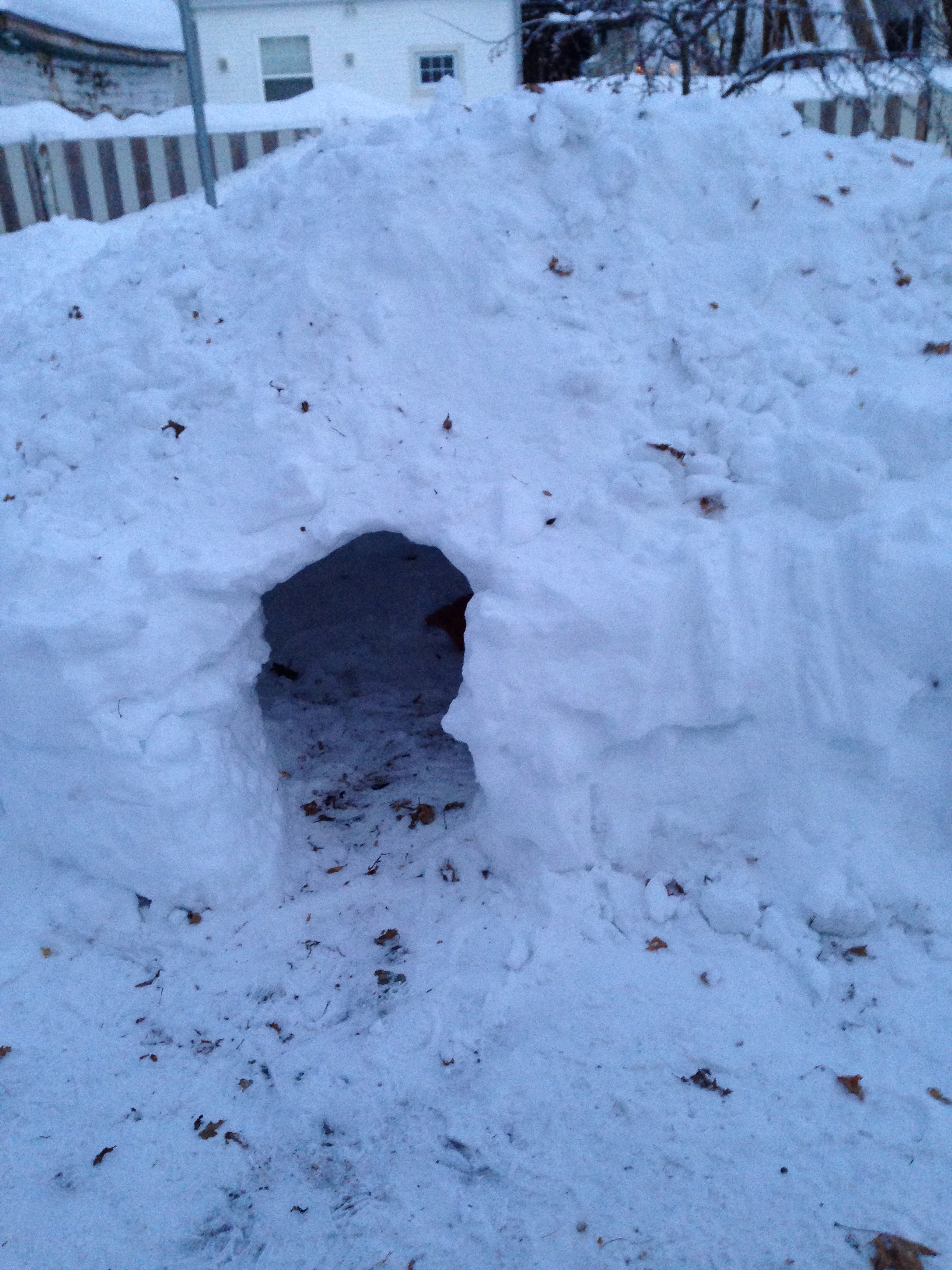
We could sell the snow. There's plenty of that

We could sell the snow. There’s plenty of that

New Brunswick, fiscally considered, is not Greece. But are we getting there?

Canada’s second-smallest province, by population, endures a long-term- debt-to-GDP ratio of 32 per cent. That means dunning, theoretically, every man, woman and child in this province roughly $15,000 a year (more than $35,000 if you consider the federal shortfall).

Greece, in contrast, is Europe’s 14th-most populous country. Its debt now stands at an astounding 180 per cent of annual economic production.

For a while, this nation was relatively robust: Its tourism trade was second to none in the world; its agricultural and resources sectors were among the strongest in the Mediterranean region. Now, it is all but bankrupt.

Last week, the country’s government ordered the banks to shut down (to prevent a run on deposits); this week, the national treasury defaulted on a critical loan repayment to the International Monetary Fund; and just yesterday all heck broke loose on international stock markets as fund managers and moneyed investors around the world sent exchange prices tumbling by triple digits – all because a middling nation with unsustainable leverage couldn’t pay its bills.

The factors that contributed to the “Greek Crisis” (now in its fourth year) are complex. They include socio-economic mismatches involved with merging trade agreements and currency standards into the European Union, and political and fiscal traditions within Greece, itself, which have not tolerated high capital streams from public sources of revenue. (English translation: Though the country maintains comparatively high marginal and progressive rates, Greeks, themselves, are expert tax avoiders).

According to an article in The Economist two months ago, “Greece emerged from recession in early 2014, but its escape from contraction was short-lived. Figures released on February 13th showed the Greek economy still growing year on year, but shrinking in the final three months of 2014. Since 2008, the Greek economy has shrunk by about a quarter. Although not quite as deep a downturn as America’s Depression, Greece’s recession was more prolonged and is likely to take more time fully to recover from. Recent downturns in the euro area seem like minor hiccups in comparison.”

In fact, Greece’s pre fiscal-crisis conditions appear troublingly familiar to residents of New Brunswick, struggling to reconcile their own ambitions with backward circumstances. In Greece, The Economist states, “Even before the crisis struck, (the country) was a laggard. In 2008 only a third of households had the Internet, the lowest share in Europe. Levels of youth unemployment and government debt were already among the continent’s highest. Since then, the gap between Greece and the rest of the euro zone has grown. Unemployment has more than tripled to 26 per cent, and three-quarters of the jobless have been out of work for 12 months or more. Over a third of Greeks are considered to be at risk of poverty.”

The degree to which a country, region or province is a victim of forces beyond its control is a subject for bitter debate. But people who buy the proposition that individual initiative makes no difference to the health of the polity are very often the same ones who expect unchanging standards of public services long after the state has run out of money.

That is certainly the case in Greece, where the leftish government has resisted all efforts by its international lenders to impose austerity measures, while keeping its outstretched hands, palms up.

New Brunswick’s annual deficit and debt are absurdly high for a province of its size.

The question remains: How long can we afford to flirt with our own Greek problem?

Tagged , ,

Facing the angry voter

IMG_0040

At this rate, the Hollywood-handsome premier of New Brunswick will need a political facelift before he again addresses his increasingly grumpy public on camera.

Canada’s paparazzo of pollsters – which evidently doesn’t take summer holidays, even as the objects of its scrutiny gently wend their way through the barbecue circuit – reports that Brian Gallant now enjoys a mere 27 per cent approval rating, down from 40 per cent only three months ago.

According to a news release from the Angus Reid Institute, posted to its website, the once-telegenic politician “ends his first session in government bruised by the implementation of his campaign promises and blemished in the eyes of his electorate. An. . .analysis of quarterly online survey results from more than six thousand Canadian adults shows Gallant, first sworn in last October, has seen his approval rating from respondents in his province plummet 13 points in the last three months.”

Only Manitoba’s Greg Selinger is more politically odious among Canadian premiers: Twenty-three per cent of his fellow citizens in that province give him a qualified thumbs-up.

As for Mr. Gallant, Angus Reid vice-president Shachi Kurl seemed almost gob-smacked, telling the Saint John Telegraph-Journal, “At some point the honeymoon always ends, but this is a dramatic drop. To dive 13 points is not something we tend to see over one quarter.”

In fact, though, if you are a resident of New Brunswick you might understand the Liberal premier’s precipitous fall from grace over such a short period. As is typical in this province, the reasons have both everything and nothing to do with the man, himself.

Had former Progressive Conservative Premier David Alward survived the most recent election, the odds are strong that he would be facing a fate similar to Mr. Gallant’s. His polling numbers stuck in the cellar, his political life would be dominated by a series of excessively long and tedious defences of his decisions.

That’s because, for some time now, voters have been nursing sore grudges not so much against the men and women who occupy elected office, but with the standard operating procedures of the political process, itself, which they fundamentally believe has perverted and corrupted every good intention. In this circumstance, no public figure has managed to hold the popular imagination for long.

Neither does party affiliation seem to matter. The public shuffles them them like so many deck chairs on a sinking cruise ship – a habit which goes a long way towards explaining why the policy differences between (if not major announcements of) the Bernard Lord Tories and the Shawn Graham Grits were vanishingly small and why you need an expert on constitutional law to explain the few ways in which the major party leaders today significantly part company.

Beyond this, though, the public has come to expect, with some justification, that most, if not all, political promises are either banal or unrealistic, or both.

Year after year, we witness fiscal posturing from MLAs from the left, the right and the swollen middle. We are told we must get our “financial house in order”, lest the robber-barons of the Wall Street’s bond markets make off with our chickens and the pots that contain them. And, yet, what actually changes? Where is the descriptive vision of a future that never seems to come, as one day dawns pretty much as every other.

Indeed, Mr. Gallant may well need more than a political facelift when he returns from a summer of pressing the flesh.

Whatever that is, one thing’s guaranteed: It won’t be popular.

Tagged , , , , , ,

Reversing our job losses

DSC_0058

In electoral politics, the easiest promises to make are always the hardest to keep. As the New Brunswick government recesses for the short, hot summer, it leaves with the uneasy certainty of that adage festering in the pit of its stomach.

No campaign vow is more facile – or more common – than the one that guarantees robust employment, despite evidence that strongly militates against its success. Still, every candidate for public office, regardless of his or her party affiliation, trots out the tired old trope, “job creation is our no. 1 job,” or words to that effect, as if his or her magic wand is loaded with something more substantial than good intentions.

Why elected representatives routinely beg to assume direct responsibility for an economic process that is quite eminently and obviously resides outside their wheelhouse is a question only the gods of political ambition can properly answer. The results, however, are as predictable as rain in the springtime.

As Statistics Canada reported last week, New Brunswick somehow lost 5,300 full-time jobs in May, just as nation, overall, picked up 59,000 positions.

“Certainly after a disastrous first quarter, the outlook suddenly seems a lot brighter,” a Financial Post article observed. “For that, we can thank an unexpected surge in hiring in May­ ­– the biggest gain in seven months, in fact, and more than six times larger than anyone had expected. And the majority of those new jobs were created in a previously unlikely location – Ontario, which had seen its prominence diminish in recent years as the manufacturing-focused economy turned to energy-heavy provinces for growth.”

All of which suggests that economists at the TD Bank were onto something earlier this month when they noted in letter to institutional clients, “The notion of ‘short’ or sell Canada became a growing theme in international circles, as falling oil prices added to concerns about an overheated housing market and high household indebtedness,” Derek Burleton and Leslie Preston wrote. “A few months later, however, it seems the bears have not been proven right. Data so far in 2015 show that investor flows into Canada have remained resilient and sentiment on the Canadian dollar has picked up.”

But as the country, on the whole, grows buoyant, the same cannot be said for New Brunswick, where the total number of employed in the unmerry month of May fell by 2,800 and 4,600 fewer people were combing the classifieds or pounding the pavement for even a glimmer of a job.

That performance was “bested” (if that is the correct word) only by Alberta, which lost 6,400 jobs. Newfoundland and Labrador shed 4,300 positions; Quebec lost 2,100; and Saskatchewan simply treaded water.

Never, however, underestimate a government leader’s sunny determination to put the best light on even the darkest circumstances.

Faced with the inevitable questions about his jobs record, New Brunswick Premier Brian Gallant insisted, “We’ve said from Day 1 that there will be ups and downs,” he told the Saint John Telegraph-Journal. “I think that’s (the province’s static job creation record in recent years) pretty positive when you look at what is happening nationally. Alberta, which is one of our economic drivers in the country, lost thousands over the last month. We have many companies and businesses here in New Brunswick that provide to the supply chain in Alberta, so obviously they are going to have some impact.”

Of course, if this provincial government insists on falling into the commonplace trap of issuing promises regarding job creation, it would do well to consider all the factors that are actually within its power to influence.

Shale gas, anyone?

Tagged , , ,

Lies our province tells them

IMG_0261

When I go abroad, I never fail to remind my felicitous hosts that New Brunswick enjoys the finest temperatures in the western world: Here, it never drops below zero, and, here, it never rises above room temperature.

Gosh, friends, it hardly ever snows.

I also tell my international confreres that the province where I currently hang my many toques bustles with sustainable, environmentally benign industries; its rural communities are economic dynamos that support entrepreneurial vigor and verve; its cities are jewels of downtown, cultural development; its public accounts are balanced; and, oh gee-whiz let’s just be honest, its future is as bright as the North Star on a late November night.

When I yak this way the English think I’m mildly amusing; the Scots couldn’t care less. In fact, only the Irish know that I am lying through my rose-colored shot glasses (after all, in their post Celtic-tiger phase, they should know blarney when they hear it). Fortunately, for representatives of this provincial government, the Americans are just a wee bit more gullible.

For, when New Brunswick’s cohort of trade officers and assorted politicos tells a Texas crowd of energy poo-bahs just how wonderful shale-gas development opportunities in New Brunswick might someday become, they may as well be speaking to a roomful of kindergartners. (Oddly enough, that’s exactly how New Brunswick’s cabinet members prefer to address the citizens who elected them on just about every subject anyway).

As John Chilibeck of the Saint John Telegraph-Journal reported earlier this week, “a moratorium on fracking hasn’t stopped the New Brunswick government from advertising the potential for a shale gas industry in the province. At an energy conference in Houston, an officer with Opportunities New Brunswick recently set up a booth showing a poster of shale gas formations in North America, including the possibility of deposits in New Brunswick.”

Did someone not get the memo?

It reads something like this, courtesy of the provincial government’s own website on the matter: “The moratorium (on fracking) will not be lifted unless there is social license in place; clear and credible information about the impacts of hydraulic fracturing on our health, environment and water, allowing us to develop country-leading regulatory regime with sufficient enforcement capabilities; a plan that mitigates the impacts on our public infrastructure and that addresses issues such as waste water disposal; a process in place to respect our obligations under the duty to consult with First Nations; a mechanism in place to ensure that benefits are maximized for New Brunswickers, including the development of a proper royalty structure.”

That’s a fairly tall order and, if I’m not very much mistaken, you can’t put it on a poster even if your eat-and-have-cake heart desires to.

Lamentably, Energy and Mines Minister Donald Arseneault appears to struggle with the conundrum. Responding to the news, he noted, somewhat confusingly, “Putting a moratorium on hydraulic fracturing doesn’t mean you can’t have conventional drilling as well. And a moratorium does not mean you have to stop promoting the province as a place to invest. We can’t hide from the fact we have a moratorium on hydraulic fracturing.”

Fine, but then why advertise to an international audience the province’s vast shale-gas reserves – resources that can only be obtained through fracking – when we have not yet crafted a commercially viable plan for lifting the injunction on the very technology that makes the business rational?

When this government goes abroad, it should remember that truth is a far better drawing card for investment than the banal and wretched alternative.

Tagged , , , , ,

Might there be a future after oil

IMAG0604

As the Gallant government in New Brunswick laudably attempts to enshrine renewable energy as a way of policy, if not exactly life, in the province, a new study illustrates just how economically efficacious planetary survival is becoming in jurisdictions around the world.

Forget, for the moment, the nauseating push-me-pull-you debate over petroleum resources. Consider, instead, a report (brought to my attention by my good friend Yves Gagnon, P.Eng., D.Sc., and professor of engineering at Université de Moncton) from the International Renewable Energy Agency.

Its annual number concludes that this segment of the sector “employed 7.7 million people, directly or indirectly, around the world in 2014 (excluding large hydropower). This is an 18 per cent increase from the number reported the previous year. In addition, IRENA conducted the first-ever global estimate of large hydropower employment, showing approximately 1.5 million direct jobs in the sector.”

What’s more, “The 10 countries with the largest renewable energy employment were China, Brazil, the United States, India, Germany, Indonesia, Japan, France, Bangladesh and Colombia. . .The solar PV industry is the largest renewable energy employer worldwide with 2.5 million jobs, followed by liquid biofuels with 1.8 million jobs, and wind power, which surpassed 1 million jobs for the first time. The employment increase extends across the renewable energy spectrum with solar, wind, biofuels, biomass, biogas and small hydropower all seeing increases in employment.”

What this should tell us is that there is a good, clean, profitable life beyond fossil fuel; and that only a pervasive failure of public imagination keeps us tethered to a petro-past (of course, it is entirely possible and probably necessary to stand before history as reluctant hypocrites, paradoxically deploying oil and gas resources, inasmuch as they are used to build and sustain renewable energy technologies and infrastructure).

In any case, perhaps New Brunswick’s first-term Liberal government has received the global meta-message loud and clear. According to Energy Minister Donald Arseneault last week, new legislation tabled last week “gives NB Power the authority to deal with local entities on a smaller scale so that the economic benefit, the job creation and any money made from these investments will stay here in the province.”

He added: “There are all sorts of projects. There’s a biomass project and we have one in Dalhousie where they are interested in putting a turbine in the Charlo dam for one megawatt. And there are a lot of community wind projects. This is a way to create economic activity.”

It is, but as the IRENA report points out, none of it is easy: “In the coming years, renewable energy employment growth will depend on the return to a strong investment trajectory, as well as on continued technological development and cost reductions. Stable and predictable policies will be essential to support job creation. Finally, in a year when negotiators in Paris aim to carve out a global climate agreement, the broader policy framework for energy investments will also move to the forefront.”

And this is, of course, where the wheels have always fallen off the renewable energy cart: sustainability costs money; and the return on investment is more often a long-term proposition for governments and industry.

When was the last time anybody in the public or private sector openly mused about the value of durable benefits paid at some point in a fluid future?

When was the last time anyone dared utter the words, “social dividend”, as justification for sensible economic development?

Still, New Brunswick’s government appears to be heading down the only track that does, in fact, promise long-term rewards in the energy sector.

And that’s laudable, indeed.

Tagged , , , , , , ,

The origin of facies

DSC_0052

Shall we see a reason to dither, to fuss or bother about shale gas development any longer? Or shall we move on and direct our righteous anger to more eminent calamities in this province – the hopeless young, the fatalistic elderly, the imperilled poor, the overtaxed, the house-proud, the land-poor, stray dogs and cute cats without homes to wreck?

Let’s face it, fracking as a nexus of public opinion in New Brunswick is as dead as a dry well. We don’t want it; we never will.

Sure, we will always want cheap oil and gas; we will just want it shipped in pristine containers that never leak, never smell, never foul the big, rock candy mountain that is this superbly self-aware part of the world.

And sure, we will always want what big-box stores offer: plastic, vinyl, more plastic, more vinyl. Never mind that 88 per cent of everything you can spend a dollar-and-a-half to buy is composed of petroleum derivatives – from shampoo to cigarettes, from sundresses to sandals.

Nope, folks, we are fated to play out the roles our human natures dictate. We want what we want, and the cheaper the better. That’s called evolution. Look it up. It’s the one principle that tethers all ideological tribes together, forever.

“My position is well known and I respect (New Brunswick Premier Brian Gallant’s) approach, because I do think it’s thoughtful and considerate,” former New Brunswick Premier Frank McKenna told the Saint John Telegraph-Journal recently. “What I like now is that there is a specific process in place (for shale gas development). It would be my hope, whatever the conclusions would be, that we would arrive at it expeditiously. I wouldn’t want to see (this issue) hanging around us for many years. I’d like to see us deal with it as quickly as possible.”

He is absolutely right, of course. Still, to say that Mr. McKenna’s views on this subject have ‘evolved’ in recent times is to say that Mr. Gallant won the past provincial election thanks, in part, to the federal Grit, anti-fracking machine operating just barely behind the veil that young Justin Trudeau wears to hide his pretty face from the voting public.

Once upon a time, Mr. McKenna had this to say to me about shale gas in New Brunswick: “We have in situ now, calculated by Corridor Resources Inc., 67 trillion cubic feet of gas. That’s bigger than western Canada. It’s a huge deposit. If 10 per cent is exploitable, that’s enough to create a revenue source for New Brunswick for decades to come.

“All in, it would result in about $15-20 billion in investment and 150,000 person years of work. And for governments, it would result in between $7-9 billion worth of royalties and taxes. The way I look at it, the real win comes when we take our indigenous shale gas in the province and hook it into the Canaport liquified natural gas (LNG) facility in Saint John.”

In other words, New Brunswick’s shale reserves could change the conversation about the province’s anaemic economy forever. They could transform the region into a jurisdiction whose wealth rivals that of a Saudi Arabian principality.

So, shall sleeping wells lie?

This province is justly famous for its ability to come a short way in a long time. Shale gas once represented an even chance to transpose this historically proven equation. No more. We must look to other, more socially acceptable ways to keep ourselves from starving and freezing in our own homes.

As Mr. McKenna might advise, we must adapt, if not exactly evolve.

Tagged , , , , ,

How a fiscal leopard changes spots

IMG_0261

New Brunswick’s former Finance Minister Blaine Higgs, God love him, has always been a straight shooter. Except when he hasn’t.

Whilst in Tory office for all of four years, he inveighed against the provincial government’s tendency towards profligacy, calling for deep and painful cuts in the public service.

He suggested that everything “must be on the table”, and that included a serious review of his government’s tax policies – even going as far as intimating, off the script, that a prudent hike in the HST might save New Brunswick years of unnecessary fiscal pain at the hands of international bond holders who held – and continue to hold the province’s $12-billlion long-term debt in abeyance.

He talked darkly about streamlining the educational system; about cutting services to rural citizens; about rationalizing the way we pay for basic infrastructure, like roads, highways, sewer systems and pubic meeting spaces.

Apart from a few trims to the fiscal petticoat that hides a multitude of sins in this province, he largely failed and largely through no fault of his commitment or character. The political winds within his own party of silos and principalities were simply not in his favour. (Have they ever been for any sitting provincial finance minister in any province of this country)?

Still, now that the man is drifting freely in the soft winds of a durable New Brunswick spring – far from from the tethers of Cabinet discipline that once constrained him – one must wonder at the temerity of his latest proposal, a proposal that he must know has no chance of finding purchase in Canada’s only bilingual province.

Conflate New Brunswick’s two health authorities, he says, into one fully bilingual one. Why? “Because,” he told the Saint John Telegraph-Journal last week, “we don’t have a choice. In order to provide the quality of health care we need in the province, we need to look at how we can work more closely together, not further apart.”

Leaving aside, for the moment, just how breathtakingly ambitious – both politically and administratively – such a move would prove, the obvious question arises: If Mr. Higgs feels this strongly now, having prowled the perimeters of the political wilderness for seven months, why didn’t he speak up (as he did about public service cuts, education and infrastructure) just as forcefully when he had a better chance to use his position to win friends and influence people on an important matter of public policy?

Answer: Because, on this file alone, he would have been burned like a bad bagel, kicked to the backbenches and consigned to vacant seat in the “independent” section of the legislative gallery by the whips and goons of his own party. And he knows it.

Of course, on the face of it, his proposition to merge the province’s health authorities is fatally flawed, if only because it can’t work. The law stipulates in excruciating detail that health, like education, is a central plank in the Equal Opportunity platform that has guided New Brunswick politics since the late 1960s. Dismantling this apparatus would be tantamount to declaring war (real or imagined) on the rights of Francophones.

Beyond this, though, Mr. Higgs’ late-game candor conveniently ignores the real problem with health care in this province, which is not linguistic “duality” but service “duplication” and the fact that nobody in government or health authorities seems to know (or, perhaps more accurately, cares to think) about how to both profitably privatize and regulate certain elements of geriatric and long-term care and, in so doing, remove huge costs from critical-care facilities.

Methinks, politics will always win out when its erstwhile gunmen aim low and shoot from the lip.

Tagged , , , , , , , ,

Follow the bouncing budgetary balls

DSC_0180

As the Government of Canada coordinates the release of its signature piece of election-year propaganda, the federal budget, provincial finance ministers are scrambling to contain the public relations disasters that are their own annual spending plans.

Rarely in the nation’s history have the fiscal conditions of the regional partners in Confederation contrasted so sharply with that of the national one – a circumstance that does little to inform Canadians about the true state of the union they occupy.

Yesterday, New Brunswick’s fine, young Liberal government brought down its first budget since assuming office last fall, becoming the latest in a string of provinces (Quebec, Saskatchewan, Alberta) to swallow its bitter medicine in one, quick gulp.

Oh to be in British Columbia in the springtime. That province is doing so well these days, it managed to double its forecast budget surplus of more than $400 million in fiscal 2014-15 to nearly a billion bucks ($879 million).

The same cannot be said for Alberta, which has just posted a deficit of $5 billion, despite having raised $1.5 billion in new taxes. According to a CBC report, “The reaction . . .is mixed: relieved that there was no increase in the corporate tax rate, and concern that Albertans will have less disposable income in a time when the economy is weak.”

In Quebec, the preoccupation is with runaway debt. That province’s 2015-16, $100-billion budget is freckled with nips and tucks in almost every department, but especially in the big-ticket portfolios of health care, education and social services. “We are making reforms, we are doing things differently,” the province’s Treasury Board chairman Martin Coiteux told the CBC. “It’s not that we are reducing services. We are looking at ways to live within a budget envelope which is relatively smaller than what we would like, but this is this the required step to rebuild our room to manoeuvre.”

  And, according to a report by The Canadian Press last month, “The Saskatchewan government has brought forward a budget that attempts to put the brakes on spending increases and peels back tax incentives for middle-class families, graduates and the potash industry. . .A global oil downturn is putting the squeeze on the province’s bottom line, but Finance Minister Ken Krawetz noted that there are no new personal income taxes or fee increases.”

Now, stroll down the banks of the Rideau Canal, Blackberry on full news-alert mode from the nation’s capital, and you’ll observe that the fiscal backstory appears altogether different. Canadians aren’t mired in debt. Nay, it’s quite the contrary. Our supremely responsible, circumspect and economically gifted federal government is preparing to bring down a (nearly) balanced budget with about $4.5 billion in goodies for individual voters.

Indeed, from places like New Brunswick, Alberta and Saskatchewan, where the stern warnings of penurious governments bear almost no resemblance to the rosy messaging wafting through Ottawa’s halls of privilege and power, following the bouncing ball from provincial script to federal talking point can give a guy whiplash.

Still, there’s some reason to think that many of the differences between national and provincial bean-counters are illusory. After all, only one pot of sovereign money is  spilled or filled in this country, as circumstances require. What one branch of government giveth, another taketh away just as keenly. The Bank of Montreal has already noted as much in a recent report. As BMO economist Robert Kavcic told the CBC “most of what Ottawa will be returning to one taxpayer’s pocket, the provinces will take out of the other.”

So much, then, for a vote-friendly federal budget.

Tagged , , , , ,

A modest proposal for New Brunswick

We could sell the snow. There's plenty of that

We could sell the snow. There’s plenty of that

In the annals of economic perdition along Canada’s benighted East Coast, Cape Breton is often cited as the exemplar of Murphy’s Law, where everything that can go wrong always does.

An Alberta colleague of mine in the Toronto newsroom of the Globe and Mail in the mid-1980s once japed that about the only government-funded development scheme that region of Nova Scotia hadn’t tried was building a monorail around the picturesque Bras d’Or Lake for rich European, American and Asian tourists.

“Because,” he shouted giddily, pointing an index finger to the sky, “there’s an idea that might actually work.”

Canada is vast enough and diverse enough that its various laughing stocks are never in short supply (much, of course, to our national discredit).

So, it seems odd that outside of a few bureaucratic enclaves at Industry Canada, New Brunswick has yet to receive the brunt of scorn and ridicule its sister parts of the Maritimes – such as Cape Breton – have endured for generations.

After all, as the lovely butt of other people’s jokes, it’s a perfect candidate. Even our very own native son, Donald Savoie, isn’t above cracking wise every now and then. . .sort of.

The Moncton-based economic development authority and university professor was in fine form last week as he chatted with the Saint John Telegraph-Journal’s John Chilibeck. Referring to the ticking time bomb that is the province’s aging population, Mr. Savoie invoked several figures of speech, including “waiting to explode” and “bite us very hard”, either or both which could involve “slow, painful economic death spiral.”

Whichever case may, ultimately, transpire, the economist’s main message is clear: We’re in for a whole lot of fear and loathing unless we get off our collective derrieres and grab the bull by the horns and go for the brass ring in our effort to prove that, if nothing else, academics aren’t the only members of provincial society who can mix a wicked metaphor.

His larger point, though, is that “we’ve being saying ‘no’ to a lot of economic development over several years. We can’t (here comes the jokey part) turn all of New Brunswick into a national park.”

Of course, we can’t. Apart from any other consideration, national parks cost big bucks and – in case some of us haven’t been paying attention – we don’t have even little ones. Oh, we have the trees, alright, but not the variety on which money grows.

Perhaps, then, we should go with our strengths – or, rather, turn our weaknesses into competitive advantages the way we turn lemons into lemonade.

Take one-part aging population, add one-part pristine environment, shake, then pour. Hey presto: we’ve got ourselves an instant, province-wide retirement community. Forget about merely visiting the old folks’ home. New Brunswick is the old folks’ home

If we’re shrewd, we can sell this brand all over the world to, you guessed it, rich Europeans, Americans and Asians.

See what we did there? In one dramatic swoop, we’ve boosted badly needed immigration. And – thanks to the money pouring into provincial coffers from fat, international retirement trusts and savings plans to pay for new sanitoriums, nursing homes and assisted-living facilities, and then some – we’ve solved the fiscal crisis.

But let’s not stop there. If we start building a few monorails to replace the roads nobody will soon be driving through the countryside nobody will soon be fracking we’ll manage to keep our productivity up until, of course, we all just drop dead from natural causes.

As my Alberta chum might say, “There’s an idea that might actually work.”

Indeed, what could go wrong?

Tagged , , ,

Just fracking grow up already!

DSC_0042

As former Quebec premier Jean Charest entreats New Brunswickers to step back, take a deep breath and, in an adult fashion, contemplate the shape of things to come in a province increasingly shy of economic options, local legislators are joyriding all the way to the political playground.

SWN Resources Canada’s vice president Jeff Sherrick sent a letter late last year to the premier’s office, advising it that the company was preparing to “suspend drilling plans and re-dedicate resources to projects in other jurisdictions.”

In other words, in the face of a government-enforced moratorium on hydraulic fracturing in the province, it has decided to pick up its toys and go home or, at least, elsewhere.

“Not knowing if or when the moratorium will be lifted makes it difficult for us to dedicate money to a project that may or may not go ahead in a given year,” Sherrick explained in the memo, a copy of which Opposition Tory Leader Bruce Fitch obtained through the right to information act.

In fact, SWN is not above playing its own games. According to a recent Telegraph-Journal story, “The gas company stated its desire to continue exploration in the province. (It) has requested a long-term extension of its licenses to search, which it said (in its letter) would provide ‘the stability needed to effectively plan and lessen the financial risks’.”

So, then, is it staying or going? Only Energy Minister Donald Arsenault, it seems, knows the answer as he alone holds the keys to the playground.

Still, when it comes to a vigorous round to “red rover” – of not, precisely, serious economic development planning – all are welcome.

Here’s Fitch on the subject of moratorium, as reported in the T-J: “The sad reality of the situation is that now, in the sixth month of this government’s mandate, the government members are more confused than ever as to what to do with this gas moratorium. . .They scramble to figure out how they can meet the conditions or excuses that they made up a few months ago while gas supplies dry up and companies pull up stakes and leave the province with their investment dollars and their jobs that would have been created here if the Liberals had not gone forward with their moratorium.”

Here’s Arsenault’s rebuttal: “The Opposition is all over the place. When it comes to shale gas and hydraulic fracturing, we have been very clear for two-and-a-half years. We will impose a moratorium in New Brunswick. Do you know why? It is because we care about what New Brunswickers have said all along. We care because we know that the royalty scheme is not maximizing the benefits for New Brunswick. We also care that the then government did not want to consult with First Nations. It is not only a moral responsibility, but it is also the law.”

Now here’s Charest on the subject at a business gathering in Moncton on Monday: “We want to see development of our natural resources. We want to see it done right, but we also see a lot of projects that are stuck and not moving ahead because we are not encouraging the right debate. Fracking in New Brunswick is an example of that. The challenge for us is to have a fact-based discussion on things like fracking, so that we can make a better decision on whether we want this industry to be part of our economy.”

Yeah, good luck with that. I believe there’s still more mud to sling in the political playground that is New Brunswick.

Tagged , , ,