Category Archives: Municipal Affairs

Will this be the year of the ‘centre’?

As 2014 rounds the bend and dashes straight for the finish line, Moncton remains that one indisputably bright beacon of economic hope for New Brunswick.

Far less certain, however, is the role the Hub City’s urban core will play in providing cultural and commercial coherence for the broader municipal area.

A vacant lot now yawns where Highfield Square once stood – the future home, presumably, of a mixed-use entertainment and sports facility.

Public opinion surveys over the past couple of years have suggested that most residents both want and expect a new events centre to tie together the loose ends of Moncton’s downtown.

And yet, whenever I broach the subject either in conversation or print, I’m just as likely to evoke bitter opposition as I am support for such a project. (In fact, I am growing quite fond of the hardy cohort of outraged readers who insist that my endorsement only proves that I have sold my God-given talents to corporate demons who just want public dollars to build them another hockey rink).

Indeed, the city’s collective mind seems torn between dueling conceptions of civic life: forced development and revitalization or market-driven urban sprawl.

Still, a city without a vibrant downtown is, simply, no city at all; and there is very little doubt that a new centre (hockey rink and much more) will go a long way towards consolidating the urban core.

As Mayor George LeBlanc once declared in a promotional video posted to the city’s website, “Pursuing a new downtown, multipurpose sport and entertainment centre has been one of my key priorities for Moncton. . .It will make the downtown more vibrant and prosperous. It will be a catalyst for. . .development.”

Not long ago, Moncton economic development consultant David Campbell and university economist Pierre-Marcel Desjardins put numbers to the boast.

According to the former, in a report to City Council, a new centre will annually “attract between 317,000 and 396,000 people. . .generating between $12 and $15 million in spending.” In the process, it will “support retail, food service, accommodation and other services in the downtown,” where it “should also support residential growth.”

Meanwhile, Mr. Desjardins estimated that the construction phase, alone, would generate $340 million worth of “economic impacts” for New Brunswick and other parts of the country, as well as nearly $17 million in taxes for the provincial and federal governments. Moreover, he indicated, sales from ongoing operations could easily reach $9.5 million in 2015 (assuming, of course, the centre is open for business by then).

But the crucial point, which Mr. Campbell argued rigorously and cogently, is that a new centre is not – as some have proposed – a luxury; it is quite nearly a necessity.

“Downtown – only 1.5 per cent of the city’s land area – generates nearly 10 per cent of the total assessed tax base and over 14.4 per cent of property tax revenues,” he notes. In fact, the urban core “generates nearly 11.5 times as much property tax revenue, compared to the rest of Moncton, on a per hectare basis.” What’s more, “the cost to service the downtown is much lower compared to many other neighbourhoods and commercial areas around the city.”

Yet – though it plays host to 800 business, 3,000 bars, restaurants and cafes 18,000 workers, and anywhere from 1,200 to 5,700 residents (depending on how one fixes downtown “borders” – the area is in a state of disrepair.

“The economic engine is showing signs of weakness,” Mr. Campbell lamented. “There is currently over 350,000 square feet of vacant office space in the downtown. Office space vacancies across Greater Moncton have risen from 6.6 per cent in 2011 to an estimated 13.5 per cent in 2013. Residential population in the core declined by 9.1 per cent between 2006 and 2011. Including the expanded downtown, the population dropped by 3.3 per cent. (This) compared to a robust 7.7 per cent rise across the city.”

A new centre that hosts a wide variety of events, with enough seats to compete for top shows, will incontestably revitalize the downtown area.

The real question is whether that’s still a priority in the little city that could.

Tagged , , ,

Out of the mouths of babes as the wrecking ball swings

It is, perhaps, only natural to expect a fundamentally good economic-development idea in this province to fall prey to petty, partisan politics, posturing and breathtakingly vast buckets of bovine effluent.

Still, that doesn’t excuse the jaw-dropping imbecility that both the Grit-dominated Government of New Brunswick and the Tory-ruled Government of Canada seem determined to manufacture in their respective (and predictably doomed) efforts to win friends and influence people over yet another municipal turf war.

In this instance, the turf in question is a demolition zone where a mall once stood, and where a downtown, mixed-use sports and entertainment facility may one day occupy (if, course, our pols manage to get out of the way of their own wrecking balls to consensus).   

As it happens, I live not five minutes from the proposed site in Moncton’s west end; and as much fun as it is to show my grandkids how “Bob the Builder” likes razing the old almost as much as he enjoys raising the new, it’s a trial to explain to my IQ-enhanced three and five-year-old compatriots why the Hub City might not actually see a new, galvanizing civic centre in their good, old Poppy’s lifetime.

IMG_0809

Well, you see, boys, we have a member of parliament who likes to issue statements that sound suspiciously disingenuous from time to time: Why, of course, we’re all for a new downtown events centre. Why, you must know, this has been a singular preoccupation of mine and the Government of Canada’s,  for. . .oh. . .you know. . .forever, it seems. It’s just that we’ve been waiting for our friends in the New Brunswick government to get on board.

On the other hand, fellows, we have a new premier of the province who seems to have been asleep over the past year whilst in opposition, when all of the forward economic forecasting, cost analyses and return-on-investment calculations definitively stated that if such a facility were to be built in Moncton’s downtown, it would generate more than $12 million for the feds and $7 million for the province in sales tax on construction outlays, even before the blessed facility’s doors open for regular business.

Still, Premier Gallant is on record, saying: “We’re not simply going to continue a project because expectations were given by the previous government for the wrong reasons.”

To which Mr. Goguen has replied (recently, to the CBC), “The province has to sign in on this, so if they don’t put their share in, we don’t put our share in.” Quoting from the public broadcaster’s report last week, the minister added that “the only thing standing in the way of federal funding is for the provincial government to agree to pay its share of. . .six infrastructure projects (road, water and sewer). ‘So, yes, they (the projects) have been identified, they have been submitted, we studied them and we’re to the point where we’re waiting for the sign-off from the province.”

Meanwhile, the only progressive moves appear to involve the steady dismantling of the old Highfield Square property and adjacent structures, which is, of course, both necessary and to, certain young acquaintances of mine, absolutely awesome.

“Can we go in there?”

Nope.

“How much longer will it take?”

No idea.

“Is it going to stay empty like that, or will they make a big snow fort in the winter?

Probably and probably not, in that order.

“So, then, why don’t they build something? Like a building or something.”

Good question, I muse. Hey, I venture, maybe you two should become Premier of New Brunswick or even Prime Minister of Canada some day. That way, you can make sure things get done for the benefit of an entire community, and not just a couple of narrow, vote-getting interests. You know what I mean?

A quick pause ensues as I toss one over my shoulder and grab the other one, sack-of-potatoes-like, at my hip, and head off to Grandma’s house, where sausages and maple syrup await the hungry inquisitors.

“What’s Premier of New Brunswick, Pops?”

“Yeah, Pops,” the spud bag joins in, “What’s Prime Minister of Canada?”

Exactly, men, exactly.

Tagged , ,

Where’s Rob Ford when you need him?

IMG-20120908-00198

Time was when a good, old-fashioned political scandal in this country involved equal measures of illicit drugs and public inebriation.

Now, according to the Globe and Mail this week, the mayor of Brampton, Ontario, Susan Fennell, has been accused of improperly charging $172,608 to the municipal credit card, which she used to pay for “hotel upgrades, flight passes and even IQ quizzes. . .on her cell phone.”

One wonders how that last one worked out for her. The auditors, in any case, aren’t waiting around to find out; they are less interested in the details of her preoccupations than in the scope of her alleged public pinching.

Says the Globe piece: “An expense scandal has been simmering since last fall, but it wasn’t until a four-month audit was completed this week by Deloitte Canada that the extent of the mayor’s breaches of the city’s spending policy were revealed, highlighting and high level of dysfunction in Canada’s ninth-largest city.”

Specifically, Deloitte found that the burgermeister of this burb of 600,000 souls had violated the codebook 266 times and possibly more, since Ms. Fennell couldn’t provide details about 72 other spending excursions.

Naturally, her fellow councillors are livid. “We certainly didn’t sit around this table and approve first-class travel and luxury hotel rooms,” said Elaine Moore, who is no fan of the mayor on a good day. “I think what we have is an attitude of compete disregard for taxpayers’ dollars.”

What irks and astonishes others who are not privy to the traditional perks of municipal office is the lack of procedures in place to enforce spending policy. Says the Globe: “In February, 2011, councillors voted 7-2 to. . .allow members to approve their own claims. . .It’s a move that;s baffled observers.”

Indeed, exclaimed Susan Crawford of the city’s Board of Trade, “There’s no corporation in our country that doesn’t have an oversight function in terms of expenses – recording them, reviewing them and approving them,”

Still, is Ms. Fennell worried? Commenting on her colleagues‘ demand for a criminal investigation into her activities, she smirked, “Do you want to stick to the (Ontario Provincial Police or do you want to double-check the proper protocol with Peel, OPP, RCMP, CSIS, the army?”

Elsewhere in Public Service Land, where the roads are paved with gold and no one need ever check his bank account, scandal-plagued former Alberta Premier Alison Redford penned her goodbyes to the citizens of the Wild Rose province.

“I am stepping down immediately as MLA for Calgary-Elbow to start the next chapter of my life, teaching and resuming work in international development and public policy,” she wrote in the Edmonton Journal this week. “I recognize that mistakes were made along the way. In hindsight, there were many things I would have done differently. That said, I accept responsibility for all the decisions I have made.”

Oh really? According to the CBC, which obtained an advance copy of Alberta Auditor-General Merwan Saher’s report on the former premier’s spending habits, “false passengers” appeared on several government flights. Ms. Redford’s staff would routinely ‘cancel’ the manifest at the last minute, thus “making it possible for (her) to fly alone with her entourage.”

The CBC report continued: “(The A-G) also concluded Redford derived a “personal benefit” by taking her daughter on dozens of government flights. Saher raises the question of whether Redford’s desire to take her daughter on out-of-province trips may have influenced the decision to use government aircraft rather than commercial carriers.”

Again, just as in Brampton, the peasants are revolting. Jim Lightbody, a University of Alberta political scientist can scarcely believe his eyes. “It reveals a scarcely disguised contempt for taxpayers’ money,” he told the CBC.

Indeed, it does. But that also seems to be the way the circus is heading these days. 

Earlier this summer, Joe Fontana – the former mayor of London, Ontario, having been convicted of fraud and breach of trust (charges that stemmed from his time serving as  federal Liberal cabinet minister) – was sentenced to four months of house detention and several more of probation.

Former Conservative senator Mike Duffy faces 31 charges of fraud, breach of trust and bribery. Who knows what’s happening in the Pamela Wallin case, as the RCMP continues its investigation into her expenses?

It all makes one yearn for a little illicit-drug and public-inebriation action.

Dear Rob Ford: Won’t you come out and play?

Tagged , , ,

Mayor Rob Ford’s unerring instinct for survival


cropped-capespear2.jpg

Like the proverbial cat of lore, though a conspicuously rotund one, Toronto Mayor Rob Ford is possessed of nine lives – one for nearly every fatal blunder possible in the brutal cosmos of elected office.

About the only outrage this recovering substance abuser hasn’t committed in his relatively short career in front of the footlights is an old-fashioned sex scandal involving a mistress whom the media’s hound dogs reveal to be a foreign spy.

Everything else – from public drunkenness to smoking crack cocaine with “persons of interest” to Hog Town’s sturdy constabulary – he has covered with enviable bravado and originality. It now remains to be seen whether he manages his public reconstruction with equal dollops of brio. 

He’s off to a truly Fordian start.

“When I look back on some of the things I have said and some of the things I did when I was using, I am ashamed, embarrassed, and humiliated,” Mr. Ford practically wailed before a crowd of Toronto reporters who had gathered at City Hall on Monday, exactly 24 hours after his release from 60 days of self-imposed rehabilitation at a facility far from prying eyes.

He said he was “wrong” and had no one to blame, “but no one”, but himself. He talked about enduring “some of the darkest moments” of his life as he relented to treatment that, nonetheless, “saved” his life. He blathered on about spending a good deal of his time in charge of Canada’s largest city – a metropolis of between two and six million souls, depending on how one parses census data – “in complete denial” about his “personal demons.”

Then he launched into a vigorous defence of his political record and vowed to represent the people of his city with matchless determination and characteristic devotion. 

The meta message, therefore, was along certain lines thusly: “Sorry for all the bother folks. but I’m all better now. Let’s move on; nothing to see here anymore. . .Anybody got a candy bar I can scarf? Getting off booze and drugs is hungry business. . .Gotta tell you. . .Ooo, is that a donut I see?” 

The degree to which one believes Hizzoner’s declarations of personal cleanliness and sobriety depends entirely on one’s perspectives about public office and what it may or may not do to those who serve at the democratic will of the electorate. 

Over the past few decades, Toronto has become a true melting pot of people from divergent world cultures. Some have zero tolerance for the sort of shenanigans that has typified Mr. Ford’s regime. Others are decidedly sanguine about their mayor’s peccadilloes and proclivities, if only because he has deliberately made a populist of  himself – a posture they appreciate. 

He’s no elite, they say. He’s a man of the people. And like any man of the people, he has his faults. We should forgive him for these, shouldn’t we? At least he’s not a nail-biting, politically correct elitist. 

Better yet, he doesn’t go around shooting people in the dark, as burgermeisters of many less enlightened cities in disadvantaged nations often do when their critics cross the line and commit the unpardonable offence of questioning authority.

But if this is, indeed, our litmus test for municipal leadership in this country, then we have reached a truly sorry state of affairs. 

Mr. Ford’s crimes against common decency demonstrate his colossally poor judgement. His tirades – drunken or otherwise – against his colleagues reveal dimensions of immaturity and paranoia that would otherwise fill a therapist’s calendar for years to come. 

He has yet to apologize personally to his rival for mayor, Karen Stintz, for outrageously inappropriate remarks he made about her while sucking back a few brewskis in a bar in April. 

And he has never acknowledged the shellacking his behaviour has visited upon Toronto in the court of world opinion. According to a CBC item posted to its website recently, “A new media-monitoring analysis suggests the Rob Ford saga received more intensive media coverage in the United States than any other Canadian news story since the turn of the century.”

Toronto mayoralty candidate Olivia Chow is right when she declares, as she did to the Globe and Mail this week, “The question is not whether Rob Ford is clean and sober. The issue is that he is a failed mayor.”

Still, will that matter four months from now when municipal election day rolls around?

This cat’s come back from the brink before.


Tagged , , ,

Recharging Hub City’s economic battery pack

IMG_0654

The CEO of Metro Moncton’s newest development agency says there isn’t really anything wrong with the name of the old one, apart from the fact that it is now entirely irrelevant.

“We changed our governance model, the funding model,” Ben Champoux told the Times & Transcript’s Cole Hobson last week. “We changed the structure of the board, we changed absolutely everything. We changed the mandate of the organization, we changed the area of focus, we changed the organizational structure of the operation.  we changed all new roles and responsibilities and job titles and the last thing that had not changed was the name.”

Until, that is, just the other day when the 3+ Corporation assumed its place in the local cosmos. And by all accounts, the tri-city area’s business movers and shakers couldn’t be more relieved.

When Enterprise Greater Moncton did its job boosting the community and brokering business opportunities it did it well. In recent years, though, the organization faced too many uphill battles to provide a consistent and convincing voice for progressive economic development in the region.

What makes the 3+ Corporation’s advisers, employees and supporters think they can boldly go where EGM did not or could not go before has to do with a year-long process of productive naval gazing that culminated in a full-court summit this winter.

It’s fair to say that keeping the channels of communication open was the overriding preoccupation of the 2014 “One Region, one Vision” conferenece, which convened at the warm oasis of the city’s Delta Beausejour Hotel on the frigid night, morning and afternoon of January 16 and 17. There, 340 heavy hitters, representing all socio-economic segments of the Moncton-Riverview-Dieppe area (population: 138,000) gathered to ponder their fortunes together if not, explicitly, to avert catastrophe.

“The whole point of the summit (is) to be proactive,” Champoux explained at the time. “Greater Moncton has been on the upswing for many years. But we just can’t rest on our laurels. In this sense, alone, we were just blown away by the community. We had leaders from every walk of life – business, politics, education, culture – demonstrating the maturity and wisdom to say, ‘Let’s not wait until we are against the wall; let’s come together and celebrate our success and, most importantly, let’s redefine who we are today where we want to be 20-25 years from now and figure out how are we going to get there.’”

Functionally, though, Robert Irving, chair of 3+ Corporation’s Economic Leadership Committee and co-CEO of J.D. Irving, Limited, said it best last week when he told a business crowd at the organization’s rebranding announcement that “the greater Moncton area needs to start operating as a single economic unit. . .Today, we are on a journey. It’s not going to be easy, but we’re going to roll up our sleeves, we’re going to revitalize our region by coming together.”

It’s tempting for some to dismiss such sentiments as wishful thinking. Except, in Moncton, wishful thinking has a happy tendency of coming true. After all, the municipal area has lost its raison d’etre on more than one occasion, and fought back purposefully to regain and, indeed, fortify its position as a driver of Maritime prosperity.

In fact, business development organizations are only as strong as is their community’s desire to see them succeed. That’s why, from time to time, it’s necessary for them to start over. And, as starting over is part of Moncton’s civic DNA, there’s every reason to expect that the 3+ Corporation will hurdle the obstacles that too often blocked its predecessor organization. 

Certainly, the signs from on high (read: city halls) are encouraging. 

Moncton Mayor George LeBlanc noted the focus on job creation, skills development and attracting new business. Riverview Mayor Ann Seamans reiterated the commitment to work together. And Dieppe Mayor Yvon Lapierre emphasized that the “combination of factors make it such that it’s going to be a much stronger organization than we’ve seen in the past.”

With any luck, it’ll be a more relevant one. Then again, Metro Moncton makes its own luck. 


Moncton’s cultural climate change is past due


IMG_0743

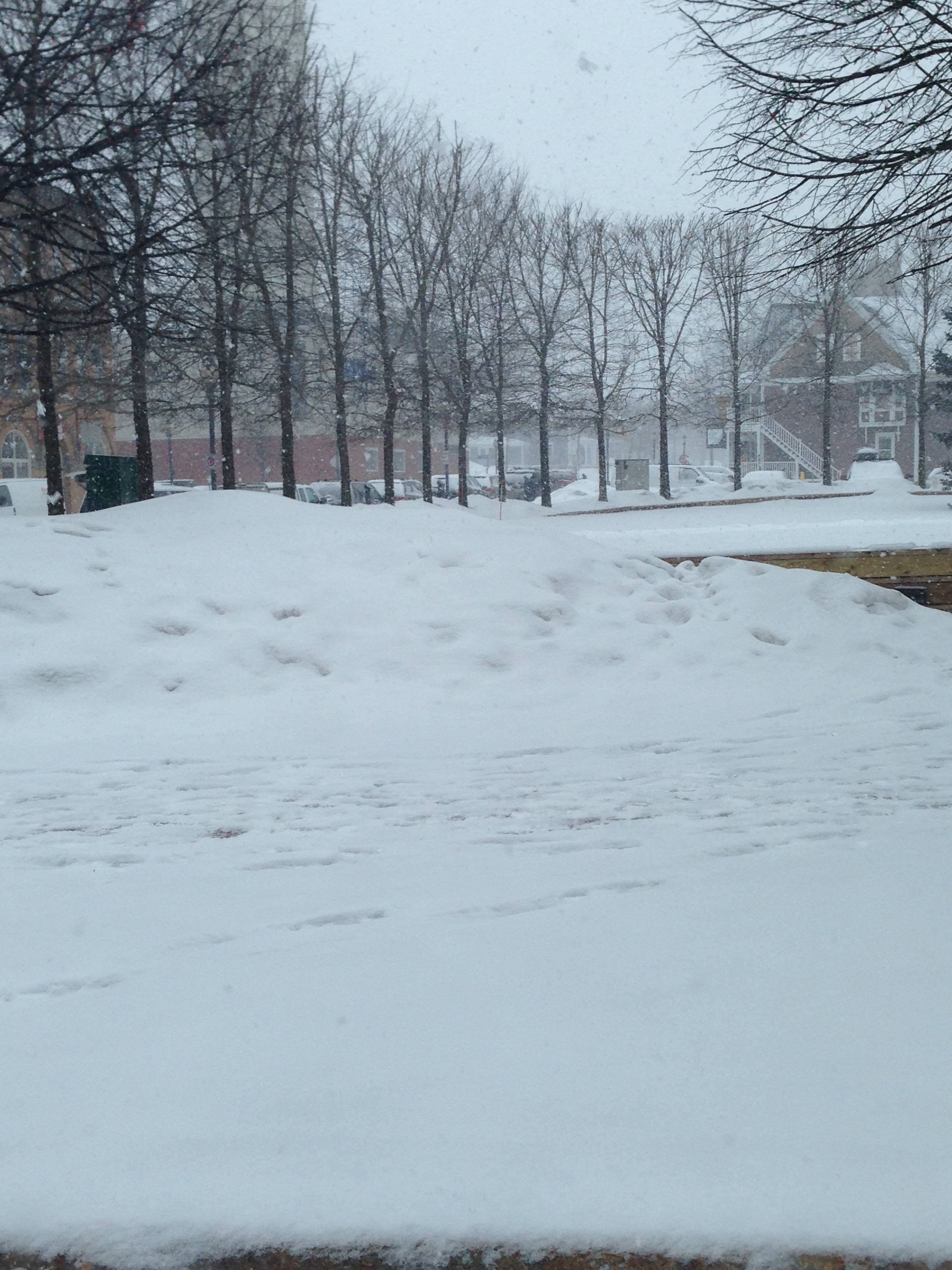
The great “snow dome of 2014” across the street from this fine rabbit warren of esteemed scribblers and other ink-stained wretches has all but vanished – proof, perhaps, that when Moncton wants to get things done, it does so in a more convincing fashion than any other city of its size in Canada. 

Here, even the weather cooperates, eventually.

Of course, what’s now emerging, as the ice melts, is the vast, crumbling parking lot that once belonged to the now vacant Highfield Square – a testament either to unrealized potential or dereliction of duty, depending on how the municipal cards fall over the next few months. 

In our bones, we Monctonians know that the greater metropolitan area needs, nay deserves, a new multi-purpose events and entertainment centre. We’ve been thinking about it for decades, talking about it for years. After all, it only makes sense.

A facility with suitable amenities and capacity (the sweet spot is between 9,000 and 12,000 seats) would generate, according to reputable estimates, between $12 and $15 million in annual spending and attract between 317,000 and 396,000 people to the downtown core, where 18,000 souls already work, thousands more reside and hundreds of shops, cafés, bistros, and restaurants operate under seasonably variable circumstances. A downtown centre would, quite simply, anchor these opportunities year round.

Those few among us who still cling to the proposition that Moncton is at its best when it’s flat on its back romanticize adversity to maniacally absurd dimensions. A turtle dies when it can’t turn over, when it can’t move. And Moncton is no turtle. 

Mayor George LeBlanc’s state of the city address earlier this week was instructive. In it, he reminded his Chamber of Commerce and Rotary Club audiences that a centre will cost $100 million, give or take, and that “we have to get it right. Let’s go big or stay home.”

He also pointed out, according to a report in this newspaper that, “for the first time, the city reached more than $400 million in tourist dollars spent last year – $409 million, to be exact. Moncton saw 1.65 million visitors in 2013, which outperformed all of the Maritime cities by about 20 per cent. LeBlanc reiterated the city’s stance on a hotel levy which would need to be regulated by the province. It would aid the infrastructure spending needed to attract even more tourists to the city.”

What’s more, “LeBlanc touched on the fact that the city saw an average of about $500,000 in new construction spending a day with 2013’s total building permits issued and reminded those at the meeting that Moncton was named best place to do business in all of North America – not once but twice, referring to 2012’s and 2013’s KPMG cost-competitive ratings.”

These are not the indicators of a city that resigns itself to second- or third-rate status in the nation’s municipal cosmos. 

Moncton’s civic boosters (and I am one of them) have routinely trotted out that old trope that we “punch above our weight class.” It’s a phrase that always plays well in the center of the country, where condescending attitudes about small cities insulates citizens in the megalopolis from the truth about their obligations to the rest of us. Good for us, they say; just as long as we look after our own problems, as we orphans in this Constitution must. 

I wonder if we, in this distinctly unpromising corner of of the nation, should adopt any spin-managed message to represent ourselves to the world. Our economic development record in Moncton speaks for itself. Our community is as diverse and vibrant as any other in this country. We have been, and continue to be, the masters of our own fortunes – the true “hub”’of economic adventure, of enterprise, in New Brunswick. 

That we should honour this by enhancing it with a sparkling, glittering, ridiculously busy downtown core is, frankly, a no-brainer. It’s in our civic DNA. It’s our customary right of passage through the chaos of economic and social dislocation elsewhere in New Brunswick. 

It is time to move our municipal conscience forward, before another deep winter buries us in ice, before our hearts finally fail to melt the “snow dome” that threatens to take up permanent residence where culture deserves to triumph.


Tagged ,

A year in the life of a Hog Town mayor


DSC_0152

For reasons known only to the furies, each time I travel to Toronto, I bring with me atrocious luck for its hapless, erstwhile chief magistrate.

To be honest, I had no inkling I had such compelling cosmic connections. But the evidence is now irrefutable.

First, last spring, I deplaned into a waiting limo at Pearson airport, there to tuck into copies of the Toronto Star and Globe and Mail dutifully reporting sorry, scandalous allegations about Rob Ford’s extracurricular activities involving known drug dealers, a crack pipe and cell phone video clip.

“Absolutely not true,” the wounded mayor bellowed when scrummed by members of the media. “It’s ridiculous. It’s another Toronto Star whatever. . .I do not use crack cocaine, nor am I addicted to crack cocaine. As for a video, I cannot comment on a video that I have never seen or does not exist. It is most unfortunate, very unfortunate, that my colleagues and the great people of this city have been exposed to the fact that I have been judged by the media without evidence.”

In August, I was back and so was Mr. Ford in Hog Town’s increasingly funny papers. Having raised a ruckus in the city’s east end, the visibly inebriated public official  later insisted on his radio call-in show: “I drove myself down there, I was not drinking. I went out, had a few beers and I did not drive home. My people met me.”

Some after that, however, he admitted that what had occurred “was pure stupidity I shouldn’t have got hammered down at the Danforth. If you’re going to have a couple drinks you stay home, and that’s it. You don’t make a public spectacle of yourself.”

Summer faded as Mr. Ford’s troubles escalated, and by my November trip to TO, the mayor was sullenly singing a different tune. 

“I am not perfect,” he said. “I have made mistakes. I have made mistakes, and all I can do right now is apologize for the mistakes. . .Yes, I have smoked crack cocaine. But, no – do I? Am I an addict? No. Have I tried it? Um, probably in one of my drunken stupors, probably approximately about a year ago.”

Now, courtesy of a Globe and Mail “exclusive” last Thursday (just in time for my first visit with my second Toronto grandkiddy), we are proud to witness this:  

“A second video of. . .Rob Ford smoking what has been described as crack cocaine by a self-professed drug dealer was secretly filmed in his sister’s basement early Saturday morning. The clip, which was viewed by two Globe and Mail reporters , shows Mr. Ford taking a drag from a long copper-coloured pipe, exhaling a cloud of smoke and then frantically shaking his right hand.”

On Friday, shortly before midnight, the frequently dazed and confused mayor issued the following statement:

“Tonight, I want to take some time to speak from my heart to the people of Toronto.  It’s not easy to be vulnerable, and this is one of the most difficult times in my life. I have a problem with alcohol and the choices I have made while under the influence. I have struggled with this for some time. Today, after taking some time to think about my own well-being, how to best serve the people of Toronto and what is in the best interests of my family, I have decided to take a leave from campaigning and from my duties as mayor to seek immediate help.”

Of course, had he faced his responsibilities earlier, he might have saved the city and the people he claims he loves a whole lot of embarrassment and heartache. I doubt that a “leave of absence” to clean himself up will do much to restore confidence in Toronto’s municipal culture or civic leadership, both of which Mr. Ford and his cadre of “loyalists” have thoroughly fouled in recent months.

Through it all, it’s impossible to dismiss the conviction that Mr. Ford still doesn’t get it. He still thinks, at some infantile level, that the world is out to get him – that he is not the author of his own misfortunes.

When a man proves that he can’t run his own life, it’s tragic. 

When that man also happens to be the mayor of one of North America’s largest cities, it’s actually terrifying.


Tagged

A tale of two urban legends


DSC_0153

In his illuminating piece on American cities and why they work, (in the current edition of the Atlantic) national correspondent James Fallows observes a renaissance, of sorts, in the ranks of strong mayors.

This, in turn, leads him to a rather shocking conclusion, given the political distemper that plagues other levels of government in the United States: “Once you look away from the national level, the American style of self-government can seem practical-minded, nonideological, future-oriented, and capable of compromise. These are of course the very traits we seem to have lost in our national politics.”

He then names some of the country’s more successful, recent big-city mayors, such as New York’s Michael Bloomberg, Boston’s Tom Menino and Chicago’s Richard Daley who, “even with their excesses. . .have been. . .the people who could get things done, while presidents and legislators seem ever more pathetically hamstrung.”

Even the nation’s more modestly sized cities, he says, deserve praise, including Greenville, South Carolina, where noting its “walkable and gracious downtown is like mentioning that Seattle has good coffee,” and Burlington, Vermont, a community “so liberal that it elected a socialist mayor” who, nevertheless, “overrode resistance to clear the waterfront, bring back the downtown, and attract businesses.”

Reading this account of Mr. Fallows’ happy adventures along the main streets of his nation, I can’t help but feel a might bewildered. 

American cities aren’t supposed to be paragons of anything. In fact, they are supposed to be dystopian hell holes where elected officials are in the back pockets of organized criminals, the cops are on the take, and murder and mayhem lurks behind every street corner. 

Canadian cities, on the other hand, are supposed to be legendarily well-ordered, well-managed and. . .well. . .boring. Typically, its mayors are supposed to be either courtly older gentlemen or feisty older ladies whose affection for controversy begins and ends with zoning restrictions in exurban subdivision developments.

Well, aren’t they?

Rob Ford was in the news the other day. It appears that Toronto’s mayor was “visibly upset” after being barred from Maple Leaf Sports and Entertainment’s board of directors’ lounge at the Air Canada Centre during a hockey game. At least, that’s how his companion described the chief magistrate on Saturday. 

“To the extent possible, yeah, they (security staff) asked me to keep him under control,” Toronto Councillor Frank Di Giorgio told the Globe and Mail. “That was one of things I hadn’t anticipated my having to do, let’s put it that way. I think if his older brother had been there, it would have been easier to control him. . .(He was) certainly visibly upset.”

Was he drunk? Was he high? Nope, hizzoner said, not this time. 

Sure, over the past year, he has admitted to smoking crack (after having lied about it) in a drunken stupor. Yes, police documents, unsealed last month, describe the a mobile phone video in which the mayor is “holding what appears to be a glass cylinder in one hand and a lighter in the othe . . .At one point Mayor Ford holds the glass cylinder to his mouth. Lights the lighter and applies the flame to the tip of the glass cylinder in a circular motion. After several seconds Mayor Ford appears to inhale the vapour which is produced, then exhale vapour.”

But last Saturday, he was as clean and sober as a Tibetan monk, even though, as the Toronto Star reported yesterday, the incident at the hockey game “marked the fourth occasion in the past three months that the mayor has been filmed acting erratic in public. In January, a video made at a fast-food restaurant showed him slurring and making disparaging remarks about the chief of police. In early February, he was seen drinking and speaking ‘gibberish’ at a British Columbia pub. And on St. Patrick’s Day, Ford was again taped stumbling and swearing outside city hall.”

For all that, Mayor Ford is just an average guy. At least that’s what he told the profile writer from Esquire last month: “I’m very humble. Some people call it shy. I am who I am. I love my football, and I love my family, and that’s pretty well it.”

Should Mr. Fallows want to write a Canadian follow-up to his excellent essay on American mayors, Mr. Ford is almost certainly available to oblige with an interview. 

Just as soon as he nails down that reality show.

 After all, for the mayor of Canada’s largest city, priorities are everything.


Tagged , ,

How to take ‘yes’ for an answer in politics


DSC_0027

Metro Moncton richly deserves its pride of place as one North America’s most attractive municipalities for businesses. In fact, according to a new KPMG report, pound-for pound, the Hub City may be the most free-enterprising on the continent.

As the 2014 Competitive Alternatives report states, “The cost leaders in the New England/Atlantic Canada region are the Atlantic Canada cities of Moncton,

Charlottetown, and Fredericton, all with costs nine percent or more below the US baseline. Costs are somewhat higher in Halifax, St. John’s and Bangor, while Manchester (New Hampshire) and Burlington (Vermont) have the highest 

business costs among the smaller cities in this region.”

Of course, money isn’t everything. Foresight also counts for a lot in the fortunes of any community. That’s why the long-running ‘will-we-won’t-we-push-me-pull-you’ saga of a rumored, though not actually realized, downtown centre has been such a frustrating anomaly in the city’s urban oeuvre – a rare instance in which Moncton has sacrificed its youthful swagger for a geriatric shuffle.

In fact, an unmistakable fustiness permeates the Request for Proposal (RFP) that City Hall has sent to prospective builders, as if councillors and staff are tripping over their own feet in their effort not to get ahead of themselves lest they (gasp!) actually hit the ground running on this thing.

The real problem has always been, and remains, existential. What do we – and those we elect – actually want a downtown centre to do? Opinions clearly vary and to the extent that they do, the actual character of the urban core hovers just out of view, beyond our grasp. 

Shall we embrace, as the RFP stipulates, the “Moncton Multi-Use Sport and Entertainment Facility” or the “Moncton Downtown Centre” or, simply, “Downtown Centre”? What does “Multi-Use” mean?

We know one thing: It means being flexible enough to accommodate two sports teams, which might not otherwise prosper here 

“The Downtown Centre will be the home of the Moncton Wildcats, and the Moncton Miracles,” the RFP says. “The Moncton Wildcats. . .will be a major tenant at the Downtown Centre. All of the Moncton Wildcats’ hockey and business operations will be located in the Downtown Centre, and the Moncton Wildcats will play approximately

thirty-four (34) home games per season, as well as any playoff games at the Downtown Centre. . .The Moncton Miracles basketball league franchise is a charter member of the 

National Basketball League of Canada (Atlantic Division), and plays twenty (20) 

regular home games per season.”

But, in calling for a mere 7,500-seat capacity (hardly better than city’s 40-year-old coliseum, whose fate as a refurbished trade centre and show location is linked to the downtown centre’s progress), officials are inadvertently raising uncomfortable questions about the broader utility of such a facility, particularly as an entertainment mooring for the downtown.

Still, the RFP insists, “The Moncton Downtown Centre development project is a major local project which has been part the City’s development and planning vision for many years. This Project has a high degree of visibility, as the Downtown Centre will be one of the most important new buildings located in the City, and the Province, for many years to come.”

Really? How so? 

“The Downtown Centre must encourage downtown residential development: 

The City envisions the Downtown Centre as a catalyst for downtown development, giving more people a reason to live downtown,” the RFP continues. “Specifically, the 

City is seeking design proposals that facilitate the City’s objective of resulting 

in more people living downtown, higher density forms of development, and a 

variety of housing options, including a mix of unit types and tenures (i.e. rental 

vs. ownership).”

City officials are not wrong to appreciate the catalytic effects of architecture and design on housing, retail and hospitality development in the downtown. But to properly re-imagine a busy, densely populated, and diverse urban core, we must articulate a fuller cultural agenda, and in greater detail, than we have for its new anchoring edifice.

Bold, aggressive strategies with no guarantee of success are what made Moncton one of the world’s recognized “smart cities” at a competition in New York a few years ago. That this city boasts the international airport it does owes everything to its habit of making a productive nuisance of itself at all levels of government.

Nothing less is called for today, and there’s no reason to start taking ‘no’ for an answer to the questions the future poses. 


Tagged , , ,

Put Moncton’s future in the hands of the willing

IMG_0180

It’s fast becoming apparent that if the community of interests that comprises Greater Moncton intends to erect any of its many imagined monuments to civic pride and progress (including, but not limited to, a downtown events centre) it must turn to private enterprises, voluntary organizations and institutions to get the job done.

Governments, it seems, are otherwise occupied counting their dwindling supply of loonies and obfuscating the public debate with impenetrable statements like the one Moncton City Manager Jacques Dube issued the other day to a Moncton Times & Transcript reporter on the subject of concert dates for Magnetic Hill:

“(City) staff need a couple more weeks to prepare final recommendations in relation to potential changes to concert and event governance, organizational structures and any new financial parameters regarding future concerts and events at Magnetic Hill, the Stadium, the Coliseum and other city venues.”

From this, it seems entirely reasonably to conclude that bafflegab-production has usurped actual event-prospecting over at Casa del Mudtown.

The good news is that just as some city officials and elected representatives (not all, to be sure and to be fair) take their time figuring out how they feel about our live sports and entertainment scene – i.e., whether or not a new events centre should support a full-blown, downtown renaissance, or just itself; whether or not Magnetic Hill will ever again attract the likes of the Rolling Stones, and 75,000 fans, for one weekend of gloriously bacchanalian spending – some of us, at least, are willing to pick up the ball.

I’m not especially fond of summitry in any of its guises. Too often, events involving a few hundred people, representing a few hundred different points of view, convened to “get things done” produce precisely the opposite effect. But the final report of the recent “Greater Moncton – One Region, One Vision 2014” conference suggests that this gathering was the happy exception to my rule.

Most impressive, perhaps, was the degree of unanimity it achieved on concrete issues that affect all sectors and industry segments in the metropolitan area.

All participants agreed, for example, that the tri-city area must draw more talent, more immigrants, into its orbit. “Our economic, cultural and social advancement will be strengthened through attracting more newcomers to the community,” the report observed. “Even the professional sectors are having a harder time attracting workers compared to the recent past.”

Though summiteers complained about the federal government’s notoriously ineffectual temporary foreign worker program, some suggested solutions they, themselves, could offer, such as “strengthening the linkages between industries and educational institutions; and raising the profile of industry among young people.”

Other priorities included engendering greater “industry-specific collaboration” to address joint problems; nurturing entrepreneurship and “strengthening the start-up ecosystem (involving) access to capital, mentorship and guidance and physical incubation spaces; and “fostering Greater Moncton’s role as a regional services centre” especially for the nascent natural gas industry in the province.

Of course, we know a community is largely on the right course when its members – ably articulating its advantages as well as its challenges – find that its strengths and weakness are actually two signs of the same municipal coin.

By summit consensus, for example, one of Greater Moncton’s top 10 competitive boons is its “entrepreneurial spirit”. At the same time, one of its key drawbacks is the “lack of new entrepreneurs.”

These two facts, juxtaposed as they are in the same urban headspace, immediately suggest strategies for real progress – the obvious one being to leverage the experience of existing entrepreneurs to mentor, promote and provide new opportunities for promising, youthful startups.

This is the type of active, collaborative, inventive, and mindful approach to solving problems and, frankly, just getting things done that this metropolitan area needs now, before it grows inured to habitual underachievement in governments at all levels.

So says the Summit report: “The success of Greater Moncton over the past 25 years has been in large part due to cooperation and collaboration. The 2014 Greater Moncton Economic Summit was the start of a process meant to rekindle this spirit of collaboration.”

We may only hope that from Moncton City Hall’s perspective that process comes just in the nick of time.

Tagged , , ,